
Airbnb Rules in Thailand: What UK Buyers Must Check First
Is Airbnb legal in Thailand? A UK buyer's guide to the Hotel Act, condo bylaws, the small-accommodation exemption, TM30 and checks before you buy.
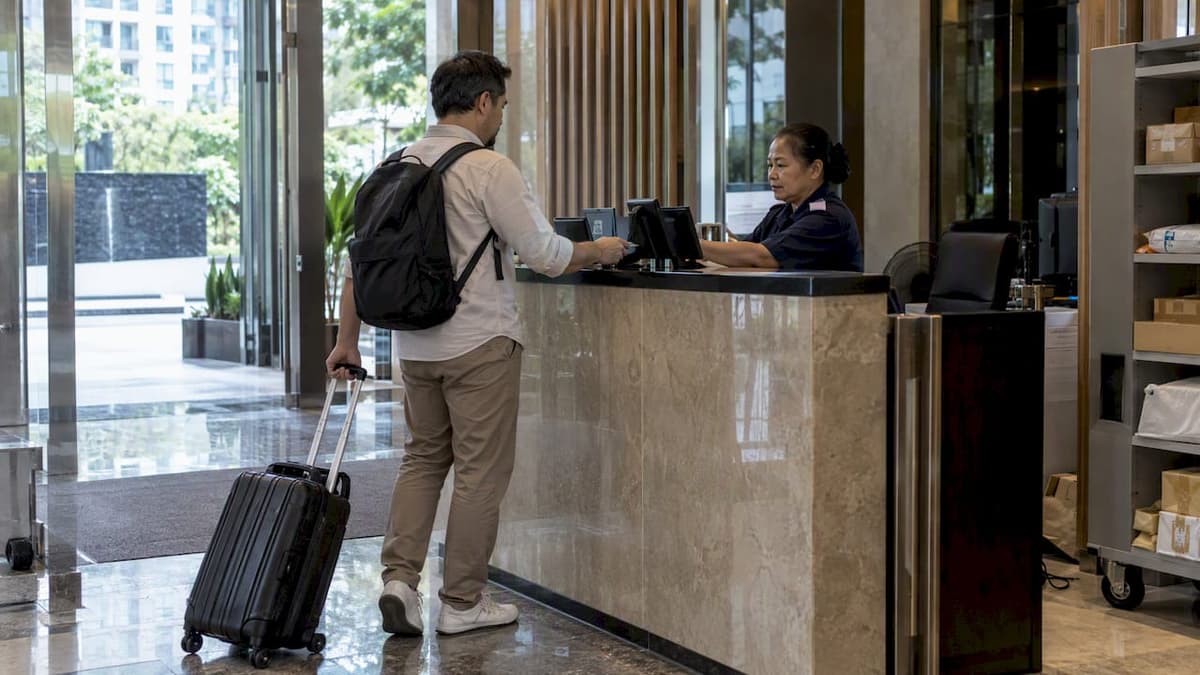

Airbnb itself is not banned in Thailand, but letting a property by the night or the week usually is, unless the property is licensed as a hotel or has been formally notified and acknowledged as a small accommodation business. Thai legal commentary draws exactly that distinction. For a UK buyer this matters before you pay a deposit, because many Bangkok and Phuket condominium units are marketed on yields that assume nightly letting.
This guide explains the law in plain terms, how it applies to condominiums and villas, what Bangkok and Phuket buyers should verify, and how nightly letting compares with a long-term tenancy. It is general information, not legal advice. For a specific unit, take advice from a Thai-qualified lawyer.
TL;DR
- Under the Hotel Act B.E. 2547 (2004), temporary paid accommodation generally needs a hotel licence. Penalties include up to one year in prison and fines.
- A small-accommodation exemption exists (up to eight rooms and 30 guests), but it needs notification, inspection and written acknowledgement. It does not override condominium bylaws.
- A condominium's juristic person (the legal entity that runs the building) can ban daily letting, so you may own a unit you cannot use as the yield model assumed.
- Every foreign guest, short or long stay, must be reported to immigration through the TM30 notification, and the duty falls on the owner or manager.
- Verify building rules, licensing status and foreign quota before paying, not after.
What the law actually says
The main statute is the Hotel Act B.E. 2547 (2004). B.E. stands for Buddhist Era, the calendar Thai legislation uses; 2547 corresponds to 2004. The Act defines a hotel by what it does, which is to provide temporary paid accommodation, rather than by what the building looks like. The English translation of the Act is worth reading with the ministerial regulations issued under it.
The Asian Development Bank's brief on short-term rentals in Thailand describes the wider framework as complex and interrelated, which makes the owner's obligations hard to read. In practice, three layers apply at once:
- The Hotel Act, which decides whether nightly letting needs a licence.
- Condominium or village rules, which decide whether the building or estate allows it.
- Immigration and tax rules, which apply to anyone hosting foreigners and earning rent.
Passing one layer does not clear the others. That is the point most listing-based advice misses.
Penalties for unlicensed letting
As of October 2026, Thai government information gives the penalties for operating without a licence as imprisonment of up to one year, a fine of up to 20,000 baht, and a further daily fine of up to 10,000 baht for as long as the breach continues. Enforcement has also tightened: the Library of Congress reported on a February 2025 government warning that buying condominiums to rent to tourists for short stays is illegal, with the Ministry of Interior instructing provincial administration officials to act. The Thai government's own press office has described continuing action against daily-let condominiums in the Sukhumvit and Asoke area of Bangkok.

The small-accommodation exemption
The exemption is the part most often misquoted. Ministerial Regulation (No. 2) B.E. 2566 (2023) widened the exception so that establishments with no more than eight guest rooms and capacity for no more than 30 guests fall outside the Hotel Act definition. Three conditions follow from the source:
- It is not automatic. The owner must notify the local Hotel Registrar, pass an official inspection and receive a written acknowledgement.
- It is time-limited. The acknowledgement is valid for five years, and the research we reviewed puts issuance at around 40 days after notification.
- It does not cancel other laws. Condominium bylaws and building control standards still apply.
Some agents say that owning one or two units means you are simply exempt. We would not rely on that. Ask for the written acknowledgement itself, check its date and check that it names the property you are buying.
Condominiums: the building decides
For a condominium unit, the obstacle is usually structural. Thai legal analysis notes that condominium rules, including provisions in the Condominium Act B.E. 2522 (1979), often prohibit daily letting, and that these prohibitions can be enforced civilly. The same source points out that obtaining a hotel licence for a single unit is practically impossible, because building control, fire safety and environmental standards cannot be met by one unit alone.

The ADB brief makes a related point for investors: rental income is a different investment category from owning a condominium. A buyer can purchase on a projected yield that assumes nightly letting without checking whether the juristic person has prohibited it. The juristic person can then enforce its bylaws in the civil courts, leaving the buyer owning a unit they are barred from using as planned.
What to ask for
- The registered condominium bylaws and any later resolutions of the owners' meeting on letting.
- Written confirmation from the juristic person on whether daily or weekly letting is allowed, and any history of fines or complaints.
- Whether the building holds a hotel licence or has any units operating under a notified small-accommodation acknowledgement.
- Whether existing nightly lets in the building are tolerated in practice but not permitted in writing. Tolerance is not permission.
Foreign ownership quota and your funds
If you are buying as a foreigner, the structure of your title interacts with letting plans. As of August 2026, the 49 percent foreign quota for condominiums remains law under Section 19 bis of the Condominium Act. Proposals to lift it to 75 percent or to allow 99-year leases have circulated but have not been tabled in parliament. The quota is calculated on total floor area, not unit count, and it is building-wide. A block can reach its limit with fewer than half its units foreign-owned. If the quota is full, you may be pushed into a lease, which changes what you can legally do and later sell. We cover this in our guide to the 49% quota and in freehold versus lease for UK buyers.
Funds matter too. Foreign freehold registration requires money remitted from abroad in foreign currency, evidenced by a bank-issued Foreign Exchange Transaction (FET) form. Practitioners warn that this is a prerequisite that cannot be fixed after purchase, so check the paperwork route with your bank before transferring.
Villas and houses in Phuket
The Hotel Act applies to houses and villas as much as condominiums, so a Phuket villa let nightly without a licence or small-accommodation acknowledgement carries the same exposure. The difference is that villas sit under different private rules: a village or estate may have its own regulations, and a foreigner cannot hold land freehold in the same way they can a quota unit. If you are considering a villa, the ownership structure, such as a lease or usufruct (a registered right to use and take income from property), shapes what you can do with it. Our note on registering usufruct in Thailand sets out the due diligence points.
For a resort area such as Patong, check the building's actual letting practice, access, and local costs; our Patong buying guide covers rentals and costs.
Is Airbnb legal in Bangkok?
The Bangkok answer is the same national one, with sharper enforcement attention. Bangkok Metropolitan Administration officials have taken part in the coordinated inspections described by the Thai government. Listing a unit on a platform does not make nightly letting lawful, and equally a platform's help pages give hosts only a general overview of local rules and expect them to follow the law. Airbnb's own host responsibilities page says as much. The practical question for Bangkok is whether the specific building permits it and whether you hold a licence or acknowledgement.
TM30: reporting your guests
Hosting a foreign guest triggers a separate duty. Under Section 38 of the Immigration Act B.E. 2522 (1979), house owners, landlords and hotel managers who accommodate foreign nationals must notify the local immigration office. This is the TM30 notification, to be filed within 24 hours of arrival. It applies to long-term tenants as well as short-stay guests, and the duty rests with the owner or manager. Missing it can leave a guest with difficulties later when they seek a visa extension. If you are abroad, someone must be named to file it.
Nightly letting versus long-term rental in Bangkok
The legal position makes the comparison less about headline yield and more about risk and what remains afterwards.
| Factor | Nightly or weekly letting | Long-term tenancy |
|---|---|---|
| Hotel Act licence | Usually required unless notified and acknowledged as small | Generally not engaged by a genuine long-term lease; confirm with a Thai lawyer for your lease length |
| Condominium bylaws | Often prohibit daily letting | Usually permitted, subject to building rules |
| Enforcement exposure | Criminal penalties, civil action by juristic person | Low if documented properly |
| Income stability | Variable, with vacancy and management costs | More predictable |
| TM30 | Every foreign guest | Every foreign tenant |
| Resale | Buyers may discount if use is restricted | Cleaner position |
The tenancy threshold that separates a long-term lease from temporary accommodation is a question for your Thai lawyer, since we have not seen a single authoritative figure that fits every case. Whichever route you take, the Thai rent is taxable; our guide to Thai property taxes and reporting Thai rent in the UK covers what UK residents should plan for.
Our perspective
We review these purchases from the buyer's side, and the same pattern recurs. A buyer is shown a rental return built on nightly letting, the unit is within the foreign quota on the day of sale, and nobody has read the bylaws. Our own record is over 380 property decisions reviewed, with one in three reviews identifying a significant deal-changing issue. We do not say that all of those relate to letting, but use restrictions are the type of issue that only appears when someone asks for the documents.
Our advice is simple. Treat permitted use as part of title, not as marketing. If the yield depends on nightly letting, the licence status, the bylaws and the juristic person's written position should be on file before you pay. If they cannot be produced, price the unit as a long-term rental or walk away.
— Neerraj
A pre-deposit checklist
- Define your intended use in writing: nightly, monthly, annual or personal.
- Obtain the bylaws and the juristic person's written view on letting.
- Check licensing: hotel licence, or a small-accommodation acknowledgement naming the property and its expiry date.
- Confirm the foreign quota status on a floor-area basis and your funds route, including the FET form.
- Model the numbers for the lawful use only, including management, vacancy, tax and resale costs.
- Plan TM30 filings and who will make them.
- Keep a decision file of every document, so your adviser and any future buyer can see what you relied on.
How we can help
Our Before Buying Property Due Diligence service reviews a specific unit or villa against your intended use, checking ownership rights, developer and counterparty claims, permits and ongoing obligations, and produces a decision file coordinated by legal, technical and market specialists. You can also read about our Thailand property due diligence service. We do not publish a price for the review, so please get in touch through the site.
FAQ
Is Airbnb legal in Thailand?
The platform is not illegal, but letting accommodation by the night or week generally needs a hotel licence under the Hotel Act, or a notified and acknowledged small-accommodation status. Without one, the owner risks criminal penalties and civil action.
Can I Airbnb my condo in Thailand?
Only if the building's rules allow it and the letting is lawful under the Hotel Act. Many condominium bylaws prohibit daily letting, and a single unit can rarely obtain a hotel licence, so check the bylaws and the juristic person's position first.
Is short-term rental in Phuket treated differently?
No. The Hotel Act is national law, so Phuket villas and condominiums face the same licensing questions. What differs is the local building or estate rules and how enforcement is applied.
Do I need TM30 for long-term tenants?
Yes. The duty to notify immigration within 24 hours applies to any owner or manager accommodating a foreign national, whether the stay is short or long.
Is a long-term rental safer than Airbnb in Bangkok?
It carries far less licensing and bylaw exposure and usually gives steadier income, though returns are often lower. Have a Thai lawyer confirm the lease term and structure before you rely on it.
Sources
- Airbnb in Thailand: Is It Legal? Hotel Act Rules
- Nurturing Short-Term Rentals in Thailand (ADB Brief 292)
- Thailand Hotel Act 2004, English translation
- Thailand Hotel Ministerial Regulation No. 2 (2023), English translation
- Thai Government Public Relations Department
- Thai government press release on daily-let condominium enforcement
- Library of Congress: Thailand warns foreign investors over illegal condo rentals
- Thailand Condo Foreign Ownership Quota: 49% Rule 2026
- Phuket Off-Plan: How to Protect Yourself From Stalled Builds
- Thai Immigration Bureau: TM30 notification
- Airbnb host responsibilities

