
📝 Blog, Seo X (Twitter) Creator Handle, Seo X (Twitter) Creator ID
India Property Due Diligence: What to Check Before You Transfer Money
A practical buyer-side checklist for India property due diligence covering title, RERA, sanctioned plans, encumbrances, approvals, total cost and NRI/OCI FEMA checks.

TL;DR: Before transferring money for an Indian property, verify the exact RERA phase, trace the title chain, match sanctioned plans to what is being sold, check encumbrances and unpaid dues, understand the full acquisition cost, and clear NRI/OCI payment and FEMA questions. RERA disclosure is useful, but it does not replace asset-level legal, technical and financial due diligence.
Table of contents
Buying property in India from overseas is not difficult because of one big risk. It is difficult because of ten small gaps that often appear only after payment.
A sales deck can look clean and the quoted price can look final. Then a missing link in the title chain, unpaid dues, an unapproved floor, or a RERA phase mismatch appears.
That is why India property due diligence is not a formality. It is how you make the decision explainable before capital moves.
At Nitarya, we review properties from the client side, independently of inventory and sales commissions. Here is what should be checked before you transfer money.
1. India is not one property market
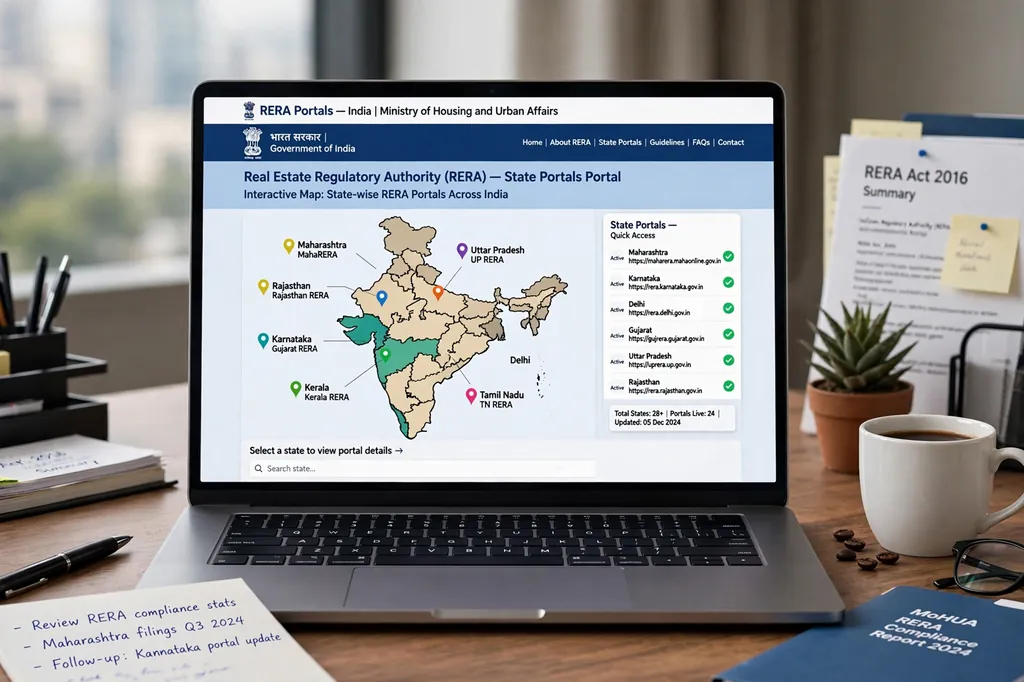
Maharashtra RERA is not the same as Karnataka RERA. Gurugram requires Haryana RERA checks alongside development authority and local municipal records. Mumbai can involve society, redevelopment and conveyance records that may not exist in the same form in Delhi NCR.
You cannot verify an Indian property through one central portal alone. Start with the relevant state RERA portal, then move outward to the appropriate development authority, local authority, sub-registrar, revenue records and society records where applicable.
Image brief: A clean India due diligence workflow graphic showing State RERA → Development Authority → Sub-Registrar → Revenue/Municipal Records → Society/Association Records.
2. Title is a chain, not a single document
Many people ask for the "title deed". In India, ownership is better understood as a chain of documents and transfers.
Review the sequence of sale deeds, partition deeds where applicable, gift or inheritance documents, revenue records such as 7/12 extracts or jamabandi where applicable, and mutation after transfers.
A break in the chain is a red flag. Missing inheritance documentation or an unregistered family settlement can create disputes years later.
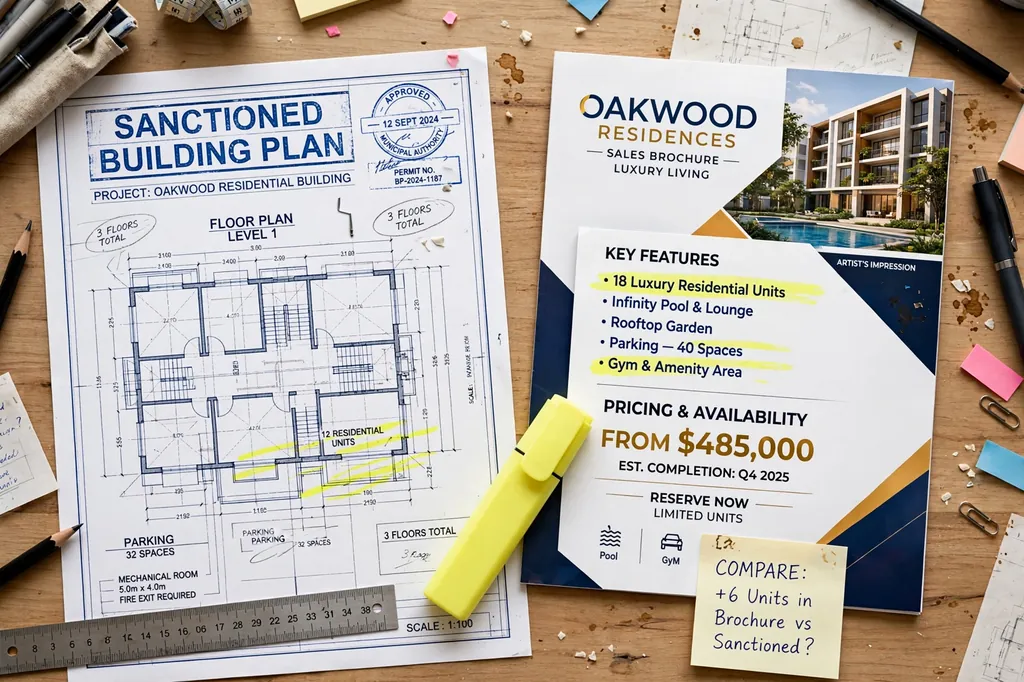
The property identity also needs to match across records. Survey number, plot number, carpet area, floor, tower and phase should be consistent across the sale deed, sanctioned plan, RERA declaration and agreement for sale. A mismatch is not a small clerical issue until it is explained and documented.
3. RERA tells you disclosure. It does not give you safety
RERA requires promoters to disclose and periodically update project information so that prospective purchasers can make a more informed decision.
That disclosure is useful. It is not a substitute for independent verification.
Check:
- Promoter name and legal entity
- RERA registration number for the exact phase
- Sanctioned plan and approval dates
- Extension history
- Quarterly progress updates
- Promised and revised completion dates
- Complaints, orders and regulatory directions
In 2025, JLL reported 83.3 million sq. ft. of gross office leasing in India, with GCCs accounting for 37.7% of activity. Strong office absorption may support the investment case for a corridor, but it does not validate a specific residential tower, title or approval status.
Macro data should inform context, not replace asset-level verification.
4. Approvals and sanctioned plans

The practical question is simple: what was approved versus what was sold?
Request and review, where applicable:
- Sanctioned layout plan
- Sanctioned floor plan
- Building permission
- Commencement certificate
- Environmental clearance
- Fire NOC
- Occupancy or completion certificate for ready properties
Projects can be revised after launch. Changes can affect setbacks, floor count, amenity space or tower configuration. The agreement should refer to the correct approved version and the exact unit being purchased.
If the brochure shows four towers but RERA shows two registered phases, treat that as a phase-level diligence question, not a marketing detail.
5. Encumbrances, dues and litigation
This is where hidden liabilities often surface.
Check the encumbrance certificate and available registration records through the relevant sub-registrar. Review mortgage entries, property tax, society or association dues, maintenance dues and utility dues where relevant.
Litigation review should go beyond a single court search. Depending on the asset and developer, useful checks can include:
- RERA complaints and orders
- Consumer forum matters
- NCLT proceedings where the developer is under financial stress
- High Court or civil proceedings relating to title, land or project approvals
No diligence process can promise zero future liability. A good process makes missing evidence, unresolved disputes and assumptions visible before commitment.
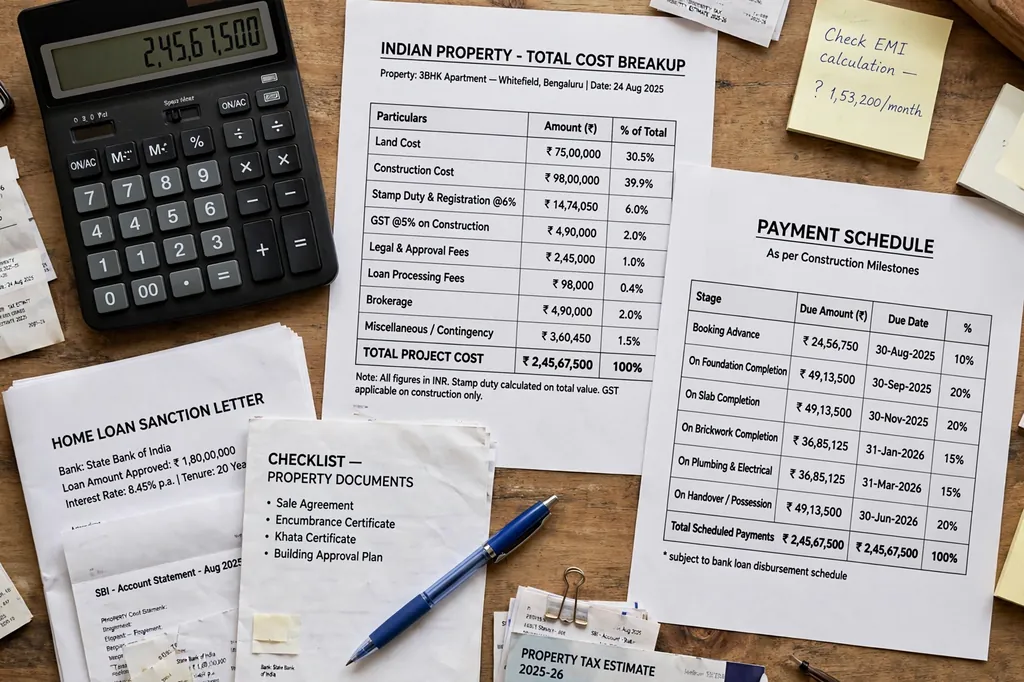
6. Cost is never just the quoted price
Ask for the total acquisition cost in writing.
That can include:
- Agreement value
- Stamp duty and registration
- GST for applicable under-construction transactions
- Parking or usage charges where separately documented
- Club, infrastructure or facility charges
- Legal and documentation charges
- Society corpus
- Advance maintenance
- Recurring maintenance per sq. ft.
- Applicable taxes and transaction-related costs
For NRIs and OCIs, payment route matters. The Reserve Bank of India permits NRI/OCI investment in immovable property subject to FEMA rules and restrictions, including exclusions around agricultural land, plantation property and farmhouses. Payment, banking and repatriation questions should be cleared with a qualified tax or legal adviser before booking.
7. How Nitarya structures an India property review
We keep the decision process in three stages.
Step 1: Buying: Asset Fit
Define the purpose first: self-use, family use, rental income, diversification or long-term hold.
Then compare the micro-market, real travel times, access, utilities, developer delivery record, competing supply and the likely future exit audience.
Step 2: Verifying: Evidence Check
Match the RERA record, title questions, approvals, agreement, payment schedule and possession evidence.
Legal, tax and technical questions should be routed to appropriately licensed specialists where required. Due diligence should coordinate those questions rather than pretend one adviser replaces every specialist.
Step 3: Monitoring: Ownership File
Maintain one evidence file for payments, construction updates, handover records, recurring charges and tax documents that may be needed later for ownership management or resale.
If you want this structured as an independent property file, see Nitarya's India property due diligence service.
India had more than 1,000 km of operational metro rail across multiple cities by the end of 2025. Infrastructure can materially change a micro-market, but access, timelines and impact still need to be checked at the individual project level rather than assumed from a brochure.
Final checklist before you transfer money
- The RERA registration matches the exact project phase and unit context.
- The title chain is complete for the period advised by your lawyer.
- The sanctioned plan matches the property and agreement.
- Encumbrance and material dues checks are complete.
- Total cost, payment milestones, possession terms and cancellation terms are in writing.
- NRI/OCI banking, tax and FEMA questions are cleared where relevant.
If any of these are unresolved, ask for evidence before you transfer funds.
Need a second pair of eyes on a specific property? Nitarya can review the documents you have and separate what is verified, what still needs confirmation, and what is missing.
This article is general information only. It is not legal, tax, FEMA, technical, investment or valuation advice. Obtain advice from appropriately licensed professionals for your transaction.
FAQs
What documents should I check before buying property in India?
At minimum, review the title chain, relevant sale or transfer deeds, RERA registration, sanctioned plans, approvals, encumbrance records, property tax and maintenance dues, and the agreement for sale. The exact list depends on the state, property type, project stage and ownership history.
Is RERA registration enough to make a property safe to buy?
No. RERA is an important disclosure and regulatory layer, but it does not replace title verification, approval checks, encumbrance review, agreement review or technical due diligence.
How many years of title history should be checked in India?
There is no single number that fits every transaction. A 30-year review is commonly used as a practical benchmark, but the appropriate period and documents should be determined by a qualified property lawyer based on the asset and jurisdiction.
What should an NRI check before buying property in India?
An NRI should verify title, RERA and approvals just like any other purchaser, and should additionally confirm eligibility under FEMA, banking channels, tax treatment, TDS obligations where applicable, repatriation implications and documentation requirements with qualified advisers.
What is an encumbrance certificate and why does it matter?
An encumbrance certificate records certain registered transactions affecting a property for the period searched. It can help identify registered mortgages or transfers, but it should be read together with title documents, lender records, litigation checks and other evidence.
Can a sanctioned plan differ from the project brochure?
Yes. Marketing material may not be the legal approval record, and plans can also be revised. The relevant sanctioned plan and approved configuration should be checked against the unit, tower, floor and agreement being offered.
What are common red flags in Indian property due diligence?
Typical red flags include gaps in the title chain, mismatch between project phase and RERA registration, unapproved construction, unresolved mortgages, unpaid dues, litigation, unclear inheritance documents, inconsistent property identifiers and payment terms that do not match the agreement.
When should due diligence be completed?
Core legal, regulatory, financial and property-level checks should be completed before making a material non-refundable payment or signing documents that materially limit your ability to exit.