
📝 Blog
Joint Tenancy vs Tenants in Common: UK Property Guide 2026
A practical UK property guide comparing joint tenancy and tenancy in common, including survivorship, inheritance, unequal shares, severance and due diligence risks.

TL;DR: Joint tenancy offers automatic survivorship but limits testamentary control. Tenancy in common allows defined, potentially unequal shares that can pass under a will. Owners can sever a joint tenancy by notice and HM Land Registry registration, and complex or cross-border ownership histories benefit from independent due diligence.
What joint tenancy means in practice?
Under a joint tenancy, each owner holds an identical, undivided interest in the whole property rather than a defined percentage. This structure carries the right of survivorship: on the death of one joint tenant, ownership automatically passes to the surviving joint tenant, regardless of what the deceased’s will says.
On the register, joint tenants appear as joint legal proprietors, though the register itself does not distinguish between joint tenancy and tenancy in common at the level of beneficial ownership. A joint tenant cannot leave a separate share by will because there is no defined separate share to leave.
What tenancy in common means for co-owners?
Tenancy in common works differently. Each owner holds a distinct, undivided share of the property, and those shares need not be equal. Because each share is a distinct asset, it passes under the owner’s will or intestacy rules rather than automatically to the co-owner.
This structure is often a better fit for friends, family members or investors contributing different amounts, or for owners who want independent control over succession.
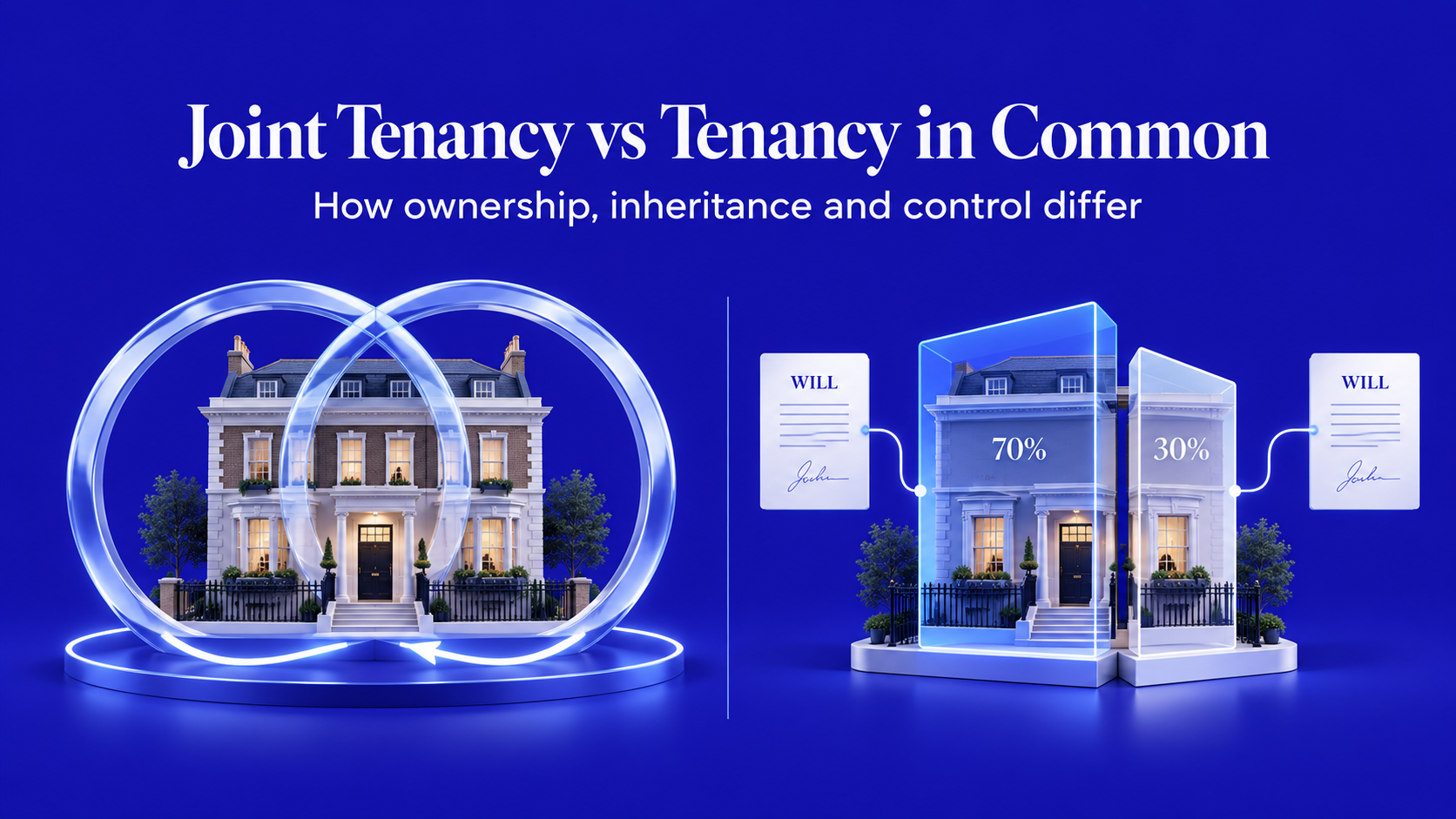
Key differences at a glance
- Ownership shape: joint tenancy gives an equal interest in the whole; tenancy in common gives fractional shares that can be unequal.
- On death: joint tenancy passes automatically to the survivor; tenancy in common passes under the deceased’s will or intestacy rules.
- Estate planning flexibility: joint tenancy offers little control over where an interest ends up; tenancy in common lets each owner direct their share independently.
- Sale and mortgage practicalities: both forms usually require every co-owner’s consent to sell or remortgage, though a tenant in common can deal with their individual share subject to any trust deed.
Weighing the benefits and drawbacks
Neither structure is inherently better. Joint tenancy is simple and offers automatic survivorship, but it can be a poor fit where contributions are unequal or owners want separate inheritance plans. Tenancy in common allows more control and can mirror unequal contributions, but probate and disputes between heirs and surviving co-owners can make administration more complex.
Pro Tip: Match the ownership form to the actual money trail, not just the relationship label. Unequal contributions usually argue for tenancy in common.
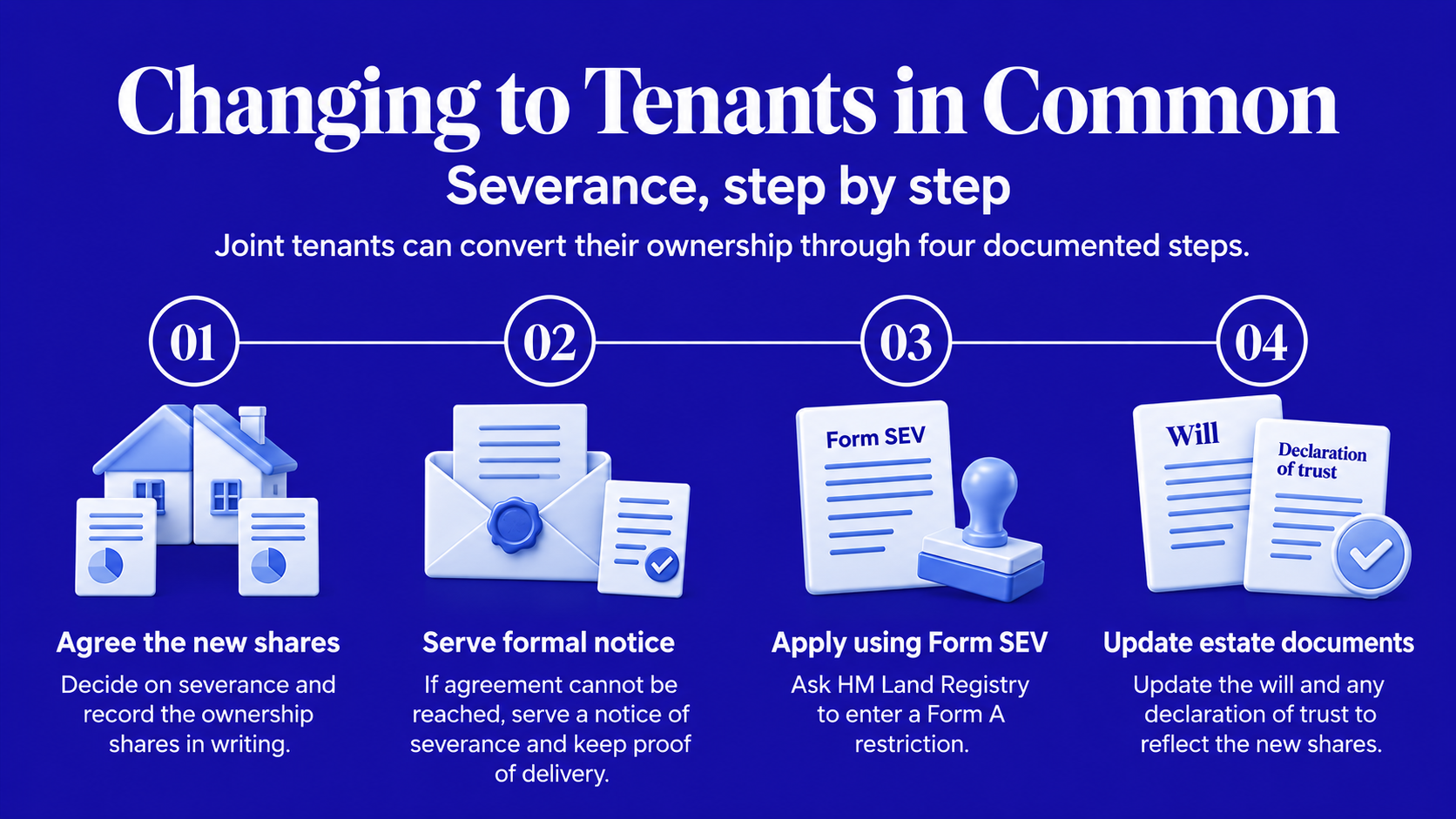
Changing to tenants in common: severance step by step
Owners who start as joint tenants can convert to tenants in common through severance.
- Decide on severance and, ideally, agree the new shares in writing.
- Serve a formal notice of severance if agreement cannot be reached, keeping proof of delivery.
- Apply to HM Land Registry using Form SEV to enter a Form A restriction.
- Update the will and any declaration of trust to reflect the new shares.
Timing matters because survivorship can still affect the outcome if severance is not completed correctly before death.
Which option should you choose?
Start with three questions: what is the relationship between owners, how were contributions recorded, and what should happen to each share on death. Equal contributors wanting simplicity may prefer joint tenancy. Unequal contributors, investors, friends or family members who want separate inheritance control are often better served by tenancy in common paired with a declaration of trust.
Treat undocumented contributions, existing debts, title complexity or inheritance wishes that conflict with survivorship as warning signs that need resolving before completion.
Applied due diligence: co-ownership risks worth checking
A buyer-side due diligence review should check the title register, payment trails behind each contribution, any declaration of trust, and how wills align with the registered form of ownership.
Independent review makes particular sense for cross-border purchases, higher-value properties, unequal contributions, or complex title histories because mismatched paperwork can surface years later.
A practitioner’s view on avoiding disputes
The most common mistake is treating a verbal agreement about shares as good enough, then delaying the paperwork that would make it enforceable. Co-owners should confirm their registration, deeds and wills while everyone still agrees and put their intentions in writing.
— Neerraj Jaiin | Founder and CEO of Nitarya
How NITARYA supports co-ownership due diligence
Cross-border co-ownership adds another layer of risk because ownership structures, registration practices and inheritance rules differ across jurisdictions. NITARYA’s buyer-side due diligence reviews ownership records, contribution documentation, declarations of trust and related records, then flags gaps before they become disputes.
Commissioning a review makes sense before signing anything, particularly where contributions were unequal or the title history spans more than one owner. Explore NITARYA’s due diligence services before you commit capital.
This article is general information, not a substitute for advice from a qualified lawyer. Consult a qualified legal professional about your own circumstances before acting.
Sources
FAQ’s
What is the key difference between joint tenancy and tenancy in common?
Joint tenancy gives owners an equal, undivided interest with automatic survivorship on death, while tenancy in common gives separate shares, which can be unequal, that pass under a will.
What are the disadvantages of a tenancy in common?
Each share passes through probate rather than automatically to the co-owner, which can take longer and create friction between heirs and the remaining co-owner. Valuation can also be more complex.
What are the disadvantages of joint tenancy?
An owner cannot leave their interest by will because survivorship overrides testamentary wishes. This can cause problems where contributions were unequal.
Why change from joint tenants to tenants in common?
Owners often sever a joint tenancy to regain control over who inherits their share, particularly after a relationship change or where contributions become unequal.