
Rental Restrictions in Dubai Communities: Check Before You Buy
Buying in Dubai to let it out? See how holiday-home permits, community rules and building bylaws limit rentals, and what to verify before you pay a deposit.
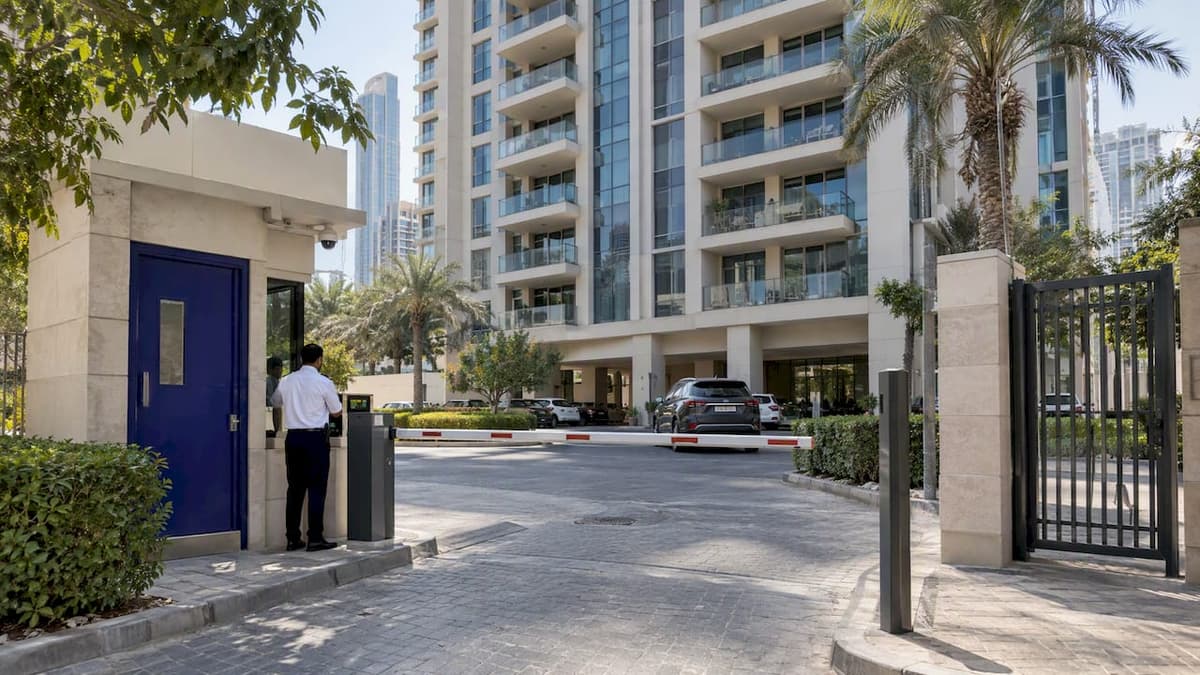

Dubai does not have a single rule on letting your property. It has three layers, and a unit has to pass all of them.
The government sets the holiday-home framework, the master developer sets community rules, and the individual building sets its own conditions.
If you are a UK buyer counting on rental income, the question to ask is not whether short-term letting is legal in Dubai. Ask whether this exact unit, in this exact building, can obtain and keep a permit for the way you plan to let it.
This guide explains how the layers work, where buyers go wrong, and which documents to hold before you pay a deposit. It covers holiday lets (nightly or weekly) and ordinary long-term tenancies. Abbreviations are expanded on first use.
TL;DR
- A holiday-home permit from the Dubai Department of Economy and Tourism (DET) is required before any listing goes live. Owning the unit does not give you the right to let it short term.
- Community rules and building rules can add conditions on top of the permit, including minimum lease terms, occupancy limits, approvals and bans on subleasing.
- Holiday homes must be let as a whole unit. Room-by-room or bed-space income cannot be underwritten.
- An agent saying "Airbnb allowed" is not evidence. Get written confirmation for the exact building and confirm the unit can obtain a current permit.
- Operating without approval carries fines, and the permit has to be renewed every year.
The three layers that decide whether you can let
Most misunderstandings come from treating "Dubai rental rules" as one rulebook. The practical position is layered.
| Layer | Who sets it | What it controls |
|---|---|---|
| 1. Holiday-home regulation | DET (formerly the Department of Tourism and Commerce Marketing) | Whether the activity is authorised in the area, the permit, annual renewal, whole-unit letting, fines |
| 2. Master developer or community rules | The developer or community manager | Use of units, minimum lease terms, occupancy, subleasing, partitioning, notification of leases |
| 3. Building management or owners' association | The building's own governance | Access, common areas, parking, pool and gym use, extra approvals, service charges |
A sales listing, or a permit held by a neighbouring building, does not show that your chosen unit passes every layer. Each has to be checked separately and in writing.
Layer one: the holiday-home permit
DET states that all apartments and villas must be registered and approved by DET before listing. The legal basis is Decree No. 41 of 2013, which regulates the activity of leasing out holiday homes in the Emirate of Dubai and applies to individuals and entities, including special development zones and free zones.
Three points matter to a buyer.
- The area must be authorised. The implementing bylaw, Administrative Resolution No. 1 of 2020, requires the property unit to be in an area where the activity is authorised in coordination with the competent entities. The more recent amended holiday homes guideline says holiday homes may be located in any area of the Emirate, subject to the approvals it sets out and any siting or zoning restrictions imposed by the competent authorities. In other words, there is no blanket list of "allowed" districts that settles your case.
- The permit is not permanent. Under the 2020 bylaw a permit is valid for one year and must be renewed before expiry. A historic permit, a previous owner's approval or a neighbouring unit's permit does not establish that you will be eligible next year.
- The application can be refused. The framework allows technical review, field visits and requests for additional documents, and an application can be rejected. A deposit paid on the strength of a rental projection is therefore exposed if eligibility was never tested.
The fee and fine schedule is set by Executive Council Resolution No. 49 of 2014. It lists AED 2,000 (UAE dirhams) for leasing a holiday home without prior approval. Fines are rarely the largest cost. Lost booking income, a delisted property and disputes with the community manager usually matter more.
Whole-unit letting only
The 2013 decree allows holiday homes to be let by the day, week, month or year, but expressly requires whole-unit letting. The 2014 fines resolution lists AED 500 for leasing separate rooms or bed spaces.
This is a statutory restriction, not a platform preference. If an advertised yield relies on several occupants, partitioned rooms or informal bed spaces, it may describe a prohibited operating model even where the property is freehold and the district looks investor-friendly. Do not underwrite room-by-room income. A shared-accommodation model needs its own regulatory analysis and should never be treated as ordinary holiday-home revenue.
Layer two: community rules
The permit is necessary but not sufficient. Community rules can impose conditions that the permit does not override. The published rules of Dubai Holding Communities are a useful example of what to expect:
- Units may be used only for their approved residential or licensed purpose.
- Occupancy limits must comply with the requirements of the relevant authority.
- Ordinary residential leases have a minimum term of 180 days unless the unit is approved as a holiday home.
- Partitioning, bed-space use and unauthorised short-term letting are prohibited.
- Leases, renewals and terminations must be notified to the community within 14 days.
Those are the rules of one named group of communities, and other master developers will differ. Treat them as a template for the questions you ask, not as a description of every community in Dubai. The pattern to notice is that the community can distinguish between a unit approved as a holiday home and one that is not, so approval status at unit level matters.
Owners also remain responsible for the conduct of tenants and guests. A guest who breaks the pool or parking rules creates a problem for the owner, not just for the guest.
Layer three: the building itself
Within a community, individual towers and villa clusters often have their own management company or owners' association (the body of unit owners that sets and enforces building rules). It can control keys and access cards, guest registration, parking allocation, lift use for luggage, and pool and gym access. It can also charge service charges that you must pay whether or not the unit earns income.

Two buildings next to each other can take opposite positions. One may welcome holiday lets and run a guest reception, while another may restrict them through its own conditions. Marketing material often hides this. Ask for the building's rules in writing, and ask whether there are pending changes or disputes.
Long-term letting is also regulated
Buyers who plan an ordinary annual tenancy face fewer approval hurdles, but not none.
- Registration. A tenancy contract is registered through Ejari, Dubai's tenancy registration system. The Dubai Land Department service page lists AED 100 for registration plus an AED 10 knowledge fee, with other applicable charges shown in the service channel. The process involves submitting the contract and supporting documents and receiving an electronic certificate.
- Contract content. The Dubai Land Department tenancy guide explains the rules, including limits on rent increases at renewal. The unified contract identifies the property, purpose, term, rent, payment method and landlord.
- Tenant obligations. Under the official unified tenancy contract, tenants must comply with management instructions and common-area rules, such as parking, pool and gym requirements. Disputes go to the Rental Dispute Center, and additional conditions that conflict with applicable law do not override it.
- Community notification. Registering in Ejari may not be the only step. Check whether the community requires its own notice, as the 14-day rule above shows.
One point from the Dubai Land Department materials is easy to miss: a landlord cannot simply switch a unit from long-term to short-term use to earn more. If you are buying a unit with a sitting tenant, find out what the tenancy permits and when it ends before you assume you can convert it.
A worked example: testing a yield claim
Suppose an agent shows a UK buyer a one-bedroom apartment and says it "is Airbnb allowed" and earns a strong gross nightly yield. A sensible sequence of questions follows.
- Does the brochure assume the whole unit is let, or are extra beds or a partitioned living area counted? If the latter, the model is not holiday-home income under the decree.
- Does the unit hold, or can it obtain, a current DET permit? Ask for the permit number of any existing operation and check that it matches the unit and owner.
- Does the master developer allow holiday homes in this community, and on what conditions, such as approval, notification or a minimum term for non-holiday leases?
- Does the building's management or owners' association allow it, and what does it charge or restrict?
- Do service charges, guest-registration duties and furnishing requirements still leave the yield attractive once costs are counted?
If the answers to questions two to four are only verbal, the claim is untested. The occupancy and nightly rate assumptions should not even be discussed until the permission question is settled in writing.
What to verify before paying a deposit
A short pre-deposit checklist, in the order we would work through it:
- Title and ownership. Confirm the seller's title and, for off-plan units, the registration position. Our guide to verifying Dubai title deeds covers the Dubai Land Department steps and the risks specific to off-plan registration.
- Payment protection. For off-plan purchases, check how your money is held. See our summary of Dubai escrow law checks.
- Permitted use in writing. Obtain written confirmation from the developer or community manager and the building management covering holiday letting, long-term letting and any approval needed.
- Permit eligibility. Ask whether the unit can obtain a current DET holiday-home permit, and if a permit already exists, when it expires and who holds it.
- Community rules and building rules. Obtain the signed, current versions. Keep them with the sale documents, because a marketing brochure cannot replace the operative rules.
- Occupancy and layout. Check the permitted number of occupants for the unit size and any partitioning in the existing layout.
- Costs. Add service charges, permit-related costs, furnishing and management fees to your model before you compare with UK buy-to-let returns.
- Exit. Ask whether a later buyer would face the same restrictions. A unit that cannot let as a holiday home may be harder to sell to an investor.
If you want to see how individual areas look, our area pages for Dubai Marina, Dubai Hills Estate, Al Furjan and Dubai Islands set out what is known about each. They are a starting point for the questions above, not a substitute for a written answer on your specific unit.
Our perspective
In our reviews of cross-border property purchases, the most expensive mistakes are rarely exotic. They come from a statement accepted at face value. Across the 380-plus property decisions we have reviewed, one in three reviews identified a significant issue that changed the deal. Rental permissions are a recurring theme in Dubai because the sales conversation and the legal position sit with different parties.

The agent knows what other owners in the building are doing. The regulator knows what the permit requires. The community manager knows what the rules say. The buyer usually hears only from the first. Our job is to put the three in one file, with evidence, before capital is committed.
We treat a rental projection as a hypothesis until three things exist on paper: a permit route for the unit, written community and building confirmation, and a yield model that excludes anything the decree does not allow. If one is missing, we say so plainly and we show what the numbers look like without it. We are independent of developers and agents, and that independence is the point.
— Neerraj
How we can help
If you have shortlisted a Dubai unit and rental income is part of the case, our Dubai property due diligence service reviews ownership, developer and counterparty, permits, ongoing obligations and the evidence behind the rental assumptions, and produces a decision file you can act on. The review is buyer-side and independent. You can also see the full range of our before, during and after purchase reviews on our home page. No price is published, so contact us with the unit and the intended use.
Common mistakes by UK buyers
- Assuming UK logic applies. In the UK, letting is generally a matter between owner and tenant plus lender consent. In Dubai a government permit and community rules sit on top, so the owner's wishes are not enough.
- Relying on a neighbour's permit. Permits are unit-specific and expire annually.
- Counting bed spaces. Whole-unit letting is the legal model for holiday homes.
- Ignoring the minimum lease term. Where community rules set a 180-day minimum for ordinary leases unless the unit is approved as a holiday home, a short let without approval breaches the rules.
- Forgetting the exit. Restrictions travel with the unit and affect resale.
- Skipping the paperwork trail. Without the permit evidence and signed rules, you cannot prove your position if a dispute arises.
FAQ’s
Do I need a permit to let my Dubai apartment on a short-term basis?
Yes. DET states that apartments and villas must be registered and approved before listing. Letting nightly or weekly without approval can lead to a fine, listed at AED 2,000 in the 2014 fines resolution, and the permit must be renewed annually.
Can I let individual rooms in my Dubai holiday home?
No. The 2013 decree requires holiday homes to be let as a whole, and the fines schedule lists AED 500 for leasing separate rooms or bed spaces. Community rules may also prohibit partitioning and bed-space use, so do not build a yield model on it.
If the area allows holiday homes, can I be sure my unit will?
No. The area is only one condition. The master developer's rules and the building's own rules can add conditions, and DET can refuse an application after reviewing documents or inspecting the unit. Get written confirmation for the exact building and unit.
Is an Ejari registration the same as a holiday-home permit?
No. Ejari registers a conventional tenancy contract with Dubai Land Department. A holiday home is a separate DET-regulated activity with its own permit. Some communities also require notification of leases within a set period, such as 14 days in the communities managed by Dubai Holding Communities.
Does the 180-day minimum lease apply everywhere in Dubai?
No. It appears in the published rules of Dubai Holding Communities for their communities. Other developers set their own terms, so check the rules for your specific community.
Sources
- DET: Apply for a holiday home permit
- Decree No. 41 of 2013 regulating holiday-home leasing in Dubai
- Administrative Resolution No. 1 of 2020, implementing bylaw
- Executive Council Resolution No. 49 of 2014, holiday-home fees and fines
- Amended Holiday Homes Guideline 2026
- Dubai Holding Communities: Community Rules
- Dubai Land Department: Register or renew a tenancy contract
- Dubai Land Department: Tenancy guide
- Dubai Land Department: Unified tenancy contract

