
Sinking Fund vs Maintenance Fee: UK Buyers’ Section 20 Check
Compare routine service charges with long term reserves, see a five year cost example, and check Section 20 protections before buying UK leasehold property.
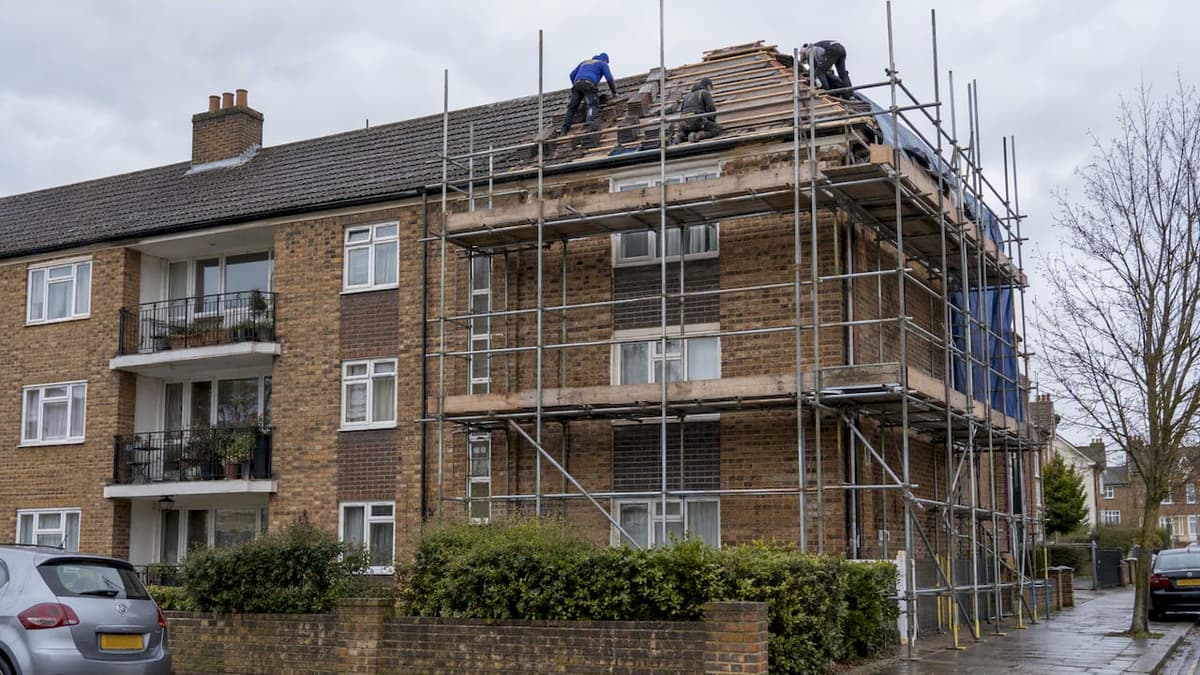

A maintenance or service fee pays for the day-to-day running of a building: cleaning, insurance, utilities for shared areas. A sinking fund is a separate reserve that accumulates money for major capital works such as roof replacement or lift overhauls. Budget for the first as a recurring cost and the second as a long-term buffer that protects you from a sudden, large bill later.
TL;DR:
- Maintenance fees cover shared cleaning, insurance, utilities, minor repairs, and management; ask for unpaid balances because arrears can delay work and raise owners’ risk.
- Compare the reserve balance with a forecast of major work, component age, and replacement timing; a healthy balance alone cannot show whether costs are covered.
- In England and Wales, planned work costing more than £250 per leaseholder triggers Section 20 consultation; request notices and proof of service before buying.
- Review three years of accounts, the reserve balance, forecasts, and meeting minutes at offer stage, while findings can still shape negotiations.
- A £40 monthly reserve contribution adds £2,400 over five years, yet a £1,500 per flat lift share may leave little for other repairs.
1. What maintenance fees actually pay for
A maintenance fee, sometimes called a service charge, covers the ordinary running costs of a building or development. It keeps the lights on in communal corridors, pays the cleaner, settles the buildings insurance premium, and funds small repairs that crop up throughout the year. None of this is glamorous, but skipping it means a building falls apart faster than its structure allows.
Typical items included in a maintenance fee are:
- Cleaning and upkeep of lobbies, stairwells and shared gardens
- Buildings insurance for the common parts of the property
- Utilities for shared spaces, including lighting and lift power
- Minor repairs, such as fixing a broken intercom or a leaking communal tap
- Management or agent fees for administering the building
How these costs are apportioned varies by building and by lease. Some developments split charges per unit regardless of size, others use square metreage, and leasehold schemes often apportion by the percentage share written into each lease. Billing is usually quarterly or annual, set out in a budget the landlord or management company prepares ahead of the charge period.
Collection quality matters more than buyers often assume. A building with persistent arrears tends to defer repairs, which stores up risk for every owner, including you. Before committing to a purchase, it is worth asking how much is currently outstanding in unpaid service charges and how the management company has handled it.
2. What a sinking fund is and why the reserve matters
A sinking fund exists for one purpose: to pay for expensive, infrequent capital works without hitting every owner with a shock bill when the roof needs replacing or the lift finally gives out. Contributions typically build up over years, often as a fixed monthly or annual amount folded into the wider service charge, and are usually non-refundable once paid, even if you sell before the fund is spent, according to Gov.
Capital items commonly funded this way include:
- Roof replacement and major structural repairs
- Lift modernisation or full replacement
- Boiler and heating plant renewal
- External redecoration and fabric repairs, such as render or cladding work
- Car park resurfacing and major landscaping works
Governance varies by building. Some developments run the fund through a residents' management company, others through a professional managing agent reporting to a committee. Whatever the label, the principle is the same: the better funded the reserve, the less likely owners are to face a special levy when something expensive breaks. A thin sinking fund does not make the roof last longer. It just means the bill arrives all at once, usually at the worst possible time.
3. How charges are set and what Section 20 consultation protects
Budgets are usually drawn up by the landlord, managing agent or residents' management company ahead of each charge year, based on anticipated running costs and any known capital works. Charges can rise year on year as insurance premiums, utility costs and contractor rates increase, so a stable fee one year is no guarantee of the next.
For major works, leaseholders in England and Wales have a statutory right to be consulted before significant costs are passed on. GOV.UK sets out the consultation thresholds: planned work costing more than £250 per leaseholder, or a long-term contract costing more than the statutory consultation threshold per leaseholder per year, triggers a formal Section 20 consultation.
The consequence of skipping this step is significant: a tribunal decision confirmed that where the Section 20 procedure is not correctly followed, recoverable costs can be capped at a statutory amount per leaseholder, regardless of what the works actually cost. That cap is a meaningful protection, and it is also a reason to check the paperwork carefully before you buy.
When reviewing a property, ask for:
- Copies of any Section 20 notices issued in the last three years
- Proof of postage or service for those notices
- Minutes from owners' meetings where capital works were discussed
- Contractor estimates that accompanied any consultation
4. Worked example: annual cost and a five-year outlook
Say a flat has an annual service charge of £1,800 and a separate sinking fund contribution of £40 per month, or £480 a year. Total annual outgoing for both charges is £2,280.
- Multiply the monthly sinking contribution by 12: £40 x 12 = £480 a year.
- Add this to the annual service charge: £1,800 + £480 = £2,280 total annual charge.
- Over five years, assuming no increases, total sinking contributions reach £2,400.
- Suppose the building's forecast capital expenditure for a lift replacement in year five is £30,000, split across 20 flats, or £1,500 per flat.
- Against a reserve contribution of only £2,400 per flat over five years, the fund may still fall short once other works are factored in, raising the likelihood of a special levy.
Adapt this by taking your own service charge statement, multiplying the monthly sinking fund figure by 12, and comparing the five-year total against any forecast capital works mentioned in meeting minutes or a reserve study.
5. A practical checklist before you commit
Work through these steps methodically rather than relying on a verbal assurance from a seller or agent.
- Request the last three years' service charge accounts, not just the most recent one.
- Ask for the current sinking fund balance and any forward-looking capital works forecast.
- Obtain copies of Section 20 notices and proof of postage for works carried out in the last three years.
- Review minutes from the last four owners' or committee meetings for mentions of upcoming capital works.
- Check for a pattern of special levies, which often signals a reserve that has been running thin for years.
- Compare year-on-year increases in the service charge against inflation to spot unusual jumps.
Red flags worth noting include repeated special levies, service charge increases well above general cost inflation, and a sinking fund balance that looks small next to any forecast lift, roof or boiler works. Where documents are refused or delayed, treat that reluctance as information in itself.
Pro Tip: Ask the managing agent for written confirmation of the sinking fund balance rather than relying on a verbal figure quoted during a viewing.
6. When professional due diligence on service charges pays off
A buyer-side due diligence review on a property typically checks three things: whether the accounts and sinking fund statements are internally consistent, whether capital cost forecasts look realistic against the building's age and components, and whether consultation procedures such as Section 20 notices were correctly followed.

Reviews of this kind commonly surface governance gaps that are not visible from a viewing or a sales brochure, such as a missed consultation step or a reserve forecast that has not been updated in several years. Findings like these change the negotiation: a buyer who can point to a documented shortfall has grounds to ask for a price adjustment or a retention, rather than discovering the gap after completion.
Timing matters. Reviewing service charge and sinking fund documents at offer stage, or at the latest before exchange, gives you room to act on what you find rather than reading it with regret afterwards.
7. Typical amounts and how to benchmark them
Service charges and sinking fund contributions vary enormously by building age, amenity level and location, which makes a single benchmark figure unreliable on its own. A modest low-rise block with few shared facilities will carry a lighter charge than a high-rise with a lift, concierge and communal heating system, simply because there is more plant and more communal space to maintain.
Rather than anchoring to a single number, compare the property against similar buildings nearby: same era of construction, similar number of units, comparable amenities. Ask the managing agent how the current charge compares to the previous year and the year before that, since a steady upward trend tells you more than a single snapshot.
For the sinking fund specifically, the more useful comparison is not an absolute amount but the relationship between the reserve balance and the forecast cost of known future works. A building with a modest monthly contribution but no major capital items due for a decade may be perfectly well funded, while a building with a higher contribution but an ageing lift due for replacement next year may still be short. Context, not a headline figure, is what tells you whether a charge is reasonable.
8. How these charges affect valuation and resale
A well-documented, adequately funded sinking fund tends to support a smoother resale process, because a buyer's solicitor or due diligence reviewer can see that capital works are planned for rather than left to chance. A thin or poorly documented reserve, by contrast, can slow a sale down, since a cautious buyer may ask for evidence of future capital costs before proceeding, or may simply walk away.
Outstanding arrears or a recent special levy are particularly material at resale. A seller with unpaid charges typically has to settle them before completion, and a buyer who inherits a schedule showing a recent large levy may reasonably price that risk into their offer, since it signals either a historically underfunded reserve or unexpected capital expenditure that could recur.
High service charges relative to comparable buildings nearby can also dampen demand, even where the building itself is well maintained, simply because ongoing cost is part of what a buyer weighs against purchase price. None of this means charges should be minimised for their own sake. A building that invests properly in its fabric tends to hold its value better over the long run than one that defers maintenance to keep charges artificially low.
9. How practices differ across international property markets
Buyers purchasing across borders should expect the terminology and legal protections around sinking funds and service charges to differ by market, even where the underlying principle, a reserve for capital works funded alongside routine running costs, stays broadly similar.
In England and Wales, the framework is shaped by statutory leasehold rights and the Section 20 consultation process described earlier, which gives leaseholders a formal say before major costs are passed on. Other markets structure these protections differently, with condominium or strata schemes often governed by their own management committees and local property law rather than a leasehold consultation regime.
For buyers considering property in Thailand, Dubai or India, the practical lesson is the same even where the legal detail changes: ask who holds the reserve fund, how it is governed, and what rights you have if consultation or disclosure falls short of what the documents promise. Local counsel familiar with the specific market remains the right source for the legal detail itself, since the rules governing capital works reserves are not interchangeable between jurisdictions.
10. Tax implications worth understanding
For owner-occupiers, contributions to a maintenance fee or sinking fund are generally a cost of ownership rather than a tax-deductible expense, since they relate to a private residence rather than an income-generating activity. Landlords letting a property are in a different position: running costs charged through a service charge are often treated as an allowable expense against rental income, while contributions to a sinking fund for capital works may be treated differently, since they relate to improving or replacing capital assets rather than day-to-day running costs.
This distinction between revenue and capital expenditure matters because it affects what can be set against rental income in the year it is paid, versus what may only be relevant when the property is eventually sold. Because tax treatment depends on your personal circumstances, the property's use and the jurisdiction involved, this is an area where generic guidance only goes so far. A qualified accountant or tax adviser familiar with property income in your specific situation is the right source for a definitive answer, particularly for landlords managing multiple units or cross-border ownership structures.
11. Verifying sinking fund adequacy before you buy
Checking whether a sinking fund is genuinely adequate takes more than glancing at a balance on a statement. Start by asking whether the fund is backed by a reserve forecast, a document that ties the expected lifespan of major components, such as the roof, lift or boiler, to a projected replacement cost and timeline. A building with no such forecast is harder to assess with confidence, because a healthy-looking balance today tells you little about what is due in three years.
Cross-check the balance against the age of the building and its major systems. A 30-year-old building with an ageing lift and no lift replacement line in its forecast is a different risk profile to a five-year-old development where most major components are still under warranty. Maintenance items tied to building safety and security systems, such as access control and alarm systems, also carry their own servicing schedules; guidance on access control maintenance illustrates how these systems require planned upkeep to meet safety standards, which is a useful reminder that not every recurring cost sits neatly inside either the maintenance fee or the sinking fund.
Finally, look at how the fund is governed. A committee or managing agent that holds regular meetings, documents decisions and issues timely consultation notices is a stronger signal of competent management than a fund that simply accumulates with no visible oversight.

What the research gets wrong about this question
Most guidance on sinking funds and maintenance fees treats the distinction as the whole answer: learn the definitions, check the balance, move on. That misses the more useful question, which is not what each charge is called but how well it is governed. A building with a modest sinking fund and a disciplined, well-documented reserve forecast is a safer bet than one with a larger fund and no paper trail behind it.
The conventional advice to "ask about the sinking fund balance" also undersells how much weight sits in the consultation paperwork. A Section 20 breach does not just cap what a landlord can recover. It tells you something about how carefully the building is run day to day, which is worth more than the number on the statement.
If you take one thing from this, prioritise governance evidence over headline figures: ask for the forecast, the notices and the minutes before you ask for the balance. The balance without the paper trail is a number with no context attached.
— Neerraj
Get a clear picture before you commit to a purchase
Sinking fund statements and service charge accounts rarely come with an explanation of what they actually mean for your purchase. We offer a due diligence service that reviews the documents behind the numbers: consultation notices, reserve forecasts, meeting minutes and arrears history, so you know whether a charge reflects sound management or a problem waiting to surface after completion.

We work independently of developers, agents and sellers, which means our findings reflect what the paperwork actually shows rather than what a sales conversation implies. For buyers purchasing in Thailand, our Thailand Property Due Diligence service applies the same approach to the market's own service charge and reserve conventions, and our Residential Property Due Diligence page sets out how a review is scoped more broadly. Start with an enquiry through our due diligence services to find out what a review of your specific property would cover.
FAQ
Is a sinking fund the same as a maintenance fee?
No, they cover different things. A maintenance or service fee pays for routine running costs such as cleaning, insurance and minor repairs, while a sinking fund is a separate reserve built up specifically for major capital works such as roof or lift replacement.
What are the disadvantages of a sinking fund?
Contributions are usually non-refundable, even if you sell the property before the fund is spent on works, according to GOV.UK guidance. A poorly managed or underfunded sinking fund can also still leave you exposed to a special levy if the reserve forecast has not kept pace with the building's actual capital needs.
Can I refuse to pay a sinking fund contribution?
Generally no, if the contribution is a term of your lease or ownership agreement, since it forms part of the charges you are contractually obliged to pay. Disputing a specific charge is different from refusing to pay altogether, and leaseholders have a right to challenge unreasonable costs rather than simply withholding payment.
What is a sinking fund fee?
A sinking fund fee is the regular contribution, often monthly or annual, that an owner pays into the reserve fund for future capital works. It sits alongside the maintenance or service fee rather than replacing it, and both typically appear on the same service charge statement.

