
Decennial Liability in the UAE: What Property Buyers Should Know
Decennial liability in the UAE explained for UK buyers: who is liable, the 10-year period, the 2026 Civil Code changes, insurance and what to verify.
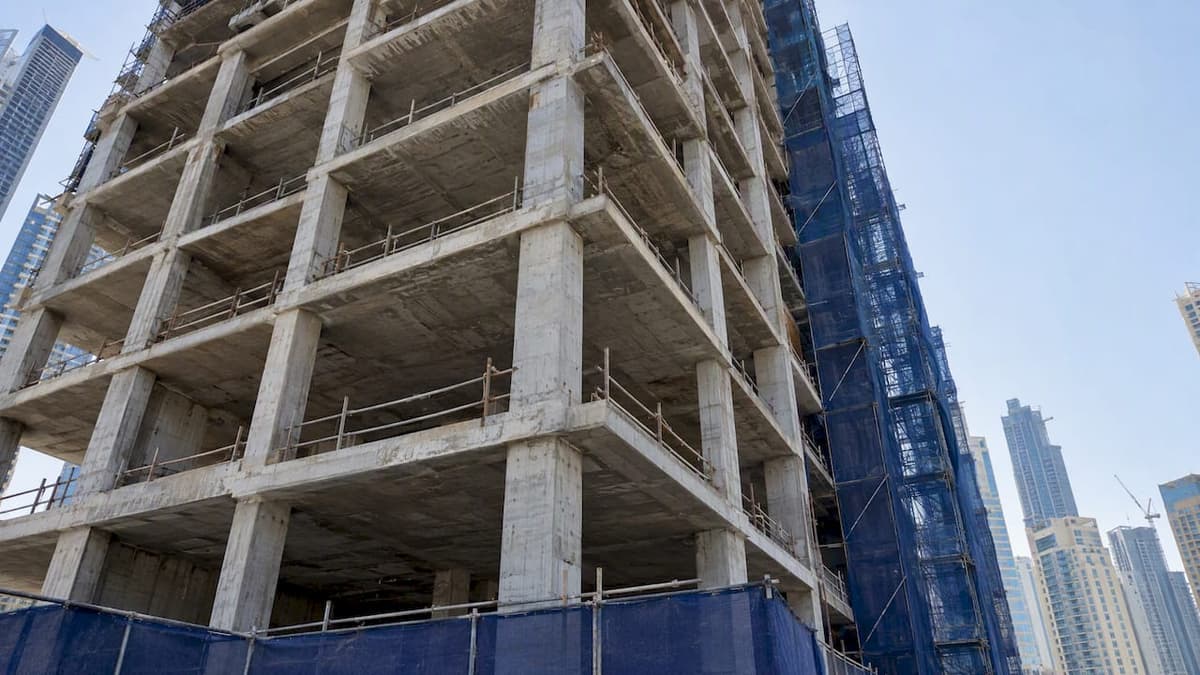

Decennial liability is a mandatory ten-year obligation under United Arab Emirates (UAE) law. It makes the main contractor and the supervising engineer answerable for serious structural defects in a building, whether or not anyone was negligent. Since 1 June 2026 it sits in Articles 821 to 824 of the new Civil Code. For a UK buyer of UAE property, the useful question is not only what the rule says, but whether it actually protects you as a later purchaser. That depends on documents you can check before you pay.
TL;DR
- Decennial liability is a strict, ten-year statutory liability of the main contractor and supervising engineer for collapse or defects that threaten a structure's stability or safety.
- The new Civil Code (Federal Decree-Law No. 25 of 2025) took effect on 1 June 2026 and keeps the core regime, now in Articles 821 to 824.
- Contracts cannot exclude or limit it, but a buyer's own right to benefit from it often depends on assignment or the terms of the sale.
- Insurance designed for this risk exists, but is generally not a legal requirement and standard policies may not respond.
- Before committing capital, ask for the completion date, the named contractor and engineer, and any insurance or assignment documents.
What decennial liability means
The word "decennial" simply means ten years. In UAE construction law, it describes a statutory warranty imposed on the parties who built and supervised a building or fixed installation. Charles Russell Speechlys describes the regime as strict, joint and several liability of the main contractor and the supervising engineer for any total or partial collapse, or for any defect that threatens structural stability or safety.
Three features matter for a buyer.
- It is strict. The claimant does not have to prove negligence, mistake or fault. This is what separates it from an ordinary common-law construction claim, where a claimant normally has to show a breach of contract or a failure of care. Commentary from Chambers treats it as an unusually strict construction risk for that reason.
- It is joint and several. Both the contractor and the engineer can be pursued for the whole loss, and they then sort out their shares between themselves.
- It is mandatory. Parties cannot contract out of it. More on that below.
It is not a general defects warranty. Cosmetic problems, poor finishes, leaking taps or a failing air conditioning unit are not what it is about. It concerns the solidity and safety of the structure itself.
Which law applies now: the 2026 Civil Code
Federal Decree-Law No. 25 of 2025 repealed Federal Law No. 5 of 1985 and came into force on 1 June 2026. Decennial liability moved with it. Reported commentary places the current provisions at Articles 821 to 824, replacing the former Articles 880 to 883 of the 1985 Code.
Two practical points follow.
- Check which article numbers a document cites. A sales brochure, a contract or an older legal note that refers to Articles 880 to 883 is quoting the previous Code. The same commentary advises checking article numbers against the contract's date and the transitional rules, because a project contracted before June 2026 may raise a question about which version applies.
- The core regime is largely preserved. According to Charles Russell Speechlys, the new Code keeps the central scheme and clarifies that strict decennial liability does not apply between a main contractor and its subcontractors.
That last clarification affects who ultimately pays. The Kennedys analysis of the 2026 Code explains that recovery against subcontractors is preserved but is not itself strict. That creates timing and evidence risk for contractors and their insurers. For a buyer, it is a reminder that the party you can claim against is the main contractor or engineer, and their ability to pay matters as much as the legal right.
What triggers a claim, and what does not
The regime is triggered by total or partial collapse, or by defects threatening the solidity or safety of the structure. The stated exception is where the parties intended the structure to stand for less than ten years, for example a temporary building.
In practice, this means the following distinctions.
| Situation | Likely within decennial liability? |
|---|---|
| Partial collapse of a balcony or slab | Yes, if it is a structural collapse |
| Cracking that indicates a threat to structural stability | Potentially, subject to expert evidence |
| Defective foundations or load-bearing elements | Potentially |
| Cosmetic snags, paint, tiling, joinery | No, a matter for the ordinary defects period and the contract |
| Mechanical and electrical faults that do not threaten the structure | Generally no |
| Temporary structure intended to stand under ten years | Excluded |
The boundary between a structural threat and an ordinary defect is a question of technical evidence, so a qualified engineer's report is usually the first document needed. The table is a guide to how the categories are normally understood, not a legal opinion on any particular building.
The ten-year period and the three-year claim window
The ten-year warranty period begins when the employer takes delivery of the works. An action must be brought within three years of the collapse or the discovery of the defect, where that event falls within the ten-year period. Charles Russell Speechlys reports the same rule.
The two clocks work together:
- The ten years is the window in which the collapse or defect must occur or be discovered.
- The three years is the time to sue once it has occurred or been discovered.
A worked example. Handover to the developer takes place in a given year. A structural defect is discovered in year nine. The claim must still be brought within three years of discovery, even though that runs beyond year ten. A defect discovered in year eleven falls outside the regime.
Note the starting point: delivery to the employer, not the date you bought. If you purchase a resale unit in a building handed over six years ago, you inherit only four years of the ten. Buyers often assume the clock restarts with their purchase. It does not. This is why the handover or completion date belongs on your verification list.

Can a contract exclude it? Choice of law and exclusion clauses
No. Any agreement seeking to exempt or limit the contractor's or engineer's liability is void, and the Civil Code prohibits contracting out of or limiting it. Reported commentary indicates the 2026 Code preserves this anti-exclusion rule.
For an international buyer, this has a notable consequence. A foreign-law clause in a construction contract does not necessarily displace it: one analysis notes that decennial liability can overrule a foreign choice of law where the liability exists by law in the country where the site is located. A contract governed by English law for a UAE building does not remove the UAE statutory duty.
What the anti-exclusion rule does not do is guarantee that the duty reaches you. That depends on who the duty is owed to, which is the next point.
Does it protect a later buyer?
This is the question that matters most to the readers of this site, and the answer is less comfortable than the headline rule suggests. The primary duty is owed to the employer, usually the developer. According to HFW, subsequent buyers' rights to benefit from it remain complex and often depend on the specific assignment of rights or contractual arrangements in the property purchase.
So a buyer should not rely on the existence of the statute alone. Ask these questions:
- Is the buyer, or the owners' association, given a right to enforce the developer's rights against the contractor and engineer?
- Does the sale and purchase agreement refer to assignment of warranties?
- For a unit in a jointly owned building, who acts for owners if a structural claim arises? Our guide to strata law in Dubai explains how jointly owned property is governed.
- Is the developer still trading, and is the contractor financially able to meet a claim?
If the answers are vague, treat the ten-year warranty as unproven protection rather than an asset.
Insurance: what it covers and what it does not
Decennial liability insurance is specifically designed to cover this risk, but there is generally no legal requirement in the region to take out the cover. The same source notes that standard forms, such as Professional Indemnity (PI) or Contractors' All Risk (CAR) policies, are typically not designed to cover the statutory risk, and that specialist cover is often expensive and rare in the region. Simmons & Simmons similarly notes that decennial insurance guarantees the cost of repairs for structural defects, and that ordinary CAR and PI policies may not give sufficient cover.
Insurance does not replace the statutory liability. It sits behind it, and gives a claimant a solvent party to recover from. Whether a particular project carries it is a fact to establish, not assume. Rules and market practice may differ by emirate and project, and may have moved since those commentaries were written, so ask for the policy schedule or written confirmation that none exists.
If a policy is offered, check:
- The named insured and whether subsequent owners or the owners' association are beneficiaries.
- The policy period, and whether it runs for the full ten years from handover.
- The insurer's identity and the defined scope of structural cover.
- Exclusions, limits and any required maintenance conditions.
Onshore UAE, DIFC and ADGM
A UK investor should distinguish onshore UAE, governed by federal and emirate laws, from the Dubai International Financial Centre (DIFC) and Abu Dhabi Global Market (ADGM), which have their own civil laws and court systems, as Chambers sets out. Most residential property sits onshore, but a contract's dispute clause may point to a different forum. Identify where the building is, which courts would hear a structural claim, and whether the contract's arbitration or court clause is consistent with that.
Other rights the new law gives employers
The new law also allows a client to hire a third-party contractor to finish or fix defective work at the original contractor's cost if the contractor does not respond to a repair request. Separately, contractors and engineers hold a special priority right over buildings they built or repaired, to the extent their work increased the property's value, and it must be registered in the land registry to be valid against others (same source). For a buyer, the second point is a reason to check the title record for registered claims before paying, which our guide to verifying Dubai title deeds walks through.
What to verify before paying a deposit
A practical checklist for a UK buyer of an off-plan or completed UAE property:
- Completion or handover date. It fixes the start of the ten years. Ask for the completion certificate.
- Named main contractor and supervising engineer. Confirm they are identified, that they still exist and that they are not a thinly capitalised special-purpose entity.
- Assignment or benefit of warranties. Read the sale and purchase agreement for any transfer of the developer's rights, or for the owners' association's rights.
- Insurance documents. Request any decennial policy, its schedule, period and beneficiaries.
- Structural or technical report. For a resale unit, commission an independent engineer's survey, especially if the building is several years old.
- Title and registered claims. Check the land registry position and any registered priority rights.
- Escrow and payment protection for off-plan. Our note on Dubai escrow law explains the investor checks that sit alongside structural assurance.
- Governing law and forum. Establish whether the property is onshore, or in DIFC or ADGM, and where disputes would be heard.
- Document dates against the Code. Confirm which Civil Code version the contract and any legal advice refer to.
The wider context, including recent legal changes, is covered in Dubai real estate laws and key updates for buyers.
Our perspective
Buyers tend to meet decennial liability as a comforting line in a sales presentation: ten years of protection, imposed by law. We read it differently. The statute is strong, but it protects a specific party, for a specific period, against solvent defendants. A buyer needs evidence of all three before the line has any value.
In our work as an independent, buyer-side reviewer, we have reviewed over 380 property decisions, and one in three reviews identified significant issues that changed the deal. The pattern is consistent: the risk is rarely a missing law, but a missing document. A handover date nobody can evidence, a contractor nobody can identify, or a warranty nobody assigned.
Our advice is plain. Treat statutory protection as the starting point of the question, not the end of it. Ask who owes the duty, to whom, from when, and who stands behind it. If the seller cannot answer in writing before you pay, that is itself a finding.
— Neerraj
How we can help
If you have shortlisted a UAE property and want the structural, ownership and developer claims tested before you commit funds, our independent Before Buying property due diligence review produces an evidence-based decision file for the specific property. It covers ownership rights, developer and counterparty assessment, regulatory and permit checks, and ongoing obligations. Our Dubai property due diligence service sets out how that works for freehold purchases.

If you have already signed, our During Buying Property Due Diligence review looks at the contract and conditions before the next payment falls due. For wider reading, see our market insights.
FAQ
How long does decennial liability last in the UAE?
The warranty period is ten years from the date the employer takes delivery of the works. A claim must be brought within three years of the collapse or discovery of the defect, provided that event falls within the ten years. The clock does not restart when a later buyer purchases.
Do I have to prove the contractor was negligent?
No. It is a form of strict liability, so claimants do not need to prove negligence or fault. The main contractor and the supervising engineer are jointly and severally liable for collapse or defects threatening structural stability or safety.
Can a developer's contract exclude decennial liability?
No. Agreements that seek to exempt or limit the contractor's or engineer's liability are void, and the rule is reported to be preserved under the 2026 Civil Code. A foreign governing law clause does not necessarily remove it for a building located in the UAE.
Does decennial insurance have to be in place?
Generally there is no legal requirement in the region to take out the cover, and standard PI or CAR policies may not respond to this risk. Ask the seller for the policy schedule, or for written confirmation that none exists. Requirements may differ by project, so confirm the position for your building.
Does decennial liability protect someone who buys a resale unit?
Not automatically. The primary duty is owed to the employer, and a later buyer's right to benefit often depends on assignment of rights or the terms of the purchase. Have the sale documents reviewed by a UAE-qualified lawyer before you pay.
Sources
- Construction and Decennial Liability Under the New UAE Civil Code, Al Maazmi Lawyers
- UAE Civil Transactions Law 2025, Book One, UAE Legal Notes
- UAE Civil Code Renumbering for Construction, Kayrouz and Associates
- Decennial Liability and Subcontractors under the New UAE Civil Code, Charles Russell Speechlys
- UAE Civil Code 2026: Decennial liability and subcontractors, Kennedys
- Construction, UAE, Chambers Global Practice Guide
- Decennial Liability Insurance, HFW
- Decennial liability in the Middle East: What is it and does insurance cover it, Charles Russell Speechlys
- Mandatory decennial liability insurance in the UAE, Simmons & Simmons
- An Overview of Construction Disputes in the UAE, JD Supra

