
Dubai Chiller Charges: What Owners and Tenants Really Pay
How Dubai chiller charges work: capacity and consumption fees, deposits, who pays under the lease, and what UK buyers should verify before committing to a unit.
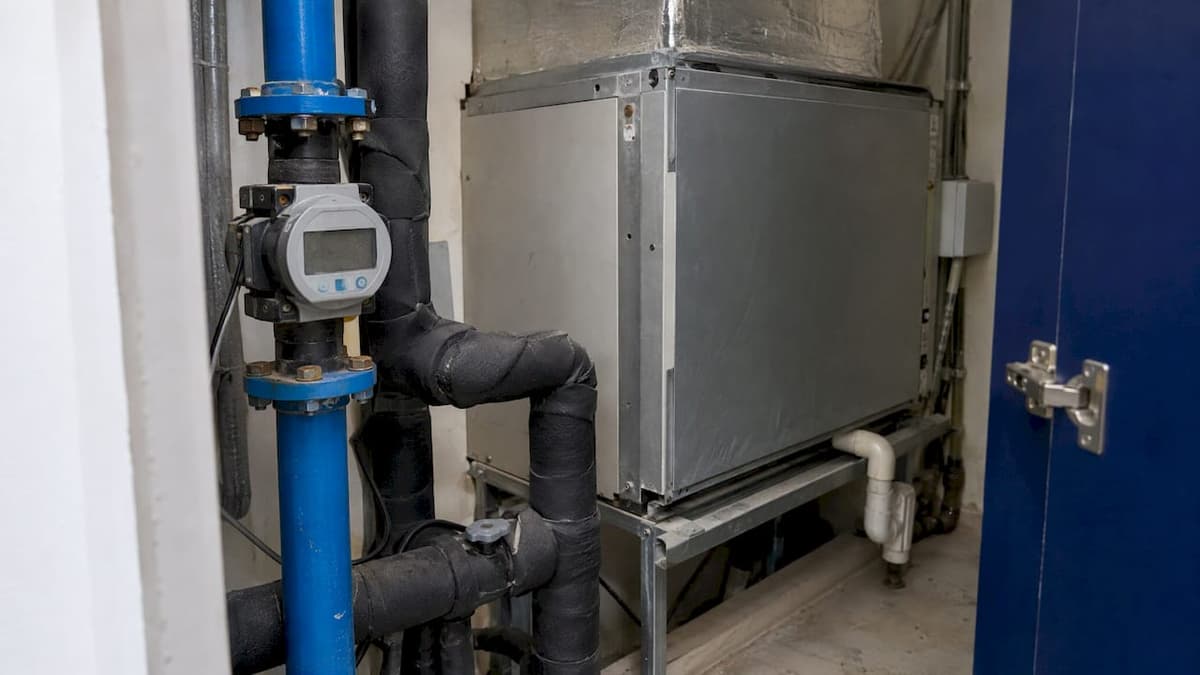

Chiller charges are the cost of air conditioning in a Dubai building cooled by a central district cooling plant. They are billed by the cooling provider, not by the Dubai Electricity and Water Authority (DEWA). They have two parts: a fixed capacity charge you pay whether or not the flat is occupied, and a consumption charge that follows your meter. For a UK buyer, the question is who carries each part, and whether the numbers in the listing include them.
TL;DR
- Chiller charges are a separate bill from the district cooling provider (for example Empower or Emicool), on top of DEWA electricity and water.
- The bill has a fixed capacity charge, a variable consumption charge, a meter and fuel element, and 5% value added tax (VAT).
- The capacity charge continues when a unit is empty, so owners of vacant or part-year properties still pay it.
- "Chiller-free" is advertising shorthand: the landlord covers cooling, the rent is usually higher, and electricity is still billed separately.
- Before paying a deposit, get the cooling clause, provider account details and 12 months of bills in writing.
What chiller charges are and how they differ from DEWA bills
In many Dubai towers a central plant chills water and pipes it to each building. Your flat has a meter and fan coil units rather than a compressor. The occupant is billed by the cooling provider, such as Empower, Emicool or Tabreed, separately from DEWA. Cooling is measured in refrigeration ton-hours (RTh), while DEWA measures electricity in kilowatt-hours (kWh).
So a district-cooled flat typically produces two utility relationships: a DEWA account for electricity and water, and a provider account for cooling. In a building with individual split air conditioning, there is no chiller bill, but the compressors sit on your DEWA meter and the electricity bill rises.
Most newer, popular communities use district cooling. Gulf News reports that this includes Jumeirah Village Circle, Motor City, Dubai Investments Park, Dubai Sports City, Discovery Gardens, Downtown Dubai, Business Bay, Jumeirah Beach Residence and Jumeirah Lakes Towers, with chiller-free options comparatively limited. If you are shortlisting in those areas, assume a cooling bill exists until the documents say otherwise.

How the district cooling bill is calculated
The formulas are set out in the Regulation and Supervision Bureau (RSB) Dubai's district cooling tariff regulation, issued under Executive Council Resolution 6 of 2021. There are two core charges.
Capacity charge
The capacity charge is the capacity tariff multiplied by the contracted capacity. The tariff is normally quoted in dirhams (AED, the UAE dirham) per year for each refrigeration ton (RT) of cooling made available to the unit. Emicool explains that this is an annual fee divided into 12 monthly payments, payable regardless of connection or consumption.
This matters for owners. The capacity charge pays for infrastructure reserved for your unit, not for cooling used. Daikin MEA notes that an owner who leaves a property empty over summer still pays for the capacity allocated to it.
Consumption charge
The consumption charge is the consumption tariff multiplied by the RTh your meter records, normally calculated monthly. Under the RSB regulation, where a capacity tariff also applies, the consumption tariff is capped at AED 0.643 per RTh including the fuel surcharge, and the fuel surcharge itself is capped at AED 0.075 per RTh.
Fuel surcharge, meter fees and VAT
Emicool states that the fuel surcharge is set monthly from DEWA's published tariff and passed on by the provider. Daikin MEA adds that a meter maintenance fee and 5% VAT sit on top of the two main charges. When you read a sample bill, look for each of these lines.
A worked example with Empower's reference rates
Empower's published reference rates are AED 750 per RT per year for capacity and AED 0.568 per RTh for consumption. Some coverage writes the consumption rate as "0.568 fils", but the correct unit is dirhams. Rates change, so treat the figures below as an illustration of method, not a quote for any building.
Take a unit with 6 RT of contracted capacity:
| Item | Working | Result |
|---|---|---|
| Annual capacity charge | 6 RT × AED 750 | AED 4,500 per year |
| Monthly capacity charge (average) | AED 4,500 ÷ 12 | AED 375 |
| Consumption in a hot month (illustrative 1,500 RTh) | 1,500 × AED 0.568 | AED 852 |
| Subtotal before fuel surcharge and meter fee | AED 375 + AED 852 | AED 1,227 |
| VAT at 5% | AED 1,227 × 0.05 | AED 61.35 |
The 1,500 RTh figure is our own assumption to show the arithmetic. Your actual consumption depends on the unit size, orientation, insulation and how you run the air conditioning. Bayora observes that setting the flat to 19 degrees with a balcony door open pushes consumption up, while a setting around 24 degrees lowers it. The fixed element, by contrast, is the same in January and August.
Deposits and set-up fees
Chiller deposits sit with the provider, not DEWA. For DEWA, the refundable deposit for electricity and water is AED 2,000 for an apartment and AED 4,000 for a villa, with a one-off AED 130 activation fee. The chiller account has its own deposit and connection charge.
Emicool, for example, uses a deposit of eight months of the capacity charge, plus a one-time activation fee and a one-time connection charge on first connection. On the 6 RT example above, eight months of capacity at AED 375 would be AED 3,000. That is our arithmetic on illustrative rates, not an Emicool quotation. Empower shows its deposit figure during registration. Ask the agent which provider serves the building and open the account page before you plan your move-in cash.
What "chiller-free" means
"Chiller-free" is not a type of cooling system. It describes how the cost is allocated. Gulf News explains that the landlord covers the cooling cost, the tenant receives no separate cooling bill, and electricity and water are still paid separately.
The same article gives a simple comparison. Apartment A has district cooling at AED 70,000 a year in rent plus separate cooling bills. Apartment B is chiller-free at AED 74,000 a year with cooling included. The difference is how cooling is billed, not automatically the cost.
For an investor, the term has a second meaning. A chiller-free unit may rent at a premium, so your yield depends on whether the premium covers the cooling you carry. A district-cooled unit may rent at a lower headline figure, with the tenant paying cooling directly. Either way, your net return is not the same as the advertised gross figure. Our Dubai rental yield calculator is designed to test returns after costs and tax.
If you want a general framework for comparing air conditioning running costs when cooling is included in rent versus billed separately, the same logic applies: compare total annual cost, not one line.

Who pays: owner, tenant and the lease
The default depends on what is being billed.
- Common-area cooling: under Dubai Law No. 6 of 2019, Article 16(b), the owner is liable for service and usage charges, including chiller charges for common areas, unless the lease states otherwise.
- In-unit cooling billed directly: typically a personal utility paid by the occupant, often the tenant.
- Capacity charge: it accrues against the property whoever lives there, so it is in principle an ownership cost. Landlords may pass it on, provided the tenancy contract says so clearly.
The practical point: the signed tenancy contract decides. In the Dubai Land Department (DLD) unified tenancy contract, extra cooling terms usually appear in the Additional Terms section. A verbal "chiller is included" counts for nothing until it is written there.
For owners buying to let, this connects to wider running costs. Service charges are set per building and can change the numbers. Our guide to using Mollak to avoid service charge surprises covers how those charges are published, and the explanation of strata law in Dubai shows how jointly owned property costs are allocated.
Checklist before you pay a deposit
Whether you are buying to live in, to let, or both, verify the following before committing capital.
- Identify the cooling arrangement. Ask the landlord or agent whether the building uses district cooling, and get written confirmation. Daikin MEA notes that a tenancy contract for a district-cooled building will typically name the provider.
- Name the provider and the account holder. Who is the named cooling customer: owner, tenant or the landlord's company?
- Request the tariff. Ask for the capacity tariff in AED per RT per year, the consumption tariff per RTh, and the contracted capacity for the unit.
- Ask for 12 months of bills. Summer and winter figures show the real range. Compare them with the tariff, not with a single quoted average.
- Check what "included" covers. PropertyStellar advises confirming whether both capacity and consumption charges are included, whether the tenant must open an account or pay a deposit, whether the promise lasts for the full lease and renewals, and whether any usage cap or separate fee applies.
- Confirm outstanding balances. Ask for proof that the cooling account is paid up before transfer, so you do not inherit arrears.
- Read the lease clause. Make sure the cooling terms are in the signed document. Treat anything verbal as unconfirmed.
- Model the electricity side. DEWA's residential slab tariff is progressive: AED 0.230 per kWh up to 2,000 kWh, AED 0.280 from 2,001 to 4,000 kWh, AED 0.320 from 4,001 to 6,000 kWh and AED 0.380 above that, plus a fuel surcharge of AED 0.060 per kWh and 5% VAT. In a split-AC building, cooling lands here.
If you intend to let the property, also check that your plans are permitted. Our note on rental restrictions in Dubai communities explains why that should be confirmed before you buy.
Perspective
Chiller charges rarely decide a purchase on their own. They matter because they are a pattern: a recurring cost that is easy to overlook in a sales presentation and expensive to discover after completion.In our experience of buyer-side due diligence, the useful question is not "is cooling cheap here?" but "what does the document trail say?" We want to see the provider, the contracted capacity, the tariff, the account status and the lease clause side by side, so the owner's net figure is built from evidence rather than from an agent's average.
That is how we approach every cross-border purchase. We have reviewed over 380 property decisions, and one in three reviews identified significant deal-changing issues. A cooling clause is seldom the whole story, but it is often the first sign of whether the rest of the numbers have been tested.
For UK buyers who cannot visit the building, we think independence matters most. Our review is built around the buyer's interests, not the developer's or the agent's.
Neerraj
Questions to put to an agent in plain terms
A short script helps when you are dealing with a seller remotely:
- "Which company supplies cooling to this building, and is the account in the owner's or tenant's name?"
- "What is the contracted capacity in refrigeration tons for this unit?"
- "Can you send the last 12 months of cooling invoices and the current DEWA bills?"
- "Does the current tenancy contract say who pays the capacity charge, and does that continue on renewal?"
- "Is any cooling deposit held by the provider, and who is entitled to it on transfer?"
If the answers arrive in writing and the documents agree, you can model the net yield with confidence. If they do not, that is information about the transaction. For the wider cost picture at purchase, see our guide to Dubai property transfer fees for UK buyers, and for tenancy renewals the explanation of the Dubai rent cap.
Have the numbers checked before you commit
If you are weighing a specific Dubai unit, we review it for you as a buyer: ownership, the developer or seller, ongoing obligations such as service and cooling charges, and the gaps in the evidence. The result is a structured decision file, coordinated by legal, technical and market specialists. You can read about our residential property due diligence or start from the Nitarya home page.

We offer reviews before, during and after a purchase, so the same checks can apply whether you have only shortlisted a property or have already reserved one.
FAQ
Who bills chiller charges in Dubai?
The district cooling provider bills them, for example Empower, Emicool or Tabreed, not DEWA. DEWA continues to bill electricity and water. Your tenancy contract or ownership documents should name the provider for your building.
Do I pay chiller charges when the flat is empty?
Yes, the fixed capacity element is billed monthly whether or not the air conditioning runs. It pays for the infrastructure reserved for your unit. Only the consumption charge falls when you use less cooling.
Does chiller-free mean I pay nothing for air conditioning?
No. It generally means the landlord covers the cooling charge, so you receive no separate cooling bill. You still pay electricity and water, and the rent is often higher to reflect the included cooling. Confirm exactly what is covered in the signed contract.
What should I ask for before signing a tenancy or buying?
Ask for written confirmation of the cooling arrangement, the provider and account holder, the tariff and contracted capacity, and 12 months of invoices. Check the tenancy contract's additional terms for who pays what, and whether this continues on renewal.
Sources
- District cooling tariff regulation, RSB Dubai
- DEWA slab tariff
- Emicool FAQs
- Gulf News: district cooling vs chiller-free
- Daikin MEA: why Dubai buildings use district cooling
- Bayora: district cooling vs DEWA
- Chiller Fees Dubai: district cooling vs split-AC costs
- Chiller charges in Dubai: deposit, fees and bills
- Dubai service charge disputes: rights and resolution
- Chiller free meaning in Dubai: who pays for AC?
- Klimaanlage Kosten Wohnung

