
EIA Approval in Thailand: What UK Buyers Must Verify
What Environmental Impact Assessment (EIA) approval means for Thai condos and villas, which projects need it, and how UK buyers can check it before paying a deposit.
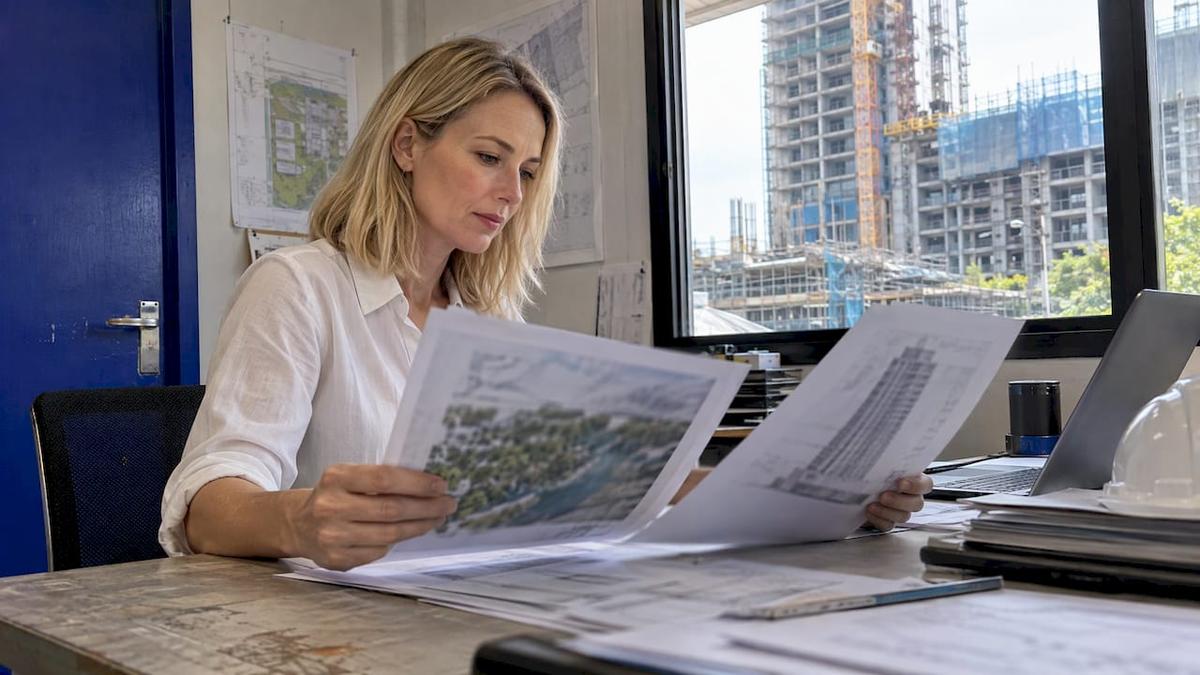

Environmental Impact Assessment (EIA) approval in Thailand is a regulatory clearance of a development's environmental study. It is not a building permit, a title deed or a guarantee that the project will be finished. If a Thai developer advertises "EIA approved", you can check the claim yourself on the public database run by the Office of Natural Resources and Environmental Policy and Planning (ONEP), then match the record to the exact project, company and building specification before any money moves.
This guide is written for UK buyers looking at off-plan or newly built condominiums, resort-style villas and larger residential schemes in places such as Bangkok and Phuket. It explains what the approval covers, which projects need one, how to search the record, and what to do when the record is missing or does not match.
TL;DR
- EIA approval confirms that an environmental assessment passed official review. It does not prove that every other permission exists, that the developer is solvent or that your unit will be delivered as sold.
- Large residential projects, including condominiums with 80 units or more or 4,000 square metres of usable area, fall within the categories that need an EIA.
- You can search approved reports on ONEP's public database, but you must match the project name, developer, location and approval reference to the documents you are given.
- If the EIA is pending, missing or cannot be matched, pause before paying more than a refundable deposit and take Thai legal advice.
- Treat the EIA as one line in a wider file that also covers permits, title, quota and the developer.
What EIA approval actually means in Thailand
The EIA regime sits under the Enhancement and Conservation of National Environmental Quality Act B.E. 2535 (1992), as amended by the Act B.E. 2561 (2018), and ONEP provides the review service. (B.E. stands for Buddhist Era, the calendar used in Thai legislation. B.E. 2535 is 1992 and B.E. 2561 is 2018.)
In practice, the developer commissions a licensed specialist to study the likely environmental effects of the project, such as traffic, drainage, noise, waste and effects on neighbours. The study sets out mitigation measures, and the authorities review it. ONEP's consumer guidance says the report is prepared by a person licensed by ONEP for EIA work. It also says the process takes roughly six months, and that a developer whose report is not approved must correct the issues until the project is approved. A Thai law firm describes the assessment as a study with public participation that forecasts negative and positive effects and sets mitigation measures.
For a buyer, the useful reading is narrow. An approved EIA tells you that the environmental review of a described project, on a described site, by a named owner, has been completed. It does not tell you:
- that a construction permit has been issued;
- that the land title is clean;
- that the developer can finance the build;
- that foreign ownership of your unit fits within the legal quota;
- that the building as constructed matches the approved design.
Each of those needs its own check. Our guide to the building permit check in Thailand covers the construction side, and the 49% foreign quota guide covers ownership.
Which Thai property projects need an EIA
Not every property needs one. Small villas, individual houses and modest low-rise buildings usually fall below the thresholds, so the absence of an EIA is not automatically a warning sign. The question is whether the project is of a type and size that requires one.
Thresholds are set by notifications of the Ministry of Natural Resources and Environment. According to a Lexology summary of the scheme, residential buildings under the Building Control Act B.E. 2522 (1979) with at least 80 units or 4,000 square metres of usage area fall within the designated categories that need an EIA report. In 2025, the rules widened for commercial buildings. Baker McKenzie reported that from 1 August 2025 certain commercial buildings need an EIA where the area is 10,000 square metres or more or the height is 23 metres or higher. Under those rules the approval must be obtained before the developer applies for other permits and licences, including the building construction permit.
As a working guide for UK buyers:
| Project type | Likely to need an EIA? | What to ask |
|---|---|---|
| Condominium of 80 units or more, or 4,000 m² or more of usable area | Yes, within the designated residential categories | Approval reference and date |
| Small boutique condominium below those sizes | Often not | Written confirmation of the unit count and floor area against the permit |
| Hotel, resort or large commercial component | Often yes, depending on size and height | Whether the EIA covers the whole scheme, including any hotel or retail element |
| Gated villa estate or land subdivision | Depends on the number of plots and the area | Plot count, total area and phase plan |
| Single private villa | Normally not | Building permit and land title instead |
Thresholds are amended from time to time, so treat the table as a starting point and have the current notification confirmed for your project's category and location by a Thai lawyer.
How the approval process affects your timeline
The review is not quick, and it affects the risk profile of buying early. A developer who sells before approval is selling a design that may still change. The sequence runs roughly as follows:
- The developer appoints a licensed consultant to prepare the report.
- The report is filed with ONEP and the authority that issues the project's permits.
- Officials check that the report is complete.
- A committee of experts reviews the report and gives or withholds its opinion.
- If the report is not approved, the developer revises it and resubmits.
ONEP's own consumer guidance puts the whole process at about six months, but a revision cycle can lengthen that considerably. An academic working paper on impact assessment in developing countries notes that Thailand's process has been criticised as time-consuming and constrained by limited ONEP resources. That paper dates from 2008, so read it as background on why delays happen, not as a description of today's processing times.
For you, the practical consequence is this. A reservation signed while the report is still under review commits you to a project whose height, unit mix or facilities may be altered to win approval. Ask in writing which stage the EIA has reached, and make your deposit refundable if approval is not granted on the design you were shown.
How to check an EIA record step by step
The public can search approved reports. ONEP states that approved reports from 1992 onwards are held in the Smart EIA Plus database at eia.onep.go.th. Each record shows the project name, project owner, report number, report type, approval letter date, approval letter number, project type and location down to region, province, district and sub-district. The ONEP user manual explains the search function for approved Initial Environmental Examination (IEE), EIA and Environmental and Health Impact Assessment (EHIA) reports, and says results can be exported to Excel.
A sensible sequence:
- Get the official Thai name. Ask the developer or agent for the project's registered Thai name, not just the marketing name in English. Marketing names often differ from filings.
- Get the legal name of the developer. This is the registered company that owns the project, not the sales brand. You can obtain it from the reservation agreement or the developer's company filings.
- Search the database. Use the Thai project name and the company name. Try spelling variants if nothing appears, and search by province and district as well.
- Read the status carefully. A record showing that a report has been received into the system is a different stage from a record showing that the report has been approved. Only the second one is an approval.
- Match the record to the project. Compare the owner, location and project type with the paperwork you hold. A real approval for a different company or a neighbouring plot does not help you.
- Ask for the approval letter. Request a copy and compare its number and date with the database entry.
- Compare scale. Check the approved number of units, floors and height against the current building plans and the permit.
- Ask about changes. If the developer has altered the scheme materially since approval, ask what approval covers the change.
You do not need to read Thai fluently to begin, but the database is in Thai, and project names, status wording and letters will be too. A translated and independently checked reading is worth having for any purchase of size.
What to compare before you pay
Once you have the record, put the following side by side. Any inconsistency should be explained in writing before you pay anything beyond a refundable reservation.
| Check | Where it comes from | What a mismatch can mean |
|---|---|---|
| Project name (Thai and English) | Database, reservation agreement, brochure | Marketing name used for a different filing |
| Developer's registered company | Database, company filings, contract | A sister or shell company holds the approval |
| Location and plot | Database, title deed, site plan | Approval relates to another plot or phase |
| Approval reference and date | Approval letter | Entry cannot be verified |
| Units, floors, height | Approved report, building permit, current plans | Design changed after approval |
| Construction permit | Permit copy and its identifiers | Environmental clearance without build permission |
For completed buildings, the approved design and the delivered building should agree. Where they differ materially, ask why, because discrepancies of this kind can lead to regulatory attention for the developer and affect your ability to use, let or resell the unit.
What EIA approval does not tell you
Buyers sometimes treat "EIA approved" as the seal of the whole project. It is better understood as one gate among several.
- Permission to build. The construction permit is a separate approval under building control rules. Read our building permit guide.
- Ownership. A foreign buyer of a condominium unit is limited by the foreign quota within the building, and the unit must be registered properly. See the foreign condo ownership guide and, for villas and land, our note on freehold and leasehold structures for UK buyers.
- The developer's finances. An approved report says nothing about whether the developer can complete the building or refund deposits.
- Construction quality and handover date. These depend on contractors, funding and supervision.
- Use of the unit. Short-term letting, for example, depends on building rules and licensing, not on the EIA. See our guide to Airbnb rules in Thailand.
In short, EIA approval answers one narrow question properly. The rest belongs in a wider decision file.
If the EIA is missing, pending or does not match
The right response depends on which of these you are facing.
The project is below the thresholds. Ask for written confirmation of the unit count and floor area, and compare it against the building permit. A developer who splits one scheme into phases to stay under a threshold is a reason for further questions, so ask how the phases relate and what total area applies.
The EIA is pending and nothing has been built. You are buying ahead of approval. The design may change, and approval may be delayed or refused. Keep your exposure to a refundable reservation, and read the contract for what happens to your money if approval fails or the design changes materially.
The EIA is pending but construction is visibly under way. This is a higher-risk position than a site that has not broken ground. Take advice from a Thai property lawyer before you commit beyond a fully refundable deposit, and ask which permits allowed work to begin.

The record exists but does not match. Names, plots or specifications that differ need a written explanation from the developer. Do not accept a verbal assurance that the paperwork is "the same thing".
The record cannot be found. Searching in the wrong language or by a marketing name is a common cause. Try the registered Thai names first. If the project is within the thresholds and still has no record, treat the matter as unresolved and pause.
If the developer fails to deliver on a signed contract, the options include negotiating a refund, relying on the termination clauses in the sale contract, and consulting a lawyer. Those routes are only as strong as the contract and the developer's finances, so it is better to build protection in before you pay than to rely on remedies afterwards.
Our perspective
We review a good many Thai purchases for UK buyers, and the most common mistake is treating one headline claim as proof of the whole deal. "EIA approved" is a good example. It sounds comprehensive, yet it speaks to one regulatory step.Across the more than 380 property decisions we have reviewed, one in three reviews identified an issue serious enough to change the deal. Those issues rarely sit in a single document. They appear where documents disagree: a developer name that differs between the brochure and the filing, a design that changed after approval, or a permit that does not match the building being sold.
That is why we put the EIA in a decision file with the title, the permit, the foreign ownership position, the developer's background and the contract terms, and why we read them against each other. An independent, buyer-side review has no stake in the sale going ahead, so it can say plainly what the evidence shows and what is missing.
Our advice to any UK buyer is to verify before paying, and to keep the deposit refundable until the file is complete.
Neerraj
Have us review the project before you pay
If you have shortlisted a specific Thai development, our Thailand property due diligence service examines it from the buyer's side. We check ownership rights, the developer, permits and approvals including the EIA position, and the financial and ongoing obligations, then set out what we found in a structured decision file coordinated by legal, technical and market specialists.

We work before you buy, during the purchase and after completion. You can see the full range on our main site, or read about our residential property due diligence if you are buying a home or second home.
FAQ
Is EIA approval the same as a building permit?
No. EIA approval relates to the environmental assessment of a project, while a construction permit authorises building works under building control rules. For projects in the designated categories, the EIA must be approved before the developer applies for other permits, including the construction permit, so a developer with a permit should also have an EIA where one is required. You should still check both separately.
Can I search for an EIA approval myself?
Yes. ONEP's Smart EIA Plus database is open to the public and holds approved reports from 1992 onwards. You will need the project's Thai name and, ideally, the developer's registered name, and you should confirm that the record shows an approval rather than a report simply received.
Does a small condominium or villa need an EIA?
Often not. Residential buildings generally come within the EIA categories from 80 units or 4,000 square metres of usable area, so a single villa or small low-rise block commonly falls below them. Thresholds change, so ask a Thai lawyer to confirm the position for your project's type and location.
Is it safe to buy off-plan while the EIA is pending?
It carries more risk, because the design can change during review and approval is not certain. If you proceed, limit your payment to a fully refundable deposit and have a Thai lawyer read the contract for what happens if approval is delayed or refused.
Does EIA approval make the investment safe?
No. It does not address the developer's solvency, build quality, completion date, your foreign ownership position or the rental rules for the building. Those need separate verification, ideally in one documented review.
Sources
- ONEP public handbook on the EIA, 2025
- ONEP consumer article on the EIA
- Kapital Legal, Overview of the Environmental Impact Assessment in Thailand
- Lexology, Thailand's Environmental Impact Assessment scheme
- Baker McKenzie, commercial projects and EIA requirements, August 2025
- FESS Global, Environmental Impact Assessments in Developing Countries
- ONEP open data on approved EIA reports
- ONEP Smart EIA Plus user manual

