
📝 Blog
How to Verify a Thailand Property Title?
A practical guide to verifying a Thailand property title, including Chanote vs. Nor Sor 3, ownership records, encumbrances, foreign rights and Land Office checks.
Getting this right in Thailand means confirming the deed type, Chanote versus Nor Sor 3, through the Royal Thai Department of Lands, checking encumbrances at the local Land Office, and cross-referencing seller identity with title records, the core of title verification in Thailand. Nitarya coordinates independent buyer-side reviews, drawing on structured due diligence that flagged deal-changing issues in one of three past property evaluations across cross-border markets.
What Are the Prerequisites for a Title Search?
A successful title search in Thailand demands two specific capabilities: fluency in the Thai language and working knowledge of property law and Land Office procedures. Without these prerequisites, a buyer cannot independently verify ownership records, interpret encumbrances, or confirm the legal status of a land title deed. The Royal Thai Department of Lands conducts all official transactions and record-keeping in Thai. Its internal processes follow regulations unfamiliar to most foreign purchasers.
Why Is Thai Language Fluency Required?
Land Office documents, including the Chanote title deed and Nor Sor 3 certificates, are written entirely in Thai. Encumbrance notations, mortgage registrations, and leasehold entries appear in legal terminology that requires precise reading. A mistranslation of a single clause, such as a pre-emptive right or a pending dispute notation, can lead a buyer to commit capital against a property with hidden obligations. Professional legal assistance is typically required because even conversational Thai does not provide the specialized vocabulary needed to navigate these records.
What Knowledge of Land Office Processes Matters?
Each Land Office branch follows specific filing systems, document formats, and verification protocols that differ from standard international property registries. A title search involves requesting the correct deed copy, cross-referencing map coordinates against the official cadastral survey, and checking for unregistered claims or pending litigation.
Buyers who attempt this process without understanding these procedural steps risk accepting incomplete or outdated information.
The combination of language barriers and procedural complexity makes independent verification nearly impossible for most foreign purchasers, which is why professional legal assistance is typically required for a proper title search in Thailand.
- Language requirement: Thai fluency for reading legal documents and encumbrance notations
- Legal knowledge: Understanding of property law, leasehold structures, and foreign ownership restrictions
- Procedural familiarity: Knowledge of Land Office filing systems, map verification, and dispute checks
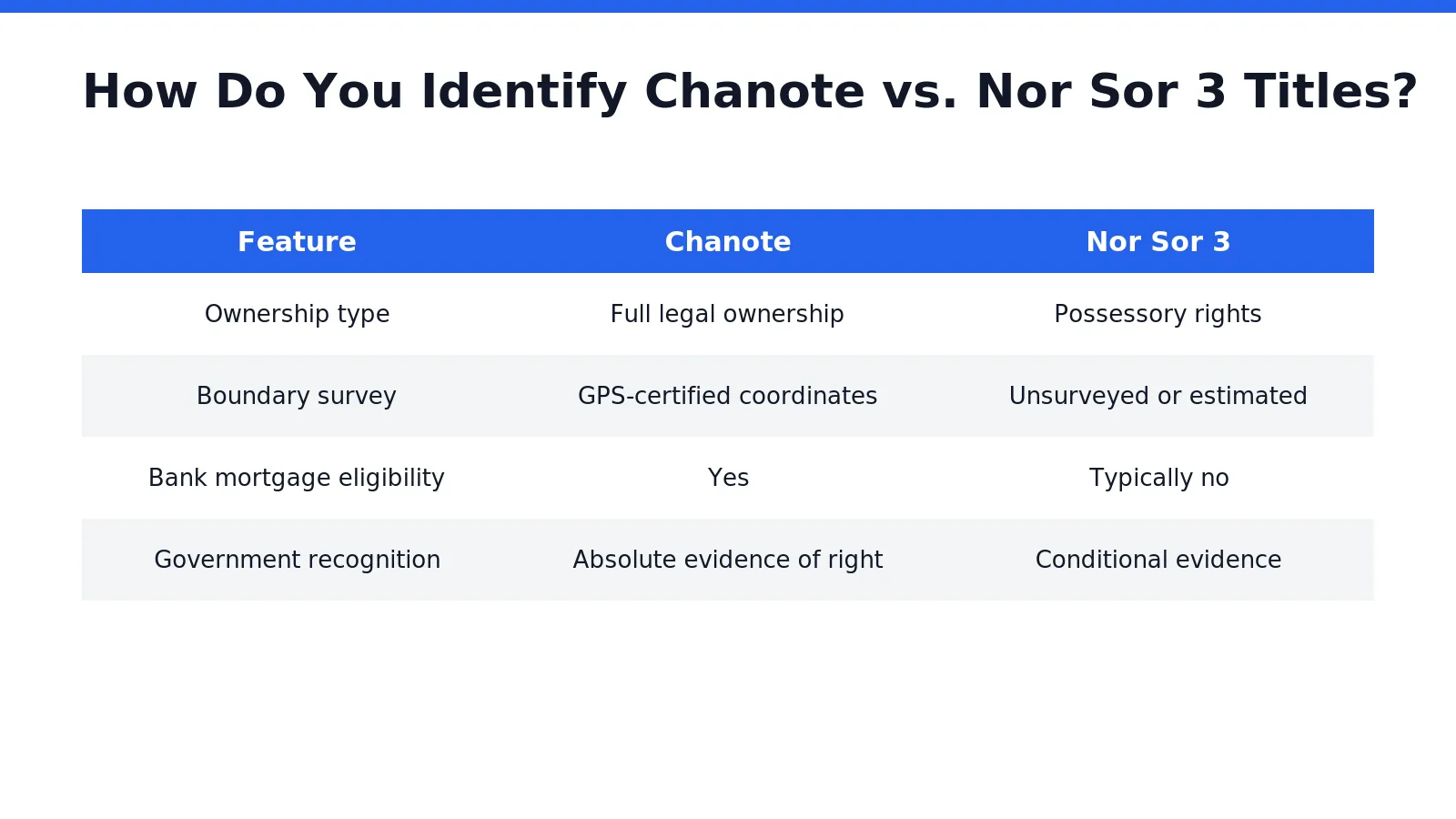
How Do You Identify Chanote vs. Nor Sor 3 Titles?
The Royal Thai Department of Lands (กรมที่ดิน) provides digital tools that allow property buyers to identify title types remotely, including map overlays and title-type identification features. A Chanote title deed represents the strongest form of land ownership in Thailand. A Nor Sor 3 document confers possessory rights without the same legal certainty. The distinction between these two documents determines what a buyer actually owns and what risks accompany the transaction.
What Makes a Chanote Title Different?
A Chanote is a certificate for ownership of land, issued by the Department of Lands using GPS coordinates to set precise boundaries. Whoever is named on a Chanote holds the legal right to the land and can point to the deed as proof of that right before government authorities.
This title type offers the highest level of security available in a Thai property transaction, with boundaries that are surveyed and registered with the state.
What Are the Limitations of a Nor Sor 3?
A Nor Sor 3 document certifies that a person has occupied and used the land. The boundaries are not surveyed with the same precision as a Chanote. This creates ambiguity in property lines and increases the risk of boundary disputes with neighboring landowners. Buyers who accept a Nor Sor 3 title may face complications when seeking financing. Most Thai banks require a Chanote before approving a mortgage.
| Feature | Chanote | Nor Sor 3 |
|---|---|---|
| Ownership type | Full legal ownership | Possessory rights |
| Boundary survey | GPS-certified coordinates | Unsurveyed or estimated |
| Bank mortgage eligibility | Yes | Typically no |
| Government recognition | Absolute evidence of right | Conditional evidence |
How Can a Buyer Verify the Title Type Online?
The Department of Lands online portal allows users to check property ownership in Thailand by entering the title deed number. The system returns the title type, current owner name, and any registered encumbrances such as mortgages or leases. This digital check is a fast pre-screen, not a substitute for an official Land Office verification or a lawyer-led due diligence review. Buyers should treat the online result as a preliminary filter, not a final clearance.
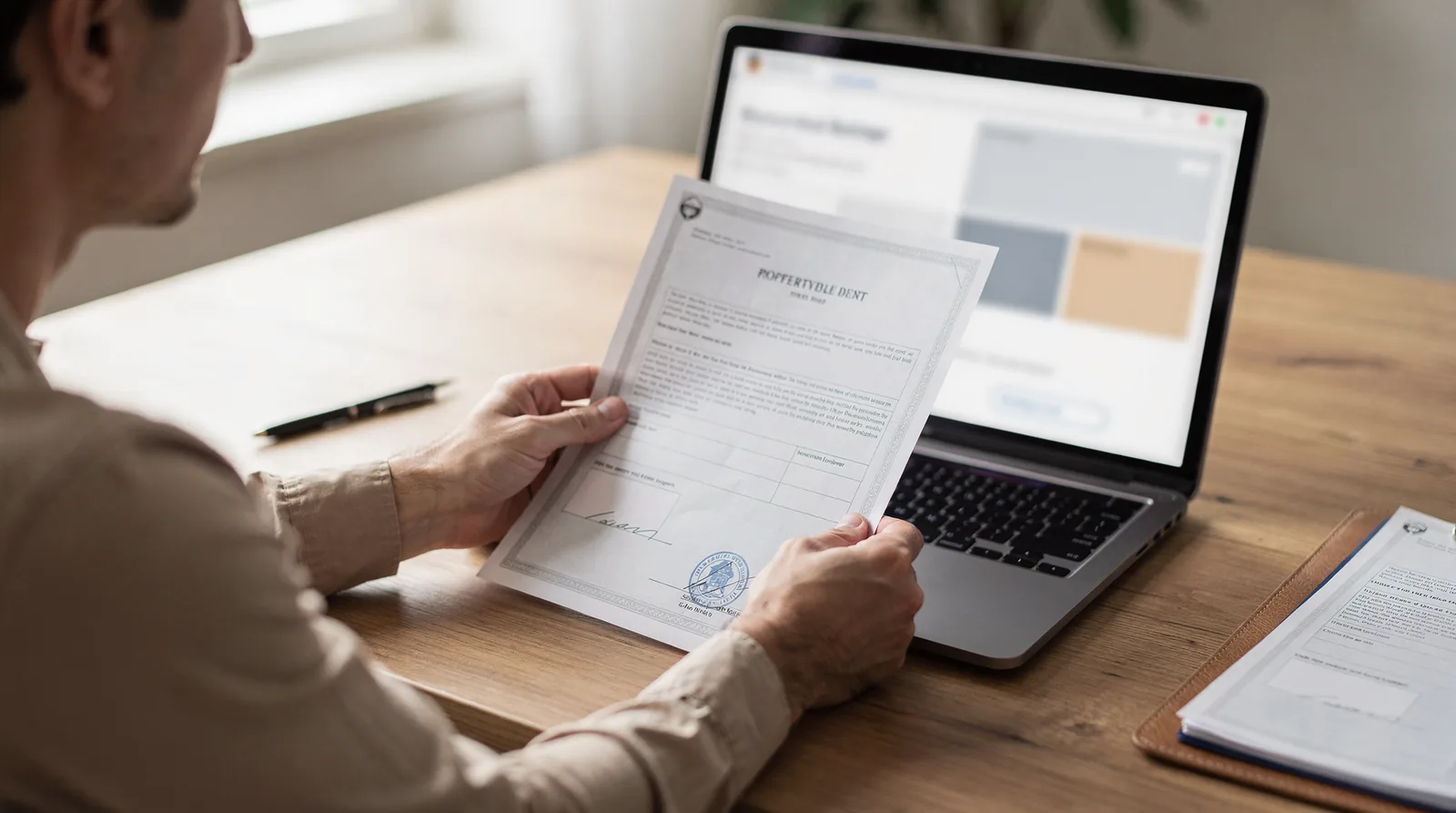
The Royal Thai Department of Lands (กรมที่ดิน) provides several digital tools that enable remote property
How Can You Conduct an Online Title Deed Check?

The Royal Thai Department of Lands (กรมที่ดิน) provides several digital tools that enable remote property ownership checks. These online systems include map overlays, title-type identification, and basic encumbrance flags. A buyer can access these tools through official government portals without visiting a Land Office in person.
What Information Do Online Tools Reveal?
The Department of Lands digital platforms display the Chanote versus Nor Sor 3 classification, which indicates the strength of ownership rights. Map overlays show property boundaries and location data. Basic encumbrance flags may appear for registered mortgages or legal claims against the title.
What Are the Limitations of Online Checks?
Online title deed checks serve as a fast pre-screen rather than a complete verification. These digital tools do not replace official Land Office verification or lawyer-led due diligence. The online system may not display unregistered encumbrances, pending disputes, or informal agreements affecting the property.
Steps for conducting an online title deed check:
- Access the Royal Thai Department of Lands official website or mobile application
- Enter the property's title deed number and province information
- Review the displayed title type, ownership details, and registered encumbrances
- Cross-reference the online data with physical title deed documents
- Schedule an in-person Land Office verification for final confirmation
Online checks provide a useful starting point for property verification. A buyer who relies solely on digital tools without completing official Land Office verification carries the risk of missing critical encumbrances or title defects. Professional legal review remains essential before committing capital to any Thailand property transaction.
What Should You Look for on the Title Deed?
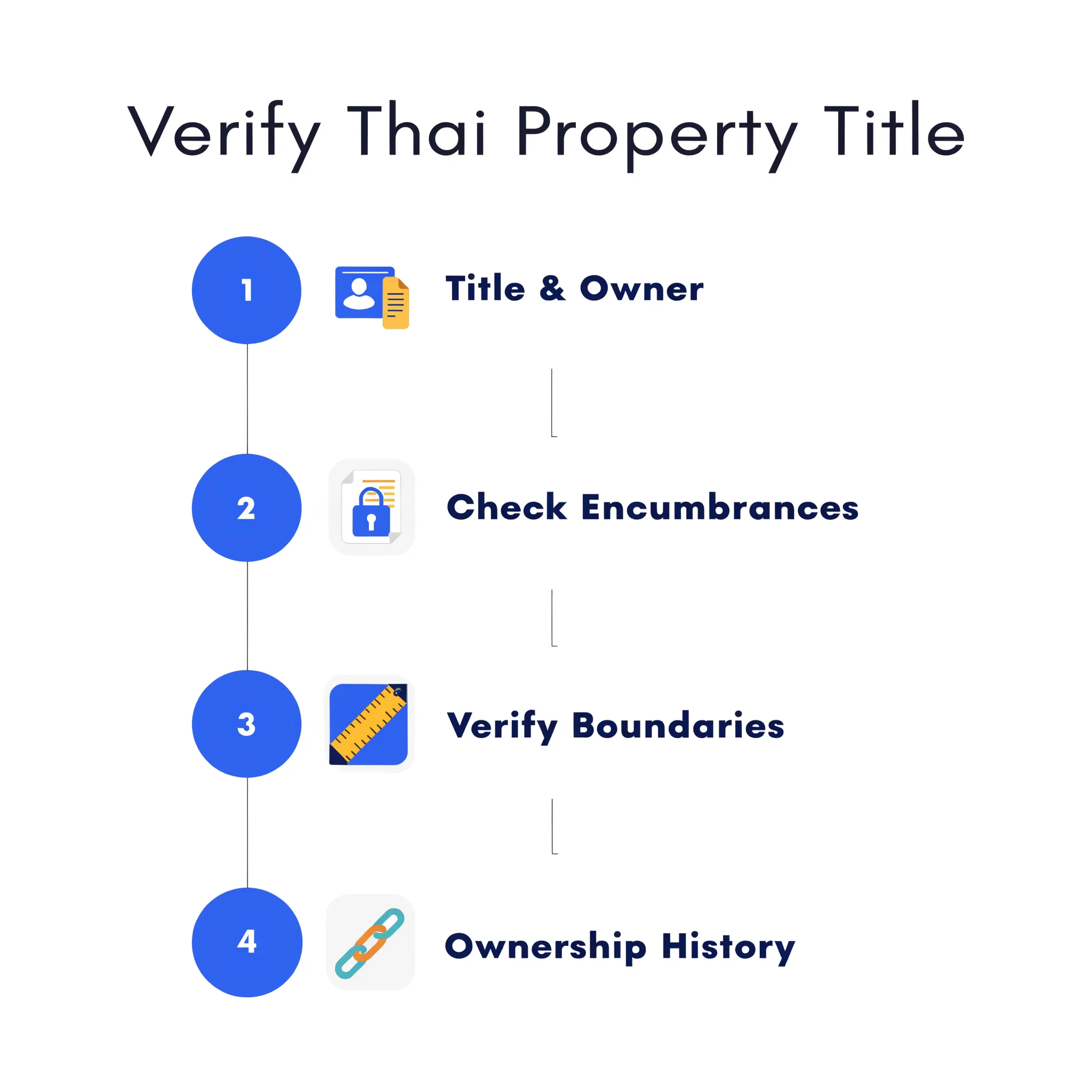
A Thailand land title deed issued by the Department of Lands shows a person's rights to the property and any registered encumbrances. The document reveals whether the owner holds full ownership (Chanote) or a lesser right. It lists all mortgages, leases, and other legal claims recorded against the land. Foreign buyers must examine these details carefully because the deed determines what rights can actually be transferred.
Key Elements to Verify on the Title Deed
- Title type and ownership name: Confirm the deed is a Chanote (full ownership certificate) and that the seller's name matches their identification documents. A Nor Sor 3 or Nor Sor 3 Gor certificate grants weaker rights and requires additional verification.
- Registered encumbrances: Look for any mortgages, leases, usufructs, or servitudes recorded on the deed. These encumbrances remain binding on the property even after a sale unless formally released.
- Boundary and area measurements: Check that the land dimensions and map on the deed correspond to the physical property. Discrepancies can indicate encroachment or survey errors.
- Chain of ownership history: Review previous transfers to ensure no gaps or irregularities exist in the ownership record.
What Rights Can a Foreigner Hold on a Thai Title Deed?
Foreigners cannot be named as the owner of land in Thailand. However, a foreign buyer can hold registered rights on the title deed including a lease, right of usufruct, habitation, superficies, or mortgage. Each of these rights must be registered at the Land Office to be legally enforceable against third parties. A title deed that shows no registered encumbrances does not automatically mean a foreigner can purchase the land outright. The buyer must still comply with Thai land ownership restrictions.
How Do Encumbrances Affect a Property Purchase?
A mortgage or lease registered on the title deed remains attached to the land unless the encumbrance holder formally cancels it. Buyers who complete a purchase without verifying these encumbrances risk acquiring a property that carries another party's legal claim. The Land Office will not transfer ownership until all outstanding encumbrances are cleared or the buyer accepts them in writing. This makes a pre-purchase title search a non-negotiable step in any Thailand property transaction.
How Do You Verify Foreign Ownership Rights?

Thailand’s land ownership rules create a clear legal boundary for foreign buyers. Foreigners cannot own land and cannot be named as the owner of land in Thailand. This restriction applies to all land parcels regardless of location or value. Understanding this limitation before starting a property search prevents wasted time on unsuitable listings.
What Rights Can a Foreigner Hold Instead?
Foreigners can hold several registered interests on a Thai title deed even though land ownership is prohibited. These include a lease, a right of usufruct, a right of habitation, a right of superficies, and a mortgage. Each of these rights can be registered in the foreigner’s name on the title deed at the local Land Office. A lease, for example, typically runs for 30 years with renewal options. A usufruct grants the right to use and benefit from the land for a defined period.
How Does Registration Protect the Buyer?
Registration of these rights on the title deed provides legal protection that a private contract alone cannot match. An unregistered lease or usufruct agreement may be unenforceable against a new owner if the land is sold. Registering the right at the Land Office creates a public record that binds future owners and lenders. This step transforms a personal promise into a property interest that survives changes in ownership.
Steps to Verify Ownership Rights
- Obtain a certified copy of the title deed from the seller or the Land Office.
- Check the title deed for existing encumbrances such as mortgages, leases, or servitudes already registered.
- Confirm the seller’s legal capacity to grant the specific right being negotiated, such as a lease or usufruct.
- Visit the local Land Office with a qualified translator or legal representative to verify the deed’s authenticity.
- Request a current encumbrance certificate from the Land Office to confirm no undisclosed claims exist.
Know before you commit. Own with more clarity.
How Do You Check for Encumbrances and Liens?
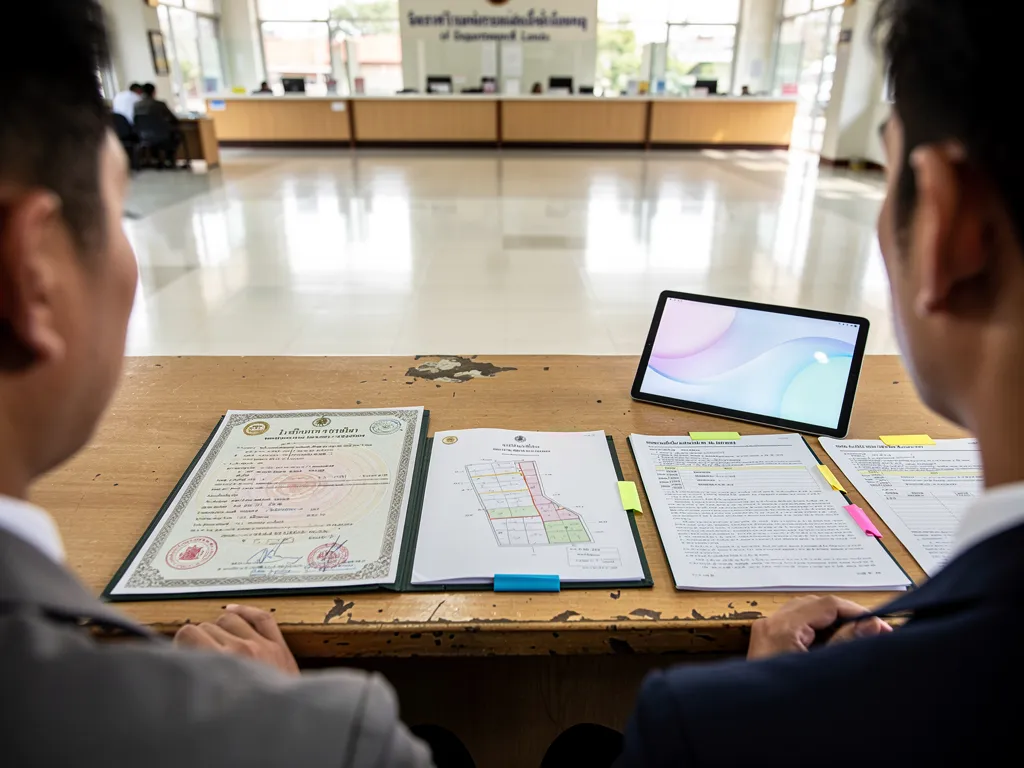
A land title deed issued by the Thai Department of Lands is the primary document for identifying registered encumbrances on a property. These encumbrances include mortgages, leases, usufructs, and other registered rights that directly affect ownership and transferability. Checking for them takes a systematic approach that combines digital pre-screening with official verification.
What Information Does a Title Deed Reveal?
The title deed shows a person's rights to land and all registered encumbrances recorded against the property. For a Chanote title deed, this document confirms ownership and lists any mortgages, leases, or other claims registered with the Land Office. Buyers who skip this verification risk acquiring property with hidden financial obligations or third-party rights that restrict use and resale.
Step-by-Step Process for Encumbrance Checks
- Obtain a certified copy of the title deed from the seller or the local Land Office where the property is registered.
- Review the encumbrance section on the back of the deed, which lists all registered claims in Thai. This section shows mortgages, leases, easements, and other restrictions.
- Use the Department of Lands online portal for a preliminary check. The Royal Thai Department of Lands offers digital tools that allow remote property checks, including basic encumbrance flags and title-type identification.
- Visit the local Land Office in person to request an official encumbrance certificate. This step confirms that no unregistered claims or pending legal actions exist against the property.
- Engage a Thai-fluent legal professional to interpret the findings. Title deeds and Land Office records are maintained in Thai, and property law knowledge is essential for accurate interpretation.
Online checks provide a fast pre-screen but do not replace official Land Office verification. A lawyer-led review ensures that every registered encumbrance is identified and understood before funds change hands.
What Are the Red Flags in a Title Search?

A title search that misses red flags exposes a buyer to disputes, financial loss, or the complete loss of property rights. The most dangerous issues tend to hide in the details of the seller's background and in the title document itself, which is why a thorough search examines both closely, well before any money changes hands.
Several warning signs demand immediate attention during verification:
- Title type mismatches: a seller presenting a Nor Sor 3 document while claiming full ownership rights
- Encumbrance flags: registered mortgages, leases, or usufructs that limit what the buyer actually receives
- Seller identity discrepancies: names or details that do not match official Land Office records
- Incomplete ownership chains: gaps in the transfer history that suggest unresolved claims
What Does a Chanote Title Reveal That Other Titles Do Not?
The critical difference between Chanote and Nor Sor 3 titles determines what a buyer can legally do with the land. A Chanote provides full ownership rights, while a Nor Sor 3 carries significant restrictions. Buyers who fail to distinguish these two documents risk purchasing land they cannot legally develop or transfer.
Why Does the Seller's Background Matter?
The seller's history directly affects the validity of the transaction. A seller with unresolved disputes, outstanding mortgages, or prior legal claims against the property creates risk that transfers to the new owner. Professional legal review examines the seller's standing alongside the title document itself. Both must be clean for the purchase to proceed safely. Missing either element leaves the buyer exposed to challenges that surface only after signing.
Why Should You Use a Professional Title Verification Service?
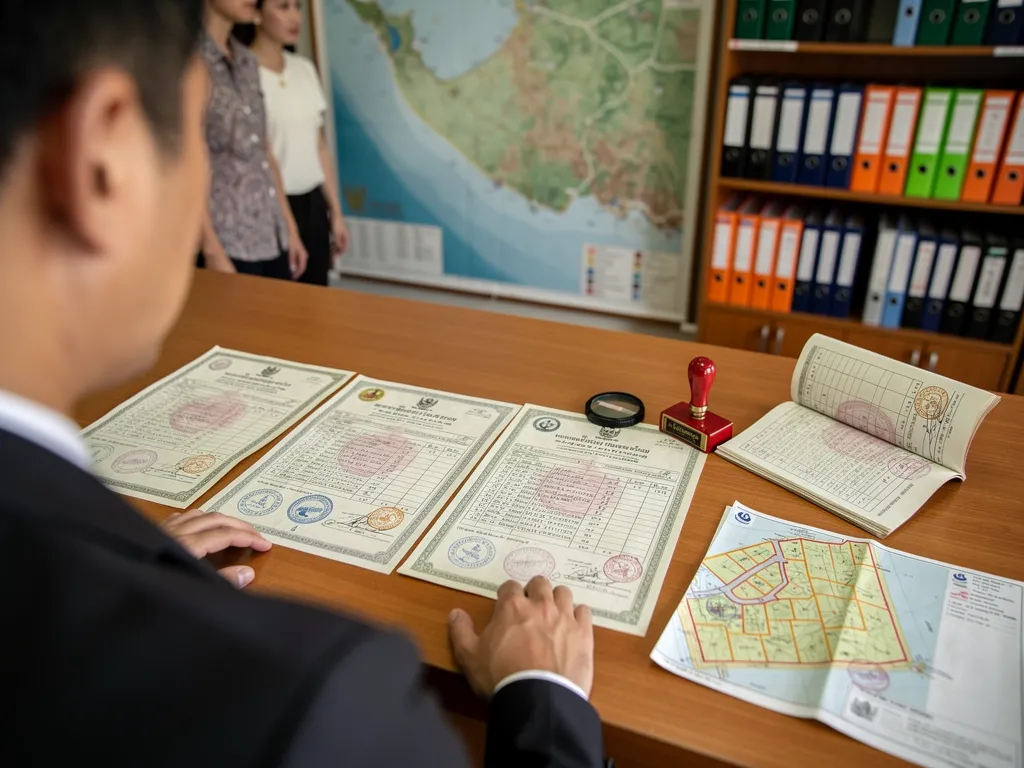
A professional title verification service addresses a fundamental gap in cross-border property purchases: the language and legal knowledge required to conduct a proper Thailand title search. The Royal Thai Department of Lands maintains property records exclusively in Thai. The encumbrance-checking process demands familiarity with specific Land Office procedures. Without this expertise, a buyer risks missing registered mortgages, leasehold restrictions, or ownership disputes recorded on the title deed.
What specific risks does a professional review uncover?
A professional service examines ownership rights, legal frameworks, and registered encumbrances that an online pre-screen cannot detect. The online tools offered by the Department of Lands provide a fast initial check. They do not replace an official Land Office verification. A professional review identifies deal-changing issues such as:
- Unregistered leases or usufruct agreements that limit property use
- Outstanding mortgages or liens recorded against the title
- Discrepancies between the physical property boundaries and the Chanote or Nor Sor 3 documentation
- Restrictions on foreign ownership that affect leasehold or freehold structures
How does independent due diligence differ from a lawyer's title check?
Nitarya provides independent buyer-side due diligence that complements a lawyer's legal verification. While a law firm confirms the title's legal validity, Nitarya's structured review evaluates the broader ownership context, including market comparisons and future obligations. This approach covers all stages of property purchasing, from pre-buying market comparisons to detailed in-purchase reviews involving legal and local market verification. The result is a comprehensive understanding of what the buyer is committing to, beyond the title deed alone.
Conclusion
Verifying a Thailand property title demands systematic attention to documentation, ownership records, and legal compliance, steps that directly determine whether an investment rests on solid ground. Buyers who complete this work gain real confidence in their ownership rights and stronger protection against future disputes. Organizing the evidence, addressing the material questions, and identifying gaps before capital transfers lets a buyer make an informed decision grounded in objective facts rather than sales presentations. This diligence is not optional. It is the foundation secure cross-border property ownership rests on.
Frequently Asked Questions
What is the difference between a Chanote and a Nor Sor 3 title in Thailand?
A Chanote is the strongest form of land title in Thailand, surveyed with GPS-certified coordinates and recognized by the Department of Lands as absolute evidence of ownership. A Nor Sor 3 only certifies possessory rights based on unsurveyed or estimated boundaries, which creates more risk of boundary disputes and typically fails to qualify for a Thai bank mortgage.
Can foreigners own land in Thailand?
No. Foreigners cannot be named as the owner of land in Thailand under any circumstances. Foreign buyers can instead hold registered interests such as a lease, right of usufruct, right of habitation, right of superficies, or mortgage, each of which must be registered at the local Land Office to be legally enforceable.
How do I check a Thailand title deed online?
The Royal Thai Department of Lands online portal lets you enter a title deed number to see the title type, current owner name, and any registered encumbrances such as mortgages or leases. This is a useful pre-screen, but it does not replace an official Land Office verification or a lawyer-led due diligence review, since unregistered claims and pending disputes may not appear online.
What encumbrances should I look for before buying property in Thailand?
Check the title deed for registered mortgages, leases, usufructs, and servitudes, all of which remain binding on the property even after a sale unless formally released.
A certified copy of the deed, an official encumbrance certificate from the Land Office, and a Thai-fluent legal review together confirm whether any undisclosed claims exist.
Why use an independent due diligence service instead of relying on a lawyer alone?
A lawyer confirms the title's legal validity, while an independent review such as Nitarya's evaluates the broader ownership context, including market comparisons and future obligations, across every stage of the purchase. Combining both gives a buyer a fuller picture of what they are committing to beyond the title deed itself.