
Withholding Tax on a Thai Property Sale: What UK Sellers Pay
How withholding tax works when you sell Thai property: who pays, how it is calculated, when specific business tax applies, and what to report in the UK.
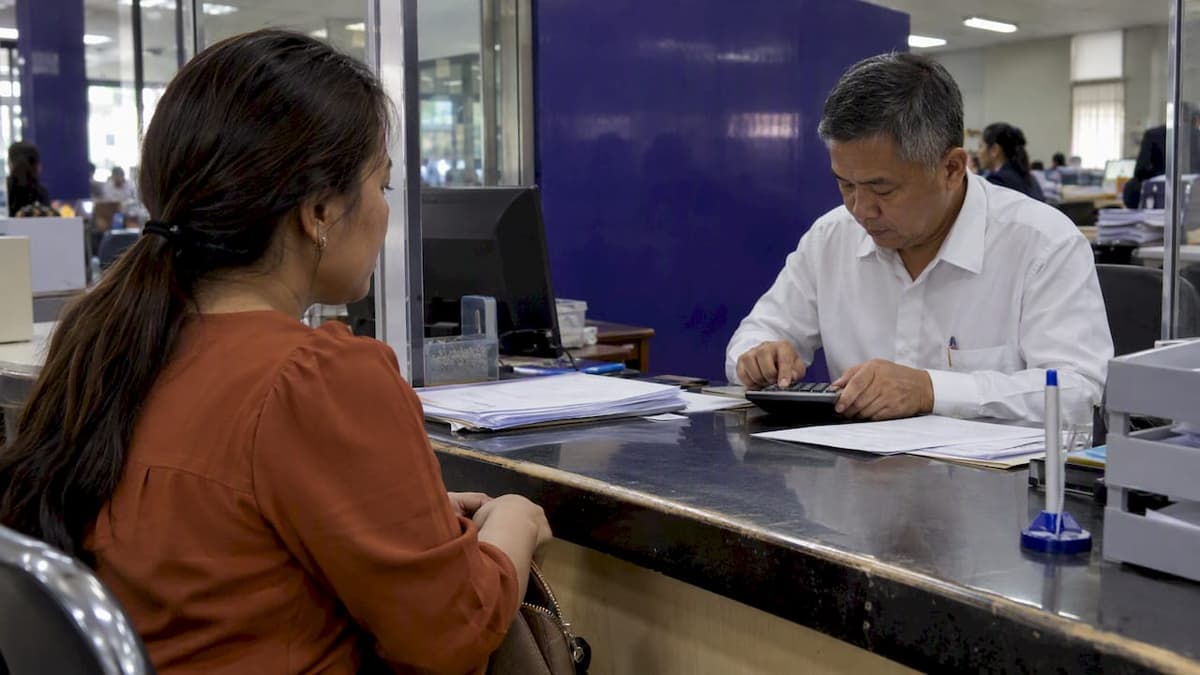

When you sell property in Thailand, the seller pays withholding tax (WHT) and settles it at the Land Office on the day the transfer is registered. The tax base depends on who is selling. An individual is taxed on the official appraised value. A company is taxed on the higher of the actual sale price or the appraised value. Specific business tax (SBT) or stamp duty is charged alongside it, and for a UK tax resident the sale still has to be reported at home.
This guide sets out how the charges fit together, which one applies to which seller, and what to check before you agree a price. It is written for UK-based owners, and for buyers who want to understand the seller's tax position, since that position shapes negotiations and completion.
TL;DR
- The seller pays and remits the tax to the registration officer at the Land Office when the transfer is registered, as set out by the Thai Revenue Department.
- For an individual, WHT is based on the official appraised value, not the price in the contract, and the total cannot exceed 20% of the sale price.
- SBT is 3.3% of the higher of the sale price or appraised value. It does not apply to an individual who has held the property for more than five years, or who has lived there as a principal residence for at least a year. Stamp duty of 0.5% applies instead.
- Thailand may tax gains on Thai immovable property under the UK-Thailand treaty, and Thai tax can be credited against UK tax on the same gain.
The charges that arise on a Thai property sale
Sellers often speak of "withholding tax" as if it were the whole bill. In practice there are up to three separate charges at the Land Office, and which ones you meet depends on your status and how long you have owned the property.
| Charge | Who it applies to | Base | Rate or limit |
|---|---|---|---|
| Withholding tax (WHT) on individual sellers | Individuals | Official appraised value, using a statutory method | Total capped at 20% of the sale price |
| WHT on juristic persons | Companies and other legal entities | Higher of actual sale price or appraised value | Set by the Revenue Department |
| Specific business tax (SBT) | Property traders, companies selling property held for business, individuals within the holding-period tests | Higher of sale price or appraised value | 3.3% |
| Stamp duty | Transactions exempt from SBT | Higher of sale price or appraised value | 0.5% |
The Revenue Department's guidance on income tax from property sales covers all of these. SBT and stamp duty are alternatives to each other. A transaction attracts one or the other, never both.
A note on the abbreviations: WHT is withholding tax, SBT is specific business tax, and the Land Office is the provincial branch of the Land Department, where title transfers are registered.
Who pays, and when
The seller is responsible for the tax. The Revenue Department's guidance states that the seller pays the applicable taxes to the registration officer at the Land Office when the transfer is registered. Transfer fees and taxes are usually settled in the same visit, during registration of the title.
This has three practical consequences.
- Nothing is collected afterwards. The tax is paid at the counter. If the figures are wrong on the day, the transfer is delayed.
- Who bears the cost is a matter of contract. The law places the obligation on the seller. The sale contract can still allocate transfer costs in another way, and it is common for the parties to agree a split. Buyers should read the clause carefully and have it confirmed in writing before paying a deposit.
- The registered numbers are official numbers. The appraised value comes from the Land Department's own valuation, not from the agent's brochure or your purchase price.
How WHT is calculated for an individual
The central point for individual sellers is that the base is the official appraised value of the property. It is not the price you and the buyer agreed. The Revenue Department states that the individual WHT calculation follows a specific statutory method applied to that appraised value, and that the total withholding tax payable by an individual cannot exceed 20% of the total sale price.
The consequences are worth thinking through before you list.
- The appraised value can be well below the market price. The tax is computed on the lower figure, which can reduce the WHT. It also means the contract price tells you little about the tax due.
- SBT and stamp duty use the higher figure. Where either of those applies, the base is the higher of the sale price or appraised value. So a low appraisal helps with WHT, but gives no advantage on SBT or stamp duty.
- The 20% ceiling matters on short holdings and low gains. Because the cap is expressed against the sale price, it limits the tax paid at the counter in cases where the formula would otherwise produce a higher number.
The WHT collected is a prepayment, not necessarily the final bill. Individual sellers may choose to include the sale income in their annual Thai tax calculation, or exclude it and claim necessary and reasonable expenses instead of a fixed-rate deduction, according to the Revenue Department's guide for taxpayers with income other than employment. For inherited property, an individual who includes the sale income in the annual calculation may deduct expenses equal to 50% of that income. If you sell a property you inherited, that treatment is worth raising with a Thai tax adviser before you file.
A seller who has made a loss on paper still finds that WHT is collected at registration, since the tax is assessed from the appraised value and the formula, not from your own profit and loss. Whether a refund or credit is available through the annual return is a question for a Thai tax adviser to answer on your facts.
How WHT differs when the seller is a company
The base changes for a juristic person, meaning a company or other legal entity. The Revenue Department's guidance sets the base as the higher of the actual sale price or the appraised value. A company cannot rely on a low appraisal to reduce the tax.
This matters to UK readers for two reasons.
- Holding structure changes the tax. A property held through a Thai company, or by a business that trades in property, will be assessed on different terms from one held personally. SBT also catches companies selling property held for business.
- Ownership structure and the exit are linked. Foreign buyers who hold a condominium unit are working within the foreign quota, and those who hold land often work through leases or other structures. The way you hold the asset shapes how you sell it. Our checks on the 49% foreign quota for condominiums and on freehold versus lease structures explain the ownership position that a future buyer will examine too.
Specific business tax: when it applies
SBT is 3.3% of the sale price or the appraised value, whichever is higher. The Revenue Department says it applies to:
- property traders;
- companies selling property held for business; and
- individuals who sell within five years of acquiring the property, or whose name has been on the Thai household registration for less than one year.
For an individual, two tests can take the sale outside SBT:
- the property was held for more than five years; or
- it was the seller's principal residence, with the seller's name on the household registration certificate, for at least one year.
A foreign owner will usually find the second test hard to meet, since the household registration (a Thai civil record called the tabien baan) is tied to residence and documents that many non-residents do not hold. That makes the five-year holding period the more relevant test for most UK owners. If you are approaching it, the date of acquisition on the title deed matters. Selling a few weeks before the fifth anniversary can change the tax outcome significantly, so check the exact date of registration, not the date of the reservation or the signing of the sale contract.
Stamp duty when SBT does not apply
When a transaction is exempt from SBT, stamp duty of 0.5% of the appraised or sale price, whichever is higher, is payable instead. So the sequence for an individual who has held the property for more than five years is typically WHT plus stamp duty, with no SBT.
It is easy to underestimate the gap this creates. At the SBT rate the charge is 3.3% of the higher value. At the stamp duty rate it is 0.5% of the same base. On a sale at ฿10,000,000 where the sale price is the higher figure, that is ฿330,000 compared with ฿50,000. The figures are simple arithmetic on the published rates, not a forecast of your bill, but they show why the timing of a sale deserves a conversation before you accept an offer.

Worked example: how the pieces combine
Take a UK resident individual who bought a Bangkok condominium and now wants to sell.
- Check the holding period. If the title was registered more than five years ago, SBT should not apply, and stamp duty at 0.5% should apply instead. If it was registered more recently, SBT at 3.3% is the working assumption.
- Find the appraised value. Ask the Land Office, or your Thai lawyer, for the official appraised value of the unit. Compare it with your target sale price.
- Estimate WHT. The WHT is calculated on the appraised value under the statutory method, and is capped at 20% of the sale price in total. Your adviser can run the formula for your holding period.
- Add the transfer fee. The Land Office also collects a transfer registration fee. Check who is paying it under the contract.
- Decide the allocation. Put the split of transfer costs and taxes in the sale agreement, so the buyer and seller are working to the same figure on the day.
- Plan the UK side. Keep the purchase documents, the sale contract, the Land Office receipts and records of improvements for your UK return.
The exercise shows which variable moves the number most. Usually it is the holding period, because it decides between SBT and stamp duty.
Thai tax reliefs that do not travel
Thailand periodically introduces measures to support the property market. One recent example, published by a provincial Land Office announcement, reduces transfer and mortgage registration fees to 0.01% for Thai nationals on specified homes and condominiums with sale and appraised values, and mortgage amounts, not exceeding seven million baht. The same notice makes clear that WHT and SBT or stamp duty remain payable at the statutory rates. Foreign sellers should not assume that a headline measure applies to them. Read the eligibility conditions, and ask the Land Office or a Thai adviser about the current position before you price a sale around a relief.
The UK side: reporting a sale and avoiding double tax
Paying Thai tax at the Land Office does not close the matter for a UK resident. The UK and Thailand have a double taxation convention. Under the 1981 UK-Thailand Double Taxation Convention, capital gains from the disposal of immovable property in Thailand can be taxed in Thailand, where the property is situated. The treaty also provides that Thai tax on those gains may be credited against UK tax computed by reference to the same gains.
In practice this means three things for a UK-resident seller.
- Report the disposal in the UK. The gain is computed under UK rules, which differ from the Thai method. Your UK gain depends on your purchase cost, allowable costs and the exchange rates at the dates of purchase and sale, not on the Thai appraised value.
- Claim the credit. Keep the Land Office receipts that show the Thai tax paid on the transfer. They are the evidence you will need for the credit. Whether a particular Thai charge counts as tax on the gain is a point to confirm with a UK tax adviser.
- Do not assume a Thai payment cancels a UK charge. The credit is limited to the UK tax on the same gain. If the Thai tax is higher than the UK tax, the excess is not usually refunded by the UK.
The same applies to rent earned before the sale. Our guide to Thai property taxes for UK buyers explains how to report Thai rental income in the UK, and the Thailand rental yield calculator shows how costs and tax change the net return you would be selling against. If the property is part of an estate plan, see our note on overseas property inheritance planning.
If you are the buyer: why the seller's tax matters to you
A buyer does not pay the seller's WHT under the statute, but the seller's tax position affects you in several ways.
- Completion risk. The taxes are paid at the Land Office at registration. If the seller has not budgeted for them, the transfer can stall.
- Price negotiation. A seller within five years of acquisition faces SBT at 3.3% rather than stamp duty at 0.5%. That can affect how much flexibility they have on price.
- Contract allocation. If the contract passes some of the transfer costs to you, the figure should be written down, with the basis of calculation, before you pay a deposit.
- Your own exit. When you sell, the same rules will apply to you. Understanding them now helps you test an investment case, since a sale price is not what you receive. Our Thailand property due diligence for buyers page explains how we examine ownership, obligations and exit before a commitment.
Our perspective
Most of the sellers and buyers we speak to treat transfer taxes as a footnote at the end of a deal. We see them as part of the investment case from the first day.Across more than 380 property decisions we have reviewed, one in three reviews identified a significant issue that changed the deal. Tax assumptions are not always the cause, but the same discipline applies: the number in the brochure is rarely the number at completion. A buyer who has not asked how the holding period, the appraised value and the ownership structure affect a future sale has not yet tested the exit.
Our approach is independent and buyer-side. We are not paid by developers or agents, so we can set out what the documents show and what is missing. For tax, we coordinate with legal and market specialists, and where a question needs a Thai tax adviser or a UK accountant, we say so and put it in the decision file with the evidence behind it.
The practical advice is simple. Model the exit before you buy. Write the allocation of transfer costs into the contract. Keep every receipt. Confirm the UK reporting position before the sale, not after.
Neerraj
Before you buy or sell: a decision file
If you are weighing a Thai purchase or planning a sale, a review of the specific property and its documents is worth more than a general guide. We review ownership rights, developer and counterparty claims, permits, ongoing obligations and exit assumptions, and we set the results out in an evidence-based decision file. You can see the stages we cover, from before purchase through to after completion, on our property due diligence page.

If you already hold a property and are considering a sale, our after buying due diligence review looks at what you own, what you owe and what a buyer will ask.
A checklist for sellers
- Confirm the registration date on the title deed and count the holding period from it.
- Ask for the official appraised value and compare it with your target price.
- Decide whether you will be an individual or company seller, and confirm how the property is held.
- Work out whether SBT at 3.3% or stamp duty at 0.5% is likely to apply.
- Estimate WHT on the appraised value and check the 20% cap against the sale price.
- Agree in writing who pays the transfer fee and each tax.
- Keep the Land Office receipts and the contract for your UK return.
- Take UK advice on the gain computation and the treaty credit before you file.
The Revenue Department updates its guidance, and Land Office practice can differ between offices, so confirm the current rates and procedure with the office handling your transfer.
FAQ
Who pays withholding tax when a Thai property is sold?
The seller. The Revenue Department states that the seller pays the applicable taxes to the registration officer at the Land Office when the transfer is registered. The contract may allocate costs differently between the parties, so check the wording before you sign.
Is the tax based on the price I sold for?
Not for an individual. WHT for an individual uses the official appraised value, and the total cannot exceed 20% of the sale price. For a company, the base is the higher of the actual price or the appraised value. SBT and stamp duty also use the higher of the two values.
How do I avoid specific business tax?
For an individual, SBT does not apply if the property was held for more than five years, or was your principal residence, with your name on the household registration, for at least one year. Stamp duty of 0.5% applies instead. Check the exact registration date on your title deed before you set a completion date.
Do I still pay UK tax if I paid Thai tax on the sale?
You may. The UK-Thailand treaty allows Thailand to tax gains on Thai immovable property, and Thai tax on those gains may be credited against UK tax on the same gains. The gain is computed under UK rules, so speak to a UK tax adviser before you file.
Sources
- Thai Revenue Department: income tax on property sales
- Thai Revenue Department: guide for taxpayers with income other than employment
- Trat Provincial Land Office: transfer fee announcement
- GOV.UK: 1981 UK-Thailand Double Taxation Convention

