
Right of Way in Thailand: Checking Property Access Before You Pay
Buying land, a villa or a condo in Thailand? Learn how a legal right of way works, how to verify it at the Land Office and what to do before paying a deposit.
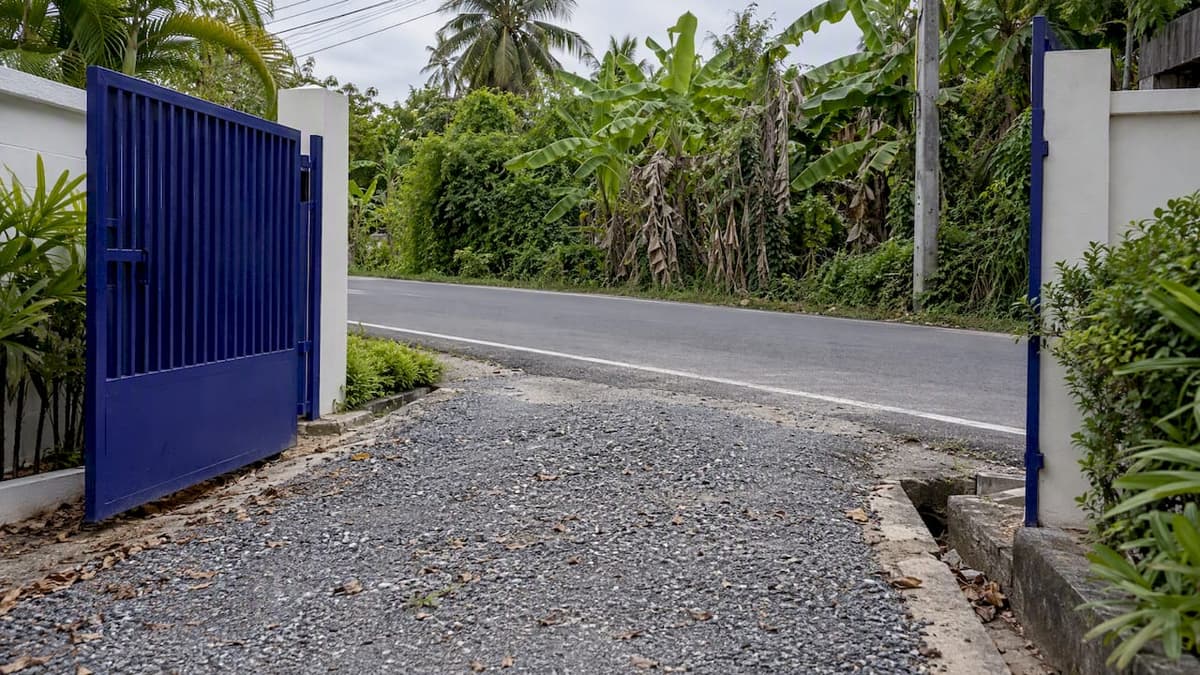

If you are buying property in Thailand, a right of way is the legal entitlement to cross someone else's land to reach yours. It is not the same as a neighbour's goodwill or a road that merely looks public. In Thai law it is usually a registered servitude, and if the access to your villa or plot rests on anything weaker, you could own a property you cannot lawfully reach. This guide explains the rules, shows how to verify access before a deposit leaves your account, and sets out what to do when the paperwork and the site disagree.
(If you arrived here looking for the driving rules on giving way at junctions and roundabouts, those are traffic regulations and sit outside this article. Here we deal with property access rights.)
TL;DR
- A right of way over Thai land is normally a servitude (phara cham yom), a real right under the Civil and Commercial Code (CCC) that attaches to the land, not to the owner.
- An agreement that is not registered at the Land Office binds only the people who signed it and may not be enforced against a later good-faith purchaser.
- Landlocked land may have a statutory way of necessity, but it must be claimed, compensation is payable and the route may not be the one you expected.
- Before paying a deposit, inspect both title deeds at the Department of Lands and walk the actual route on the ground.
- If deeds, records, site and developer claims do not match, pause the purchase until the difference is explained in writing.
What a right of way means in Thai property law
A servitude is a real right under sections 1387 to 1401 of the CCC. One plot, the servient property, carries a burden for the benefit of another, the dominant property. The most common uses are road access, drainage and utility lines.
Two features matter to a buyer:
- It runs with the land. The servitude attaches to the property, not the person, and the Land Office records it on the reverse of both title deeds. A new owner of either plot inherits the position.
- Registration gives it force. Under section 1299 of the CCC, registration is required for a servitude to be enforceable against buyers of the servient land.
That is the line between a right and a courtesy. A seller who says "the neighbour lets everyone use that lane" is describing tolerance. Tolerance can end the day the neighbouring plot is sold, and informal access arrangements may be revoked when neighbouring owners change. Public access is a third category again: a road that belongs to the public authorities, reached directly from your boundary, needs no servitude at all.
Where buyers meet the problem
The risk is greatest in villa developments and in plots sold out of a larger parcel. In many such projects the internal roads may be private. If no servitude is registered, the buyer risks the access being blocked or sold. Condominiums are usually less exposed, because the building typically fronts a road, but the same question applies to the approach road, parking and any shared service routes. Ask it anyway.
How a right of way is created
The route to a valid servitude is set out by ThaiLawOnline's guide to servitudes. There are three routes:
| Route | What it needs | What to check |
|---|---|---|
| Written agreement | Registered at the Department of Lands and noted on both title deeds | Both deeds carry the entry; the route is described or mapped |
| Long use | 10 years of peaceful, open and continuous use as of right | Evidence of use; usually needs formal confirmation before you rely on it |
| Operation of law or court order | Including in some subdivisions | The order or the subdivision approval itself |
An unregistered written agreement still binds the people who signed it. It cannot be enforced against good-faith purchasers. So if you buy the servient plot, you may not be bound. If you buy the dominant plot, you may not be protected.
What registration involves
The Department of Lands lists the documents for registering a servitude: the original title documents, identity documents and, where the servitude covers only part of a property, a map showing the land boundary. If someone acts for an owner, a power of attorney is needed. Fees depend on whether compensation is paid: nominal for non-monetary agreements, percentage-based where money changes hands. For straightforward encumbrance registrations that need no public notice, the Department's published process allows about 150 minutes, excluding waiting time. If an owner cannot attend, read our guide to power of attorney in Thailand before signing anything.
When land has no route at all: the way of necessity
Sometimes a plot is landlocked and no servitude exists. Section 1349 of the CCC then allows the owner to cross neighbouring land to reach a public road. This arises by operation of law. It is not a registered servitude, the user must pay the neighbour compensation, and the route is the one that causes the least damage to the surrounding land.

For a buyer this is a fallback, not a plan. It must be claimed, compensation is payable, and the route may not be the one the buyer expected. Imagine buying a plot after walking a pleasant lane to the gate, then finding the lawful route is a longer, narrower strip along the back boundary. The price you paid assumed the lane.
Costs, duties and who maintains the route
A right of way is not free of obligations on either side. According to ThaiLawOnline:
- The dominant owner may maintain the route at their own expense.
- Where the servient owner also benefits from it, costs are shared proportionally.
- Registration, survey and stamp duty charges may apply.
- Compensation depends on the agreement.
In practice, ask who pays for resurfacing, drainage and gate or barrier upkeep. In a villa estate, ask whether a juristic person or an estate management company collects a fee for roads, and what the fee covers. The answer belongs in your budget alongside the figures in our guide to Thailand property taxes for UK buyers.
How a right of way ends
A servitude is lost after 10 years of non-use or total destruction. If the two plots come into one ownership, the owner may cancel the registration. The point for you: a servitude on a deed is strong, but check that nothing suggests it has fallen out of use, and if you are buying both plots, understand what a merger does to it.
Verifying access before you pay a deposit
Thailand has a nationwide land registration system: ownership, leases over three years and security interests generally must be registered, and registration legally guarantees title and priority. The record is also open to you. A buyer can verify good title from the title deed held at the competent Land Office, at the buyer's expense. Use that, not the brochure.
A seven-step access check
- Identify the deed type. A full title deed (chanote) is the highest classification, with absolute private ownership rights and cadastral boundaries marked by official ground posts. Weaker documents make boundaries and access harder to prove.
- Request a title-deed inspection. Before committing, verify servitude details through a title-deed inspection at the Department of Lands. Do this for your plot and for every plot between it and the public road.
- Read the reverse of the deeds. Any servitude should be noted there. A promise in the sales contract with no entry on the deeds is not the same thing.
- Trace the route on a map. For a servitude over part of a property, the registration needs a boundary map. Compare it with the road you will actually drive.
- Walk it. Check width, surface, gates, barriers and whether the route crosses land that is not on your deed chain.
- Ask who owns the road. Public road, private estate road or neighbour's land? Each needs a different document.
- Fix it in the contract. Make the registration of a missing servitude a condition of payment, with the deposit protected until it is done.
Access is only one of the checks
A registered route does not settle the rest. Building permits, the foreign ownership structure and the developer's own claims each need their own review. See our guides to the building permit check in Thailand and to freehold or leasehold structures and the 49% quota. A UK buyer should also be clear which forms of ownership are open to a foreigner at all before spending on a villa plot.
When the documents, the records and the site disagree
This is the situation that costs buyers most, and no checklist resolves it for you. Typical mismatches include a developer plan showing a road that the deed does not mention, a servitude entered on one deed but not the other, or a gate on the ground where the map shows open land.
A sensible sequence:
- Stop payment. A discrepancy found before the deposit is a negotiating point. After it, it is a dispute.
- Get the discrepancy in writing. Ask the developer or seller to explain it in a signed document, and ask which documents will be registered and when.
- Compare against the Land Office, not the sales office. The registered record outranks marketing material.
- Ask a Thai lawyer who acts for you, not for the seller, whether the gap can be cured by registration, by a section 1349 claim, or not at all.
- Price it or walk away. If the cure depends on a neighbour's cooperation you do not control, treat the property as higher risk and say so in your decision.
What is useful in each case depends on facts a general article cannot see. That is the reason to have the specific property reviewed by someone independent.
Our perspective
In the reviews we carry out for buyers, access is rarely the first thing a client asks about. Price, view and yield come first. Yet across the more than 380 property decisions we have reviewed, about one in three turned up a significant issue that changed the deal, and the problems we meet most often are not exotic. They are gaps between what was promised and what was recorded.

Our view is simple. Evidence beats assurance. A buyer who has seen the deed entry, the boundary map and the route on the ground has bought a right. A buyer who has been told it is fine has bought a hope. We would rather a client learn this before a deposit than after completion, when the only leverage left is a lawsuit.
We also think access should be reviewed together with ownership structure, permits and ongoing obligations, because each affects the others. A beautiful villa on an unregistered track with an unclear ownership route is one problem seen from several sides.
— Neerraj
Having the specific property reviewed
If you have a Bangkok or Phuket property shortlisted and want to know whether you can verify its ownership, access and the developer's claims before paying, our Thailand property due diligence service is built for exactly that. We review the specific property independently of the seller, coordinate legal, technical and market specialists, and give you a decision file that shows the evidence found and the evidence missing.

The review can run before you commit, during the purchase or after you have bought. Start from our main services page to choose the stage that fits your position. Fees are not published, so describe the property and we will explain what the review would cover.
FAQ
Is a right of way in Thailand the same as an easement in England?
The idea is similar: one plot is burdened for the benefit of another. In Thailand it is called a servitude, governed by the Civil and Commercial Code, and it attaches to the land. The practical difference is that registration at the Land Office, with an entry on both title deeds, is what makes it enforceable against later buyers of the burdened land.
Can a neighbour block the road to my Thai villa?
If the access rests on informal permission, yes, it can be withdrawn when ownership changes. If a servitude is registered, the owner of the burdened land must respect it. If neither exists and your land is landlocked, a statutory way of necessity may be claimed, but compensation is payable and the route is not guaranteed to be the one you use today.
How do I check whether a servitude is registered?
Request a title-deed inspection at the Department of Lands for your plot and the neighbouring plots on the route. A registered servitude is noted on the reverse of both deeds. A Thai lawyer acting for you can attend, and may need a power of attorney if you are not there in person.
How long does a Thai right of way last?
It continues with the land through changes of owner. It is lost after 10 years of non-use or total destruction of the burdened property. If both plots end up with one owner, that owner may cancel the registration.
Sources
- Servitudes in Thailand for Investors, ThaiLawOnline
- Servitude in Thailand: Right of Way and More, ThaiLawOnline
- CCC section 1349: Right of way over surrounding land in Thailand
- Department of Lands: servitude registration requirements
- Department of Lands: registration procedure for rights and juristic acts
- Real Estate, Thailand chapter (Nagashima Ohno & Tsunematsu)
- Thailand Property Due Diligence Checklist
- Due diligence checklist for buying property in Thailand

