
📝 Blog
Thailand Chanote Verification: A Foreign Buyer's Guide
A practical guide for foreign buyers to check Thai land titles, ownership, boundaries, and encumbrances online and at the Land Office.
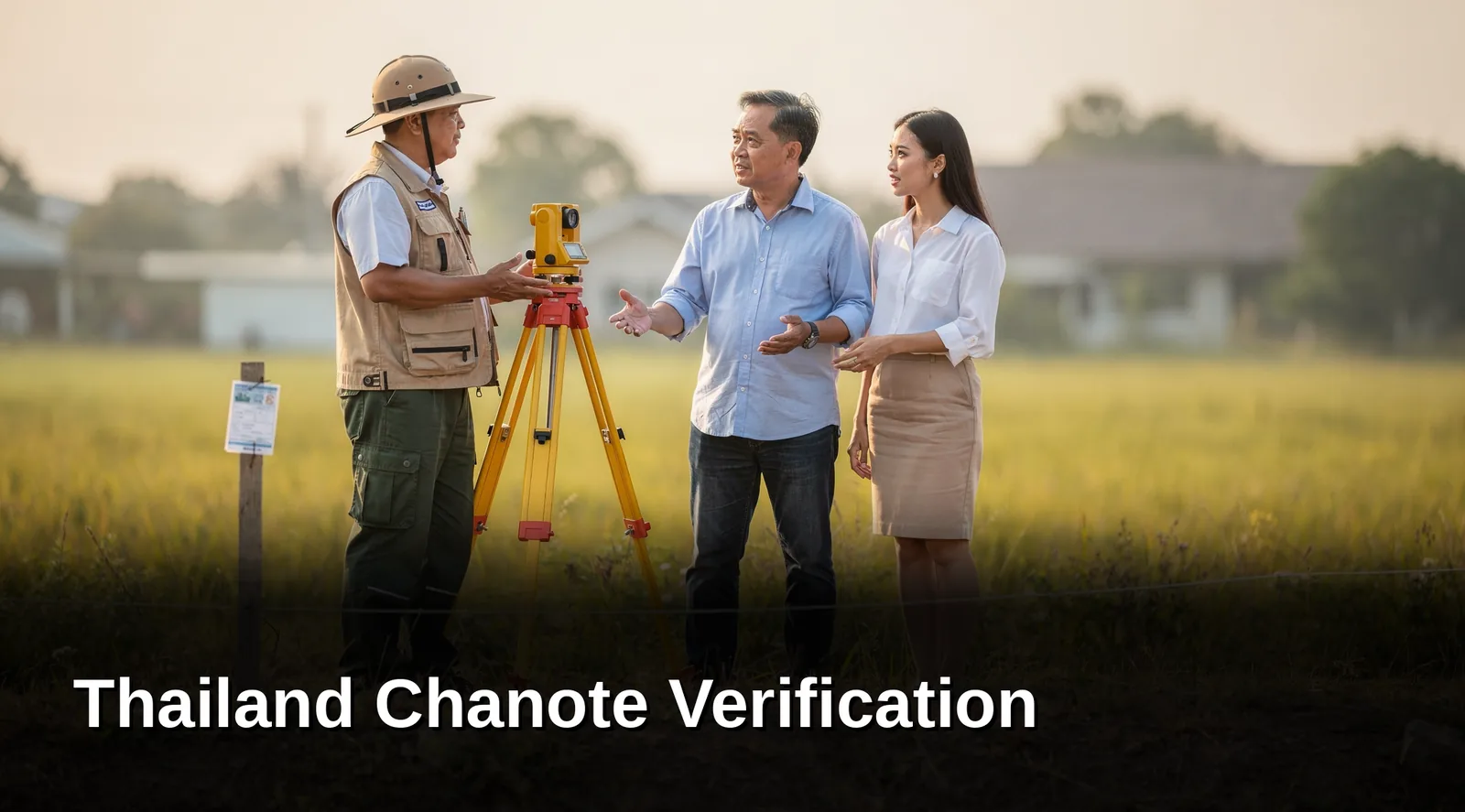
Chanote verification in Thailand requires cross-checking the Royal Thai Department of Lands' digital portals against physical inspection. Roughly 50% of Thai land lacks full ownership title.
Foreign buyers should confirm chanote status, boundary markers, and mortgage encumbrances before deposits.
What Is a Chanote Title Deed in Thailand?
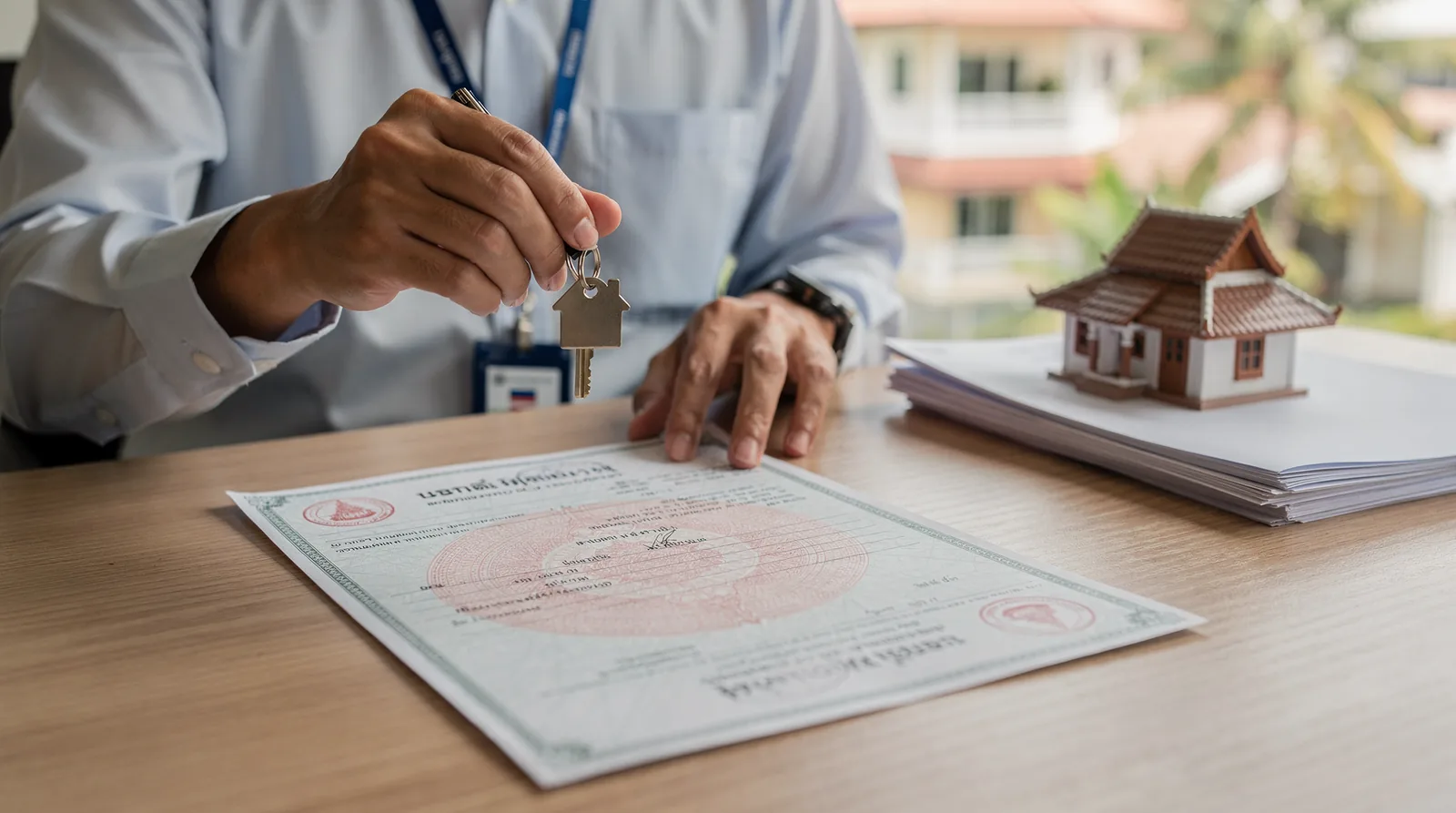
A Chanote (Thai: โฉนด, formally Nor Sor 4 Jor) is the strongest land title document issued by Thailand's Land Department. It confirms full, incontestable ownership of a precisely defined plot, with each plot number linked to a digital cadastral record. For any foreign buyer considering property in Thailand, verifying that a property carries a Chanote is the single most important risk-reduction step available.
The gap between a Chanote and lesser documents is the gap between genuine ownership and a conditional right to use. Without a Chanote, a buyer may hold a property that cannot be legally transferred, mortgaged, or leased with certainty.
Chanote vs Nor Sor 3 Gor, Nor Sor 3, and Sor Kor 1
Thailand has four main categories of land title documents, but only one provides full legal certainty for investors.
| Title document | Ownership status | Key characteristics |
|---|---|---|
| Chanote (Nor Sor 4 Jor) | Full ownership | Precise GPS-surveyed boundaries; clear transfer, lease, and mortgage rights |
| Nor Sor 3 Gor | Possession right | Often upgradeable to Chanote; boundaries verified by local officials |
| Nor Sor 3 | Possession right | Requires extra boundary and dispute checks; less reliable for transactions |
| Sor Kor 1 | Notification of possession | No ownership rights; cannot be sold or mortgaged |
A Chanote provides precise boundaries and clear transfer, lease, and mortgage rights. Nor Sor 3 Gor can often be upgraded to a Chanote. Nor Sor 3 needs additional boundary and dispute checks before any transaction proceeds. Foreign buyers should never commit capital to a property without first confirming the title type through proper Thailand Chanote Verification.
Why Foreign Buyers Must Verify the Chanote
Chanote Verification Thailand is not optional due diligence. Without it, a buyer risks purchasing a property that cannot be legally owned, transferred, or financed. The Land Department's digital tools allow remote pre-screening, but only an official Land Office check confirms the title is free of encumbrances, liens, or boundary disputes. Verify Chanote Title Thailand before signing any agreement or transferring funds.
How to Verify Property Ownership in Thailand
Verifying property ownership in Thailand requires using the Royal Thai Department of Lands (กรมที่ดิน) digital tools as a first step, then completing an in-person check at the local Land Office.
The Department of Lands now offers several online portals that allow remote checks of property ownership, including map overlays, title-type identification, and basic encumbrance flags.
These digital tools serve as a fast pre-screen, not a replacement for official Land Office verification or lawyer-led due diligence.
Five Steps to Verify a Thai Property Title
Step 1: Access the Department of Lands online portal.
Navigate to the official website and use the map-based search function to locate the property. Enter the land parcel number or GPS coordinates to retrieve the title deed record.
Step 2: Identify the title deed type. The online system displays whether the property holds a Chanote (Nor Sor 4 Jor), Nor Sor 3 Gor, or Nor Sor 3 title. Chanote provides the strongest ownership rights with precisely surveyed boundaries.
Step 3: Review encumbrance flags. The portal flags basic restrictions, mortgages, or liens registered against the property. Note any flags for follow-up during the in-person check.
Step 4: Visit the local Land Office in person. Always verify the original deed, seller identity, encumbrances, and boundaries at the local Land Office. Request an official certified copy of the title deed and a current encumbrance certificate.
Step 5: Engage independent legal review. A qualified lawyer or due diligence firm examines the deed for undisclosed restrictions, boundary disputes, or pending legal actions not visible online.
What Online Title Checks Cannot Confirm
Online checks through the Department of Lands portal provide a useful preliminary view but miss critical details. The system does not display pending litigation, unregistered easements, or boundary disputes that require physical inspection.
Buyers who rely solely on digital verification risk discovering ownership defects after committing funds. Independent buyer-side due diligence, such as the structured review Nitarya provides for cross-border property purchases, helps clients identify these hidden risks before capital changes hands.
Documents and Details Needed Before a Chanote Check
Before a buyer can perform a Thailand Chanote Verification, several documents and conditions must be in place. The most critical prerequisite is confirming that the property carries a Chanote (Nor Sor 4 Jor) title deed. This is the only Thai land title with GPS-surveyed boundaries that permits legal sale, subdivision, and mortgage registration. Each Chanote plot number links to a digital cadastral map, making online verification possible only when this title type is present.
Foreign Buyer Eligibility, Condo Quota, and FET Documents
Foreign buyers must provide proof of legal ownership eligibility before any title check proceeds. For condominium purchases, the buyer needs evidence that the unit falls within the building’s 49% foreign quota under the Thai Condominium Act, along with Foreign Exchange Transaction (FET) forms documenting offshore fund transfers. For landed property, the buyer must present a registered 30-year leasehold agreement or registered usufruct contract. Direct freehold ownership of land is not available to foreign nationals.
Checks to Plan Before Relying on Online Results
Independent Land Department due diligence must occur before relying on any online title check results. This includes:
- Chanote title verification at the local Land Office to confirm the document matches the digital record
- Contract redlining to protect against hidden liens, mortgages, or unapproved construction
- Encumbrance checks to identify any existing claims or restrictions on the property
These steps ensure the online pre-screen is validated against official records, reducing the risk of proceeding with a property that has unresolved legal issues. Without this groundwork, a buyer risks committing capital to a transaction that cannot legally close.
How to Check a Thailand Land Title Online
The Royal Thai Department of Lands (กรมที่ดิน) provides several digital tools for remote property ownership checks. These portals allow users to view map overlays, identify title types, and see basic encumbrance flags. Online checks function as a fast pre-screen rather than a substitute for official Land Office verification or lawyer-led due diligence.
What the Department of Lands Portal May Show
The official portal displays the title deed number, land type classification, and approximate boundary coordinates. Users can cross-reference the property location against the department's digital cadastral map. The system flags whether a title carries any registered encumbrances, such as mortgages or court orders. This data helps a buyer determine whether the property warrants a deeper investigation.
Online Chanote Pre-Screen Checklist
A buyer should follow these steps:
- Access the Department of Lands e-Service portal and enter the title deed number provided by the seller or agent.
- Review the title type displayed, confirm it shows Chanote (Nor Sor 4 Jor) rather than a lesser document like Nor Sor 3.
- Cross-check the land location using the map overlay to verify the property sits within the expected coordinates.
- Note any encumbrance flags that appear, then request the full encumbrance certificate from the seller.
Nitarya's services cover all stages of property purchasing, from pre-buying market comparisons to detailed in-purchase reviews involving legal and local market verification. An online check is the first step in that process, not the last. A clean online result does not eliminate the need for a physical Land Office search or a lawyer's review of the complete title history. Buyers who skip those downstream steps risk discovering liens, boundary disputes, or ownership gaps after funds have transferred.
How to Verify a Chanote at the Local Land Office
Verifying a Chanote title Thailand at the Land Office requires the buyer to inspect the original deed, confirm the seller's identity, and check for encumbrances and boundary disputes directly with the issuing authority. The Thailand Land Title Verification process begins at the local Land Office where the property is registered. Only that office holds the authoritative record. A Chanote Verification Thailand performed in person provides the highest level of certainty before any funds change hands.
Original Deed, Registered Owner, and Encumbrances
The Land Office examines the original Chanote (formally Nor Sor 4 Jor) to confirm it matches the digital cadastral record. Officials verify that the deed defines ownership rights, precise boundaries, and any restrictions on transfer, lease, or mortgage. The seller's identity is cross-checked against the registered owner on file. Encumbrances such as liens, mortgages, or court orders appear as annotations on the official record, not always on the copy held by the seller.
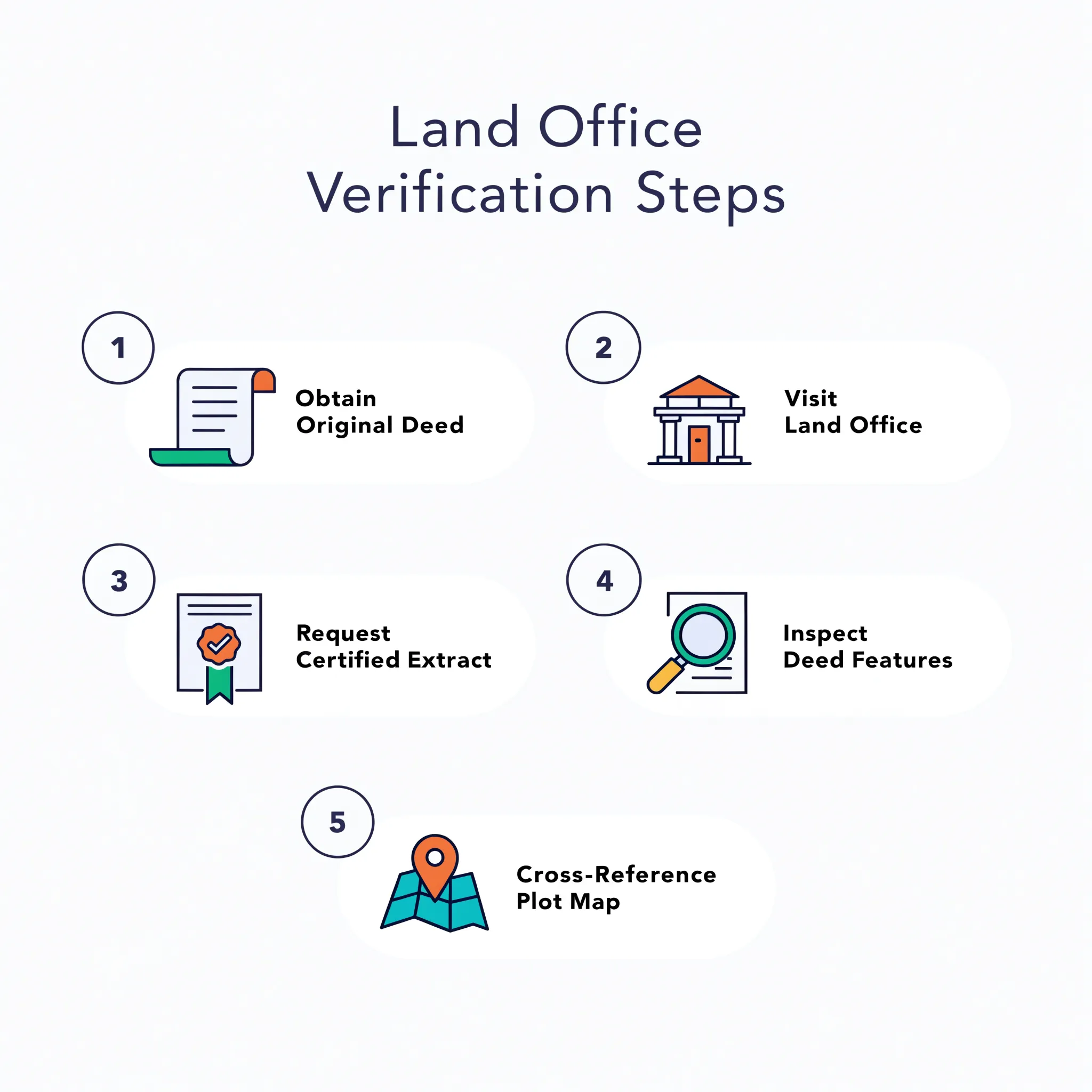
Land Office Verification: Step by Step
- Obtain the original Chanote deed from the seller or their representative. Photocopies are not accepted for official verification.
- Visit the local Land Office (Krom Thi Din) that has jurisdiction over the property's location. Each province and district maintains separate records.
- Request a certified extract (Nor Sor 2) from the land officer. This document lists the current registered owner, plot boundaries, and any registered encumbrances.
- Inspect the deed's physical features, genuine Chanote documents contain watermarks, serial numbers, and official seals that are difficult to counterfeit.
- Cross-reference the plot number against the Land Office's digital cadastral map to confirm boundaries match the physical land.
Nitarya works closely with specialized partners to conduct a thorough review of every aspect implicated in property ownership and investment, including Land Office verification. A buyer who skips this step risks purchasing a property with undisclosed liens, boundary disputes, or a title that cannot be legally transferred. The Land Office verification remains the single most reliable method for verifying property ownership in Thailand.
Thailand Chanote Verification FAQs
Q1 Can foreigners legally own land with a Chanote title in Thailand?
No. Even when a property carries a Chanote (Nor Sor 4 Jor), direct freehold ownership of land is not available to foreign nationals under Thai law. Foreign buyers must instead use a registered 30-year leasehold agreement or a registered usufruct contract to secure rights to landed property. Condominium units are treated differently: a foreign buyer can hold freehold title on a unit, but only within the building's 49% foreign ownership quota under the Thai Condominium Act, and only after submitting Foreign Exchange Transaction (FET) forms documenting the offshore transfer of purchase funds.
Q2 What happens if a property does not have a Chanote title?
Without a Chanote, a buyer may end up holding a property that cannot be legally transferred, mortgaged, or leased with certainty, since roughly 50% of land in Thailand lacks a full ownership title. Lesser documents carry real limitations: a Nor Sor 3 Gor is a possession right that is often upgradeable to Chanote, a Nor Sor 3 requires extra boundary and dispute checks before any transaction proceeds, and a Sor Kor 1 is merely a notification of possession that carries no ownership rights and cannot be sold or mortgaged at all.
Q3 How can a buyer tell if a Chanote deed is genuine and not forged?
Genuine Chanote documents contain physical security features, watermarks, serial numbers, and official seals, that are difficult to counterfeit, so a buyer or their representative should inspect the original deed's physical features rather than relying on a photocopy. The plot number on the deed should also be cross-referenced against the Land Office's digital cadastral map to confirm the boundaries match the physical land. Requesting a certified extract directly from the land officer adds a further layer of confirmation that the document in hand matches the official record.
Q4 Why is independent due diligence important even when a seller provides title documents?
Documents supplied by a seller or agent are not a substitute for an independent check, because online Land Department portals and seller-provided copies can miss pending litigation, unregistered easements, or boundary disputes that only surface through physical inspection and direct verification. Nitarya's independent review process is built specifically to surface these deal-changing issues before a buyer commits capital, giving foreign purchasers a check that is separate from, and not dependent on, whatever documentation the seller or agent has chosen to share.
Q5 What is an encumbrance certificate and why does it matter in Chanote verification?
An encumbrance certificate is an official Land Office record showing any existing mortgages, liens, or court orders registered against a property's title. These encumbrances appear as annotations on the official record, but they are not always visible on the copy of the deed held by the seller, which is why buyers should request the full encumbrance certificate directly rather than relying on what is presented to them. Encumbrance checks are one of the core due diligence steps that must precede reliance on any online title check result.
Q6 What is a Nor Sor 2 certified extract used for?
A Nor Sor 2 is a certified extract that a buyer can request from the land officer during in-person verification at the local Land Office. It lists the current registered owner, the plot's boundaries, and any registered encumbrances on the property, giving the buyer an authoritative snapshot straight from the issuing authority rather than from the seller.