Thailand › Bangkok

City · Thailand

Buying property in Bangkok, ThailandBangkok has more new condominiums than buyers. Negotiate.

At the pace of sales in mid-2026, the condominiums on offer in Bangkok and its neighbouring provinces would take about 39 months to sell. Asking prices are broadly flat. That gives a buyer room to negotiate. Letting by the day is not a safe way to earn the money back.

6-minute read · checked 9 October 2026

Find my property

Time to sell the condominiums on offer in Bangkok and five neighbouring provinces, at the current pace
39 months
Real Estate Information Center (Government Housing Bank), second quarter 2026
Share of units reserved in newly launched condominium projects
24.3%
Knight Frank Thailand, first quarter 2026
Average asking price per square metre for a condominium in the central business district
THB 236,800
Knight Frank Thailand, first quarter 2026
Micrograms of fine dust in each cubic metre of air in a typical year. The World Health Organization guideline is 5
25–30
World Bank, citing IQAir, recent years

Bangkok property market in 2026More than three years of condominiums waiting for buyers.

What this means for youTreat the asking price as an opening offer. Knight Frank expects buyers to keep the upper hand on price, promotions and payment terms for one to two years from early 2026.

Read the detailClose

The Government Housing Bank's Real Estate Information Center found that 2.4% of the condominiums on offer in Bangkok and its five neighbouring provinces sold each month in the second quarter of 2026. At that pace the rest would take about 39 months to sell. Sales of new condominiums were 19.5% higher than a year earlier.

Knight Frank put average asking prices in the first quarter of 2026 at about THB 236,800 a square metre in the central business district (the main office area), THB 123,500 in the city fringe and THB 71,200 in the suburbs. It reported prices as broadly stable, with developers clearing stock in preference to raising prices. About 24.3% of the units in newly launched projects were reserved.

CBRE reported that international buyers made up 32% of downtown condominium buyers in 2026, against an average of 18% between 2021 and 2025. In the Central Lumpini area it reported 55% of sales as leasehold (a right to use the home for a fixed term, not ownership) and 45% as freehold, so check which one is being sold.

From: Real Estate Information Center (Government Housing Bank); Knight Frank Thailand; CBRE Thailand. Knight Frank and CBRE are property consultancies, not government bodies.
Renting out a condo in Bangkok: short-stay rulesLetting a condominium by the day is treated as running a hotel.

What this means for youPlan on tenants who stay a month or longer. Read the building's rules before you buy, and ask for rents actually paid in the building, not asking rents.

Read the detailClose

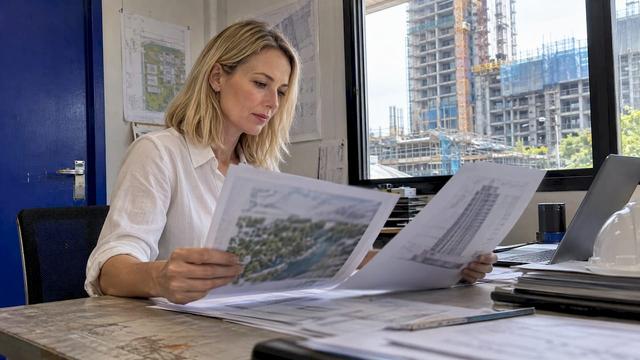
The law firm Lex Bangkok describes regular, commercial letting for stays shorter than 30 days as generally counting as operating a hotel, which needs a licence. It states that a single condominium unit cannot get its own licence, that most buildings' owners' bodies forbid daily letting, and that Thai courts have repeatedly held daily condominium rentals to breach the Hotel Act. The penalty it gives is up to one year in prison, a fine of up to THB 20,000, or both, plus up to THB 10,000 for each day the letting continues.

In March 2025 the Bangkok Metropolitan Administration (the city government) was reported to have set out six measures against daily condominium rentals, focused on Sukhumvit and Sathorn. They include patrolling known buildings, removing key lockboxes and working with booking platforms.

For longer lets, the figures on record are asking rents for whole buildings held by one landlord. CBRE reported that these downtown rental apartments were 94% occupied in the second quarter of 2026, with 86% of the units in Sukhumvit, and that the average asking rent for the top grade was THB 581 a square metre, down 0.4% in a year. Rents achieved by individual condominium owners are not held.

From: Lex Bangkok; Bangkok Metropolitan Administration; CBRE Thailand

Transfer fees and taxes when buying in BangkokWho pays the transfer costs is settled in the negotiation.

What this means for youWrite into the contract who pays each transfer cost. Ask how long the seller has owned the property, because that can decide which tax is due.

Read the detailClose

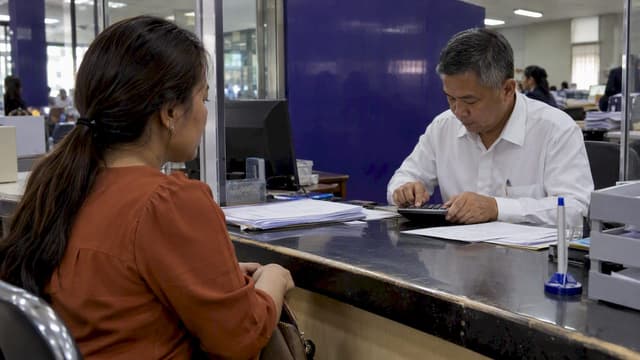
The Land Office charges a transfer fee of 2% of the property's official appraised value. A sale made commercially or for profit also carries specific business tax of 3% of the sale receipts, plus a local tax of one tenth of that, which makes 3.3% in all.

The law firm Closer CSS Law reports stamp duty on a transfer at 0.5% of the registered value, and that a seller who has owned for more than five years is exempt from specific business tax, subject to conditions. It also reports that no rule fixes who pays. By custom the seller pays the taxes and the buyer pays the transfer fee, and the split is settled with the price.

After the purchase, land and building tax is charged every year. The legal maximum rates run from 0.15% to 3% depending on how the property is used. Assessment letters are issued by the end of February and payment is due by the end of April.

From: Revenue Department; Closer CSS Law; PwC Worldwide Tax Summaries. The 3.3% is our calculation from Revenue Department rates.

Bangkok flood risk, sinking land and air pollutionFlooding is a regular condition, and the city's edge is still sinking.

What this means for youAsk whether the street floods in heavy rain, and see the property in September or October. Take more care on the city's edge, where the land is still sinking.

Read the detailClose

The World Bank treats flooding in Bangkok as a recurrent condition, not an occasional shock. Much of the metropolitan area lies only one to two metres above sea level. The land sinks by an estimated 7.0 millimetres a year on average: parts of the inner city are stable or rising slightly, while much of the urban fringe and the surrounding provinces continue to sink.

In July 2026 the city's flood defences comprised four drainage tunnels, 207 pumping stations, 244 sluice gates and 371 pumping wells. A drainage tunnel system at Bueng Nong Bon, in works covering 152.90 square kilometres of eastern Bangkok, is due to come into use by late 2026.

Fine dust in the air (PM2.5) has typically averaged 25 to 30 micrograms per cubic metre over a year, against a World Health Organization guideline of 5. The Pollution Control Department reported that the average over the dust season, from November to early March, fell from 33 to 28 between 2024–25 and 2025–26. Days hotter than 35°C are projected to approach 300 a year by mid-century if emissions stay high.

From: World Bank; Bangkok Metropolitan Administration; Pollution Control Department

Living in Bangkok: hospitals, schools, weather and trafficLarge private hospitals, a six-month wet season and slow roads.

What this means for youChoose the address by the daily journey. Test the trip to work, school and hospital at rush hour and in rain before you commit.

Read the detailClose

Bumrungrad International Hospital states that it treats over 620,000 international patients a year, employs over 130 interpreters and runs 24-hour emergency care. Samitivej Sukhumvit describes itself as a 275-bed private hospital with interpreters and immigration services for expatriates. NIST International School in Watthana has over 1,800 students aged 3 to 18 on International Baccalaureate programmes. International School Bangkok, on a United States-based curriculum, is in Nonthaburi, just outside the city.

The wet season runs from May to October, when each month has 15 to 21 rainy days. September is the wettest month, with 335.9 millimetres of rain. From November to March there are 1.5 to 5 rainy days a month. April is the hottest month, with an average daily high of 35.7°C.

Road congestion costs an estimated 7 to 10% of the city region's yearly output, and a typical monsoon storm cuts average traffic speeds by around 7%. Suvarnabhumi Airport is about 31 kilometres east of the city. Don Mueang, the base for low-cost airlines, is about 25 kilometres north.

From: Bumrungrad International Hospital; Samitivej Hospitals; NIST International School; International School Bangkok; Thai Meteorological Department (1991 to 2020 averages); World Bank; Airports of Thailand. Hospital and school figures are the institutions' own.

Questions buyers ask

Buying property in Bangkok: short answers.

Is the Bangkok condo market oversupplied?

Supply is well ahead of sales. The Real Estate Information Center found that 2.4% of the condominiums on offer in Bangkok and its five neighbouring provinces sold each month in the second quarter of 2026, which it puts at about 39 months to sell the rest.

How much does a condo cost in Bangkok?

Knight Frank put average asking prices in the first quarter of 2026 at about THB 236,800 per square metre in the central business district, THB 123,500 in the city fringe and THB 71,200 in the suburbs. These are asking prices, not prices paid.

Can I rent out my Bangkok condo for short stays?

Not safely. The law firm Lex Bangkok describes regular letting for stays under 30 days as generally counting as operating a hotel, states that a single condominium unit cannot get its own hotel licence, and says most buildings forbid daily letting.

What are the transfer costs when buying property in Bangkok?

The Land Office transfer fee is 2% of the official appraised value. A commercial sale also carries specific business tax of 3% plus a local tax of one tenth of that, on Revenue Department rates. Closer CSS Law reports that who pays each cost is settled in the negotiation.

Does Bangkok flood?

Yes, regularly. The World Bank treats flooding in Bangkok as a recurrent condition: much of the metropolitan area lies one to two metres above sea level, and the land sinks by an estimated 7.0 millimetres a year on average.

How bad is air pollution in Bangkok?

Fine dust (PM2.5) has typically averaged 25 to 30 micrograms per cubic metre over a year, against a World Health Organization guideline of 5, on figures the World Bank takes from the private monitor IQAir.

The areas

Choose an area, and see what is being built there.

In the developers’ own words, as they publish them. NITARYA checks a project only inside Acquire & Own, for the client who chooses it, and every project here stands on the same footing.

Thong Lo

See how these areas compare on price, rent and running costFree. Every figure there carries its source and date.

What to do next

Two ways to go on from here.

Find my property

Tell us what the property has to do for you, by tapping, and see your next step. Free.

Find my property

Explore & Decide

Our research on the areas and a ranked shortlist of projects, read for your brief, before you commit.

Explore & Decide

The evidence

What this guide rests on.

The full rules, step by step: ownership guide for Thailand and the tax guide.

Every sourced fact we hold on Bangkok (33)
  • Registered population density was 3,477.3 people per square kilometre in 2024, against 128.5 for Thailand as a whole.
  • Police General Hospital, the Royal Thai Police hospital at 492/1 Rama 1 Road, Pathum Wan, Bangkok 10330, runs a 24-hour emergency room (telephone 02 207 6000).
  • Triam Udom Suksa School, at 227 Phaya Thai Road, Pathum Wan, admits students into Mathayom 4 (upper secondary) for the 2026 (B.E. 2569) academic year.
  • At the Bangkok Metropolis weather station (index 48455), mean annual rainfall over 1991 to 2020 was 1,702.2 millimetres, falling on an average of 128.3 rainy days a year.
  • The built-up urban area of Bangkok, which spreads beyond the province, had an estimated 17 to 18 million residents in 2020 and ranked 12th in the world among countries' largest cities, on the 2025 Global Human Settlement Layer database cited by the World Bank.
  • CBRE counted 100,485 expatriates in Bangkok, using Foreign Workers Administration Office data available as of November 2025.
  • Bumrungrad states that it treats over 1.1 million patients a year, of whom over 620,000 are international patients from more than 190 countries, and that it employs over 130 interpreters.
  • Samitivej Srinakarin, on the east side of Bangkok towards Suvarnabhumi Airport, is a 400-bed hospital; the group also runs a children's hospital and lists Joint Commission International accreditation.
  • Bangkok Hospital Headquarters, a private hospital, states that its sixth consecutive Joint Commission International accreditation ran from 18 February 2023 to 17 February 2026, with separate certified programmes for stroke and heart attack care running to 2027.
  • NIST International School, on Sukhumvit Soi 15 in Watthana, is a not-for-profit school with over 1,800 students aged 3 to 18, teaching all three International Baccalaureate programmes.
  • International School Bangkok is a not-for-profit school in the Nichada Thani estate in Pak Kret, Nonthaburi, just outside the city, taking children from age 3 to Grade 12 from over 60 nationalities on a United States-based curriculum with Advanced Placement and International Baccalaureate options.
  • Suvarnabhumi Airport stands on 22,000 rai in Samut Prakan Province, about 31 kilometres east of Bangkok, and opened for commercial service on 28 September 2006.
  • The BTS Skytrain opened on 5 December 1999 and was the first electric mass transit railway to run in Thailand.
  • The first section of the MRT Blue Line, from Hua Lamphong to Bang Sue, runs underground for its whole length, covers 20.0 kilometres with 18 stations, and opened on 3 July 2004.
  • The Bangkok Mass Transit Authority's S1 bus runs from the Suvarnabhumi passenger terminal to Sanam Luang in the old city between 06:00 and 17:00 for a fare of THB 60.
  • Bangkok and its five neighbouring provinces together (the group the statistics office calls Bangkok and Vicinities) had a registered population of 10,906,861 in 2024.
  • The registered population of Bangkok was 5,455,020 in 2024 (2,544,400 male and 2,910,620 female), on the Department of Provincial Administration's registration record.
  • Output per person in Bangkok was THB 675,979 in 2023, against THB 256,345 for Thailand as a whole (preliminary figures at current prices).
  • Mean relative humidity is 73 per cent over the year, from 66 per cent in December to 79 per cent in September (1991 to 2020).
  • Bangkok's gross provincial product (the value of everything produced in the province in a year) was THB 6,142,910 million at current prices in 2023, a preliminary figure from the Office of the National Economic and Social Development Council.
  • Mean temperature ranges from 27.3 °C in December to 30.7 °C in April, with an annual mean of 28.9 °C (1991 to 2020).
  • Mean monthly rainfall is highest in September (335.9 mm) and October (288.7 mm) and lowest in December (11.6 mm), February (21.4 mm) and January (23.6 mm), on the 1991 to 2020 record.
  • The World Bank describes Bangkok as generating close to half of Thailand's economic output and as nearly 27 times larger than Chiang Mai, the second-largest city; this measures the wider urban area, not the province alone.
  • The highest temperature recorded at the station in 1991 to 2020 was 40.1 °C and the lowest was 13.2 °C.
  • The average daily high is 35.7 °C in April and 32.3 °C in December; the average daily low is 27.2 °C in April and 23.2 °C in December (1991 to 2020).
  • Each month from May to October averages between 189.7 and 335.9 millimetres of rain and 15.0 to 21.4 rainy days, against 1.5 to 5.0 rainy days a month from November to March (1991 to 2020).
  • Bumrungrad International Hospital, a private hospital in Bangkok, states that it has 580 inpatient beds, capacity for 5,500 outpatients a day and over 1,500 physicians and dentists.
  • Bumrungrad states that it was first accredited by Joint Commission International (a United States-based body that audits hospital quality) in 2002 and most recently re-accredited in 2023, and that it runs 24-hour emergency care.
  • Samitivej Sukhumvit Hospital, on Sukhumvit Soi 49, describes itself as a 275-bed private hospital with interpreters and immigration services for expatriates in Bangkok.
  • Don Mueang International Airport is about 25 kilometres north of Bangkok and about 46 kilometres from Suvarnabhumi, and serves as a hub for low-cost carriers on domestic and international routes.
  • Other BMTA routes from Suvarnabhumi include 555 to Rangsit via the Rama 9 expressway (04:30 to 19:00, maximum fare THB 37), 554 via Ramindra Road (06:30 to 20:00, THB 36) and 558 to Central Rama 2 (05:30 to 20:40, THB 36).
  • Public minibus routes 549, 552, 552A, 555 and 559 link Suvarnabhumi with Min Buri, On Nut and Don Mueang between 05:00 and 22:00 for THB 27 to 60.
  • Road congestion costs an estimated 7 to 10 per cent of Bangkok's gross regional product (the yearly output of the city region) each year, on World Bank estimates published in September 2026.

National Statistical Office · Police General Hospital, official website contact information · Triam Udom Suksa School, official website admissions notices · Thai Meteorological Department · World Bank · CBRE Thailand · Bumrungrad International Hospital · Samitivej Hospitals · Bangkok Hospital · NIST International School · International School Bangkok · Airports of Thailand Public Company Limited · Bangkok Mass Transit System Public Company Limited · Mass Rapid Transit Authority of Thailand · Airports of Thailand, Suvarnabhumi Airport, public bus routes page, checked 9 October 2026

Already have a property in mind? Get it reviewed.

Last checked 16 October 2026. This guide is general: what applies to you depends on your nationality, where you pay tax and the property itself.

Find my property